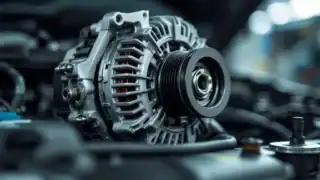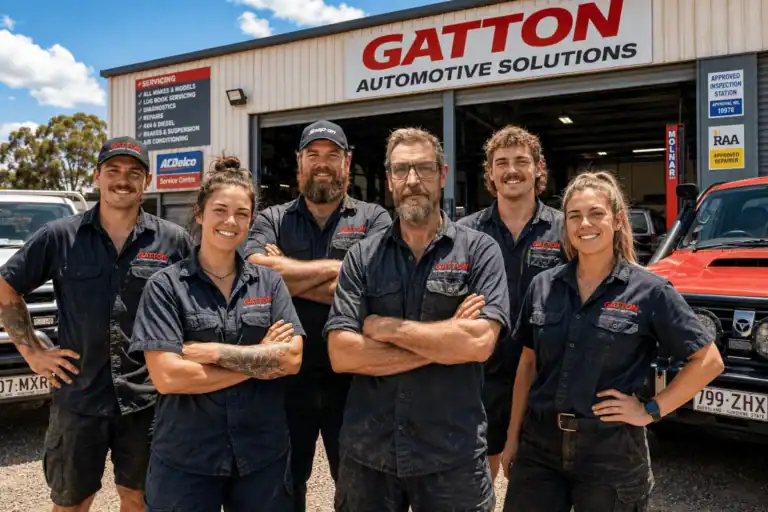
The drive belt on your Volkswagen does more work than most drivers realise. A single serpentine belt typically runs the alternator, power steering pump, air conditioning compressor, and water pump simultaneously — meaning a worn or snapped belt can trigger a cascade of failures rather than just one. Volkswagen drive belt replacement is one of those jobs that’s straightforward when done at the right time and genuinely costly if it’s left too long. At Gatton Automotive Solutions, we see a steady stream of Volkswagen owners from across the Lockyer Valley who’ve heard a new noise from under the bonnet and want a straight answer about what’s going on.
Signs Your Volkswagen Drive Belt Needs Attention
Volkswagen’s belt routing can vary quite a bit across the model range. A Golf TSI, a Tiguan, and a Transporter all have different engine layouts and belt configurations, but the warning signs of a failing belt are fairly consistent regardless of which model you drive.
- A high-pitched squealing or chirping from the engine bay, particularly on startup or when you switch on the air conditioning
- Visible cracking, fraying, or glazing on the belt surface, which is often picked up during a routine service
- Battery warning light illuminating without a clear battery fault, which can point to the alternator not being driven properly
- Overheating or temperature gauge creeping up, which can happen if the water pump pulley relies on the serpentine belt
- Heavy or unresponsive steering on models with belt-driven hydraulic power steering
- Air conditioning cutting out unexpectedly, especially in warmer weather
If the belt snaps while you’re driving, none of those systems will work at all. On some Volkswagen engines, particularly the interference-type four-cylinder units common in the Golf, Polo, and Jetta, a belt failure can also allow valves and pistons to collide, turning what was a belt replacement into a much larger engine repair. Getting ahead of it is always the smarter call.
Volkswagen-Specific Belt Service: What We Actually Do
Volkswagen uses a variety of engine configurations across its range, and the belt system on a 1.4 TSI differs meaningfully from one on a 2.0 TDI diesel. Before we touch anything, we confirm which belt arrangement your specific model uses and check the VW service schedule to understand whether replacement is due based on age, mileage, or condition.
Our process starts with a visual inspection of the existing belt, checking for cracks, edge wear, glazing, and correct tension. We also inspect the tensioner and idler pulleys at the same time. These components carry the belt under load and are a common failure point on higher-mileage Volkswagen vehicles. A new belt on a worn tensioner is a short-term fix; both should be assessed together.
On models where the serpentine belt also drives the water pump, which applies to several VW petrol engines, we assess whether the water pump should be replaced at the same time. The labour overlap makes it a sensible conversation to have before the job starts rather than after. We’ll give you our honest read on its condition and let you decide.
Parts used are sourced to OEM-equivalent specification. Volkswagen engines are designed around tight tolerances, and using an undersised or lower-grade belt risks premature wear or slipping under load. We source parts that match the manufacturer’s specifications for belt width, length, and rib count.
What Affects the Cost and Time for This Job?
Drive belt replacement on a Volkswagen is not a one-size-fits-all job. A few variables affect both the time required and the overall cost.
Engine accessibility is a big one. On some VW models, removing the belt is relatively straightforward; on others, ancillary components need to be shifted to access the tensioner or reroute the belt correctly. The condition of the tensioner and idler pulleys also matters. If they’re worn and need replacing alongside the belt, that adds parts and some additional time. And if the water pump is borderline, addressing it during the same job is almost always more cost-effective than returning for it separately.
We’ll walk you through what we find before any work begins. No surprises, no unnecessary add-ons. If something genuinely needs doing, we’ll explain why, and if it doesn’t, we’ll tell you that too.
Drive Belt Replacement for Volkswagen Owners in Gatton and the Lockyer Valley
Gatton Automotive Solutions is a full-service workshop in Gatton, which means Volkswagen owners from Laidley, Plainland, Hatton Vale, Forest Hill, and across the Lockyer Valley don’t need to make the drive to Ipswich or Toowoomba for quality mechanical work. We handle everything from everyday cars and 4WDs through to trucks, heavy equipment, and farm machinery, all under one roof.
Our reputation in this community is built on giving people straight answers and doing the work properly. We’ve earned five-star reviews from local customers, and we’re not interested in padding a job to inflate a bill. If your Volkswagen needs a belt replaced, we’ll do it right the first time, using parts that are fit for purpose, and we’ll tell you honestly if anything else deserves attention.
We also handle roadworthy certificates, tyre fitting, suspension work, and smash repairs in-house, so if your Volkswagen needs more than one thing sorted, we can work through it without you needing to visit multiple workshops.
Ready to get your Volkswagen sorted? Book Your Free Inspection online or Call Us Now and we’ll get you in at a time that suits you.