When a Toyota’s suspension starts to go, you notice it in ways that are hard to ignore. The ride gets rougher, corners feel vague, or you hear knocking sounds over bumps that weren’t there six months ago. Toyota Suspension Replacement is one of the more common repairs we carry out at our Gatton workshop, and it covers everything from worn shock absorbers and struts to degraded bushes, ball joints, and coil springs. Getting the right diagnosis matters here, because throwing parts at a suspension problem without understanding the root cause wastes time and money.
Signs Your Toyota Suspension Needs Attention
Suspension wear tends to creep up gradually, which means drivers often adapt to a worsening ride without realising how far things have slipped. There are some specific signs worth watching for.
- Bouncing or wallowing after bumps — if the car continues to rock after hitting a pothole or dip, the shock absorbers are likely worn and no longer controlling spring rebound properly.
- Knocking or clunking sounds — a repetitive knock over rough surfaces often points to worn control arm bushes, a loose strut mount, or a failing ball joint.
- Pulling to one side — while this can also be a wheel alignment issue, a worn suspension component on one side of the vehicle can cause consistent directional pull.
- Uneven tyre wear — scalloping or cupping on the tyre tread is a classic indicator of shock absorber failure. If your tyres are wearing in a feathered or diagonal pattern, have the suspension inspected before investing in new rubber.
- Nose-diving under braking — if the front of the vehicle dips sharply when you brake, the front struts or shocks are likely overdue for replacement.
- Visible oil weeping from shocks — a dark, oily residue running down the body of a shock absorber is a clear sign the seal has failed and the unit needs replacing.
If you’re seeing any of these symptoms on your Hilux, Landcruiser, RAV4, Camry, or any other Toyota model, it’s worth having a proper inspection carried out rather than waiting for things to deteriorate further.
How We Diagnose and Replace Toyota Suspension Components
Toyota vehicles are built to specific engineering tolerances, and suspension work on them needs to account for that. A Hilux carrying a tray and toolbox has very different suspension demands to a Kluger used for school runs and weekend trips. Our approach starts with understanding how the vehicle is being used, what symptoms have appeared, and when they started.
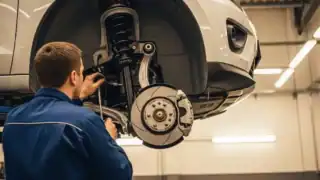
We begin with a visual and physical inspection of the front and rear suspension, checking for play in the ball joints and tie rod ends, cracking or deformation in rubber bushes, shock absorber condition, and the integrity of strut mounts and top hats. We’ll also examine the coil springs for cracks or settled height, since a spring that’s dropped even 10-15mm can significantly affect handling geometry and tyre wear.
For Toyota 4WDs and utes in particular, we pay close attention to the leaf spring pack condition and U-bolt torque, as these are commonly overlooked but critical to payload handling and stability. The Hilux, for instance, is often used with added weight in the tray, which accelerates rear suspension wear faster than the factory service schedule assumes.
Once we’ve identified what needs replacing, we’ll walk you through exactly what we found and what we recommend. We use quality parts that meet OEM specifications, whether that’s genuine Toyota components or reputable aftermarket equivalents, depending on your preference and budget. We’ll also check wheel alignment after any suspension work, because even a straightforward strut replacement can shift the alignment angles if it’s not checked and corrected.
What Affects the Cost of Suspension Replacement on a Toyota?
Suspension replacement costs vary depending on which components need attention, how many axles are involved, and the model in question. Replacing both front struts on a Camry is a different job to overhauling the full suspension on a Landcruiser 200 Series. Parts availability plays a role too – most Toyota components are well stocked locally, though some older or less common models may require ordering.
Using OEM-spec or genuine parts will generally cost more upfront than budget aftermarket options, but the difference in longevity and performance is usually worth it, especially on a vehicle that does serious work or carries passengers regularly. We’ll give you an honest quote with options so you can make the call that suits your situation.
Why Get Your Toyota’s Suspension Sorted in Gatton?
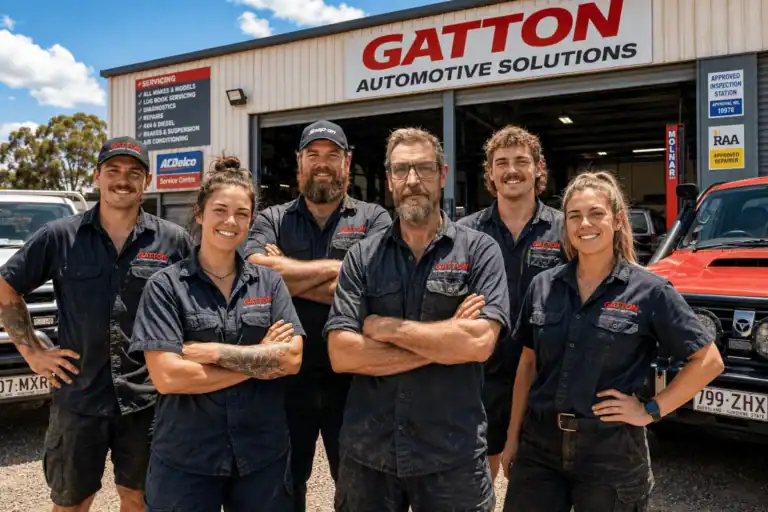
Driving to Ipswich or Toowoomba for suspension work adds 45 to 80 kilometres each way to what’s already an inconvenient job. Gatton Automotive Solutions is a full-service workshop right here in Gatton, which means your Toyota doesn’t have to go anywhere else once it’s with us. If the suspension inspection turns up worn tyres, an alignment issue, or a brake concern, we can handle all of it in one visit. We carry out tyre supply and fitting, wheel alignments, roadworthy certificates, and general mechanical work alongside suspension repairs, so nothing gets left for another trip.
Our team works on everything from everyday Corollas and Camrys to Hilux utes, Landcruisers, and heavy equipment. With five-star reviews from drivers across the Lockyer Valley, we’ve built our reputation on giving people straight answers and doing the job properly the first time.
If your Toyota’s ride doesn’t feel right, use Book Your Free Inspection to book online or Call Us Now to speak with our team. We’ll tell you what we find, what it needs, and what it’ll cost before any work begins.