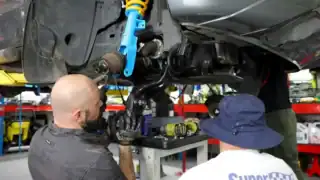
A timing belt is one of those components that does its job quietly in the background until it doesn’t. For Toyota owners in Gatton and across the Lockyer Valley, Toyota timing belt replacement is one of the most important scheduled services you can stay on top of. The timing belt synchronises your engine’s camshaft and crankshaft so that valves and pistons move in exactly the right sequence. If it snaps or skips a tooth, the results can range from a sudden breakdown to significant internal engine damage, depending on the engine type.
How Does a Timing Belt Work and Why Does It Wear Out?
Unlike a timing chain, which is metal and typically lasts the life of the engine, a timing belt is made from reinforced rubber. It’s designed to be replaced at set intervals because rubber deteriorates with heat, age, and load. Toyota specifies replacement intervals in your vehicle’s logbook, and these vary by model and year. Many older Toyotas call for a replacement around every 90,000 to 100,000 kilometres, though some models have different schedules. If your Toyota has been sitting for years without high mileage, age alone can cause the belt to crack or harden, so time matters just as much as kilometres.
Toyota has used timing belts across a wide range of engines, including the 2RZ-FE, 3RZ-FE, 5VZ-FE, and various diesel four-cylinder engines found in HiLux, LandCruiser, Prado, Camry, and RAV4 models from the 1990s through to the mid-2000s. Knowing which engine your vehicle has matters because each has its own belt routing, tensioner design, and water pump configuration.
Signs Your Toyota Timing Belt May Be Due for Replacement
In most cases, there are no obvious warning signs before a timing belt fails, which is exactly why following the service schedule matters. That said, there are some indicators worth watching for:
- Ticking or slapping noise from the engine: A worn or loose belt can produce a rhythmic sound at startup or under load.
- Rough running or misfires: If the belt has stretched or jumped a tooth, valve timing is off and the engine may run poorly.
- Difficulty starting: A belt that has slipped can make it hard to start the engine or cause it to crank without firing.
- Oil leaks near the timing cover: Leaking camshaft or crankshaft seals can contaminate the belt and accelerate wear.
- You don’t know the last replacement date: On a used Toyota, if you can’t confirm when the belt was last done, treat it as overdue.
If your belt breaks completely, you’ll know immediately. The engine will stop, and if yours is an interference engine (where pistons and valves share the same space), bent valves or worse can result. It’s far better to replace on schedule than to discover the hard way.
What the Timing Belt Service Includes at Our Gatton Workshop
A timing belt job is more involved than it might appear from the outside. Our team at Gatton Automotive Solutions removes the timing covers, inspects the belt condition, checks for oil contamination, and assesses the tensioner and idler pulleys before anything is touched. These pulleys are often replaced at the same time because they run constantly and are only accessible once the belt is off. Replacing them now avoids having to pull everything apart again a short time later.
On many Toyota engines, the water pump is driven by the timing belt. If the water pump fails after a belt replacement, the repair cost is similar to doing the full job again. We’ll advise you on the water pump’s condition during the inspection so you can make an informed call before we proceed. Where camshaft seals or crankshaft seals are showing signs of leakage, we’ll flag those too.
We use parts that meet OEM specifications for your specific Toyota. On a precision component like the timing system, quality matters, and we won’t fit undersized or unrated belts to save a few dollars at the risk of premature failure.
What Affects the Cost and Time of a Toyota Cam Belt Replacement?
A few variables determine how long this job takes and what it will cost. The engine type is the biggest factor: some Toyota engines have straightforward access to the timing belt, while others require more disassembly. Whether you include the water pump, tensioner kit, and seals also affects the total. We’ll walk you through the options clearly before starting, so there are no surprises when you pick the car up.
Vehicles with a history of oil leaks near the timing cover may need additional work to clean or reseal before the new belt goes on. Parts availability is generally good for Toyota models, which keeps delays to a minimum for most Lockyer Valley customers.
Why Gatton Drivers Choose Gatton Automotive Solutions for Toyota Servicing
Gatton Automotive Solutions is a full-service workshop based right here in Gatton. For locals, that means no trip to Ipswich or Toowoomba for a job your vehicle genuinely needs. Our team handles everything from everyday Toyota servicing and repairs through to 4WDs, light trucks, and heavy equipment, all under one roof. We source parts directly, which keeps things moving without the waiting around that comes with relying on outside suppliers.
With five-star reviews and a reputation built on straight advice and honest pricing, we’ve become the go-to workshop for a lot of Toyota owners across the Lockyer Valley. We don’t recommend work that isn’t needed, and we explain what we find before we quote. Beyond mechanical work, we also issue roadworthy certificates on-site, handle smash repairs and custom paintwork, and offer suspension upgrades and tyre fitting, so if anything else comes up during your visit, it can often be taken care of in the same stop.
If your Toyota is due for a timing belt replacement, or you’re unsure whether it’s been done on a recently purchased vehicle, Call Us Now or Book Your Free Inspection online. Gatton Automotive Solutions is here in Gatton and ready to help.