The timing belt is one of those components that works quietly in the background until it doesn’t. For Isuzu owners, staying on top of Isuzu timing belt replacement is one of the most important maintenance decisions you’ll make. The belt synchronises your engine’s camshaft and crankshaft, keeping the intake and exhaust valves opening and closing in precise coordination with the pistons. If it fails, the result is usually severe internal engine damage. At Gatton Automotive Solutions, we carry out Isuzu cam belt replacement for a wide range of Isuzu models, from the D-Max utes and MU-X wagons popular throughout the Lockyer Valley to older commercial vehicles that are still earning their keep.
What Happens When an Isuzu Timing Belt Fails?
Timing belt failure doesn’t always announce itself with a dramatic warning. In many cases, the belt simply snaps without prior symptoms, which is exactly why replacement intervals matter so much. That said, there are signs that something may be developing:
- A ticking or slapping noise from the engine – particularly on cold starts – can indicate belt tension or guide wear
- Rough running or misfires that occur without any obvious cause in the fuel or ignition system
- Engine vibration at idle that wasn’t there before
- Visible cracking, fraying, or glazing on the belt itself if you or your mechanic can access it during a routine inspection
- Oil contamination near the belt housing, which can cause rapid belt degradation if a cam seal or crank seal is leaking
More commonly, though, there are no warning signs at all. Isuzu petrol and diesel engines covered by a timing belt are typically interference engines, meaning the pistons and valves share the same space at different moments in the engine’s cycle. If the belt breaks and synchronisation is lost, valves can collide with pistons at speed. The repair bill that follows is far higher than the cost of a scheduled belt replacement.
Isuzu Timing Belt Replacement Intervals
Isuzu’s recommended replacement interval varies by engine type and model year. Many Isuzu diesel engines, including those found in the older D-Max and Rodeo platforms, specify belt replacement at around 100,000 km or every five years, whichever comes first. Some petrol variants carry different intervals. If you’re unsure of the correct schedule for your specific model, our team can check the manufacturer’s service data before any work begins.
One detail worth knowing: Isuzu’s 4JJ1 and 4JK1 diesel engines, fitted to D-Max models across several generations, use a timing chain on some variants and a timing belt on others depending on the production year. It’s not always obvious from the outside. We identify your exact engine specification before recommending replacement, rather than making assumptions based on model name alone.
What Does an Isuzu Timing Belt Service Include?
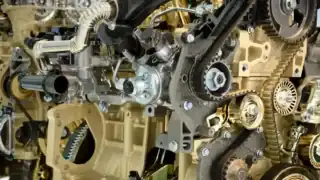
A timing belt replacement isn’t just swapping the belt. On most Isuzu engines, our service includes inspection and replacement of the components that drive and tension the belt, because worn tensioners and idler pulleys will shorten the life of a new belt and can cause failure of their own.
- Removal of the timing cover and any ancillary components needed to access the belt
- Inspection of the tensioner, idler pulleys, and belt guides for wear, play, or damage
- Replacement of the belt to OEM specification or a genuine-equivalent part suited to your Isuzu engine
- Tensioner and idler pulley replacement where recommended or where wear is evident
- Inspection of the water pump, which is driven off the timing belt on many Isuzu engines – if it’s showing signs of bearing wear or weeping, replacing it at the same time saves significant labour down the track
- Checking cam and crank seals for leaks that could contaminate the new belt
- A final check of engine timing marks before reassembly
We use parts that meet the specifications required for your engine. Where genuine Isuzu parts or trusted OEM-equivalent components are available through our parts sourcing, that’s what we’ll use. You’ll know what’s going into your vehicle before we start.
What Affects the Cost and Time Involved?
Timing belt replacement cost varies depending on your engine type, how accessible the belt housing is on your particular model, and which associated components need replacing alongside the belt. A D-Max with a straightforward diesel layout will differ from an older petrol Trooper that requires significantly more disassembly to reach the belt.
Including the water pump and tensioner kit in the same service adds parts cost but removes the need to revisit the same labour-intensive job in the near future. Many Isuzu owners in the Lockyer Valley find this the sensible approach, particularly if they rely on their vehicle daily for work or farm duties. We’ll talk you through the options and what makes sense for your situation, without pushing parts or work you don’t need.
Serving Gatton and the Lockyer Valley
There’s no need to drive to Ipswich or Toowoomba for this kind of work. Gatton Automotive Solutions handles everything from everyday car servicing to heavy vehicle and equipment maintenance under one roof, and Isuzu timing belt work is well within our scope. We’re locally owned and operated in Gatton, and we give honest advice on what’s needed and what can wait. With five-star reviews, our reputation in the local community speaks for itself.
If your Isuzu is due for a cam belt service, or you’re not sure of the last time it was done, Call Us Now or Book Your Free Inspection online. We’re here to help Gatton drivers keep their vehicles running without surprises.