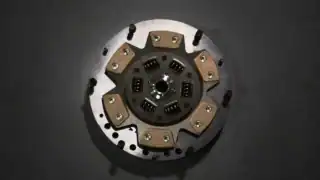
A clutch problem rarely announces itself all at once. More often, it creeps in gradually until one day you’re sitting at the lights in Gatton and the car won’t pull away cleanly, or you notice the engine revving higher than it should for the speed you’re doing. BMW clutch repair is something our team handles regularly, and it’s worth understanding what’s actually happening inside the drivetrain before deciding on the right course of action. Getting it assessed early is almost always cheaper than waiting until the clutch fails completely.
Warning Signs Your BMW Clutch Needs Attention
BMW vehicles use a hydraulic clutch system, which means there are more potential points of wear than on a simple cable-operated setup. What feels like a clutch problem might be the friction disc, the pressure plate, the release bearing, the dual-mass flywheel (DMF), or the hydraulic master or slave cylinder. Each of these fails differently, and the symptoms can overlap in ways that make a proper diagnosis important before any parts are ordered.
Here are the signs BMW owners most commonly describe when they bring their car in:
- Clutch slipping: The engine revs rise when you accelerate but vehicle speed doesn’t follow. Most noticeable when pulling uphill or under heavier load.
- High or low biting point: The clutch engages very high in the pedal travel, or has dropped much lower than usual. Both can signal hydraulic issues or a worn friction disc.
- Shudder on take-off: A judder or vibration when you pull away from a standstill is often linked to a worn or contaminated friction disc, or a failing dual-mass flywheel.
- Grinding or rattling at idle: A rattling noise when the car is stationary that disappears when you press the clutch pedal is a classic dual-mass flywheel symptom, common across a range of BMW models.
- Stiff or spongy pedal: A hydraulic clutch pedal should feel consistent. If it’s harder than normal, soft, or has no resistance at one end of its travel, that points to the hydraulic circuit rather than the mechanical clutch assembly itself.
- Difficulty selecting gears: If first gear is hard to find or reverse crunches, the issue might be at the clutch, the gearbox, or the hydraulic actuation. Getting the diagnosis right matters here.
How We Diagnose and Repair BMW Clutch Problems in Gatton
Our first step is always a proper assessment before recommending any work. For BMW vehicles, this means checking the hydraulic circuit, inspecting fluid condition in the clutch master cylinder reservoir, and road testing the vehicle to replicate the fault. We also check for any stored fault codes that might point to clutch sensor inputs or gearbox-related faults.
Once we’ve confirmed the source of the problem, we’ll give you a clear explanation of what needs doing and why. If the clutch assembly needs replacing, we assess whether the flywheel should be replaced at the same time. On many BMW models, particularly those with a dual-mass flywheel, replacing the clutch without addressing a worn flywheel often results in the same shudder and noise returning within a short time. We’d rather tell you that upfront than have you come back with the same complaint six months later.
For parts, we use components that meet OEM specification for the specific BMW model. Clutch kits that include the friction disc, pressure plate, and release bearing are sourced to match the vehicle’s drivetrain rating. Where a dual-mass flywheel is required, we source parts appropriate to the engine variant and model year, as specifications vary across BMW’s range.
A Note on BMW’s Hydraulic Clutch Circuit
Some BMW models route the clutch slave cylinder inside the gearbox bell housing, which means it can only be accessed when the transmission is removed. If the slave cylinder fails on one of these models, the labour involved in reaching it is the same as a full clutch replacement. It’s worth knowing this when budgeting for a repair, and it’s one of the reasons we check the entire hydraulic system during our initial assessment rather than addressing components in isolation.
What Affects the Cost and Time Involved
No two BMW clutch repairs are identical. The cost and time involved depend on the specific model and engine variant, whether the flywheel needs replacement alongside the clutch kit, the condition of the gearbox mounts and related components uncovered during the job, and whether OEM-equivalent or genuine BMW parts are used. Sourcing parts for less common BMW variants can add time to the job, though we handle parts procurement directly so you don’t need to chase suppliers yourself.
We’ll always tell you what we’ve found, what we recommend, and what can wait before any work starts. No surprises on the invoice.
Why Gatton BMW Owners Choose Us for Clutch Work
Gatton Automotive Solutions is a full-service workshop handling everything from everyday passenger cars through to 4WDs, trucks, and heavy equipment. You don’t need to drive to Ipswich or Toowoomba for quality mechanical work on your BMW. Our team handles transmission and drivetrain repairs as part of a broader workshop offering that includes suspension, tyres, roadworthy certificates, and smash repairs, all on-site. With five-star reviews from drivers across the Lockyer Valley, we’ve built that reputation one honest job at a time.
If your BMW’s clutch is slipping, shuddering, or just doesn’t feel right, Book Your Free Inspection online or Call Us Now and we’ll get it assessed at our Gatton workshop.