A clutch is one of those components you barely think about until it starts giving you trouble. For Mercedes-Benz owners in Gatton, Mercedes clutch repair is something we handle regularly, and getting it right matters more than people often realise. The clutch system is responsible for transferring power from your engine to the gearbox, and when it starts to wear or fail, it affects everything from fuel efficiency to your ability to safely pull away at an intersection. Catching the problem early almost always means a simpler and less costly repair.
Signs Your Mercedes Clutch Needs Attention
Mercedes-Benz vehicles use a hydraulically actuated clutch in most modern models, which means the symptoms can present differently compared to older cable-operated systems. The clutch master cylinder, slave cylinder, and the clutch disc assembly itself are all part of the picture. Here are the warning signs worth paying attention to:
- Slipping clutch: The engine revs climb but the car doesn’t accelerate properly, especially when pulling onto a highway or towing.
- High bite point: The clutch engages very close to the top of the pedal travel, which often indicates a worn disc or a hydraulic issue developing.
- Spongy or soft pedal: If the pedal feels different from usual, there may be air in the hydraulic line or a failing master or slave cylinder.
- Juddering on take-off: A shuddering sensation when moving off from a standstill can point to a worn or contaminated clutch disc.
- Burning smell: A sharp, acrid smell after driving in stop-start conditions is a classic sign of clutch slippage, where the disc is generating heat through friction without fully engaging.
- Difficulty selecting gears: If the clutch isn’t fully releasing, you may feel resistance when shifting between gears or hear a grinding noise when engaging first or reverse.
Some of these symptoms can also overlap with gearbox issues, so accurate diagnosis matters before any parts are ordered. Guessing wastes money and time.
How We Approach Mercedes Clutch Diagnosis and Repair
Because Mercedes-Benz models use hydraulic clutch actuation, our first step is always to inspect the hydraulic components alongside the mechanical ones. Many workshops skip straight to replacing the clutch kit without checking whether the master cylinder or concentric slave cylinder is contributing to the problem. That approach often leads to callbacks.
We start by assessing clutch pedal feel and engagement point, then inspect the hydraulic fluid condition and check for any leaks at the clutch master cylinder under the bonnet and around the bell housing. On many Mercedes models, the slave cylinder is concentric, meaning it sits inside the gearbox around the input shaft bearing. Replacing just the external hydraulic line and leaving a tired internal slave cylinder in place is a common shortcut that creates problems later. We factor this into our repair assessment from the start.
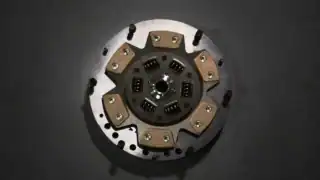
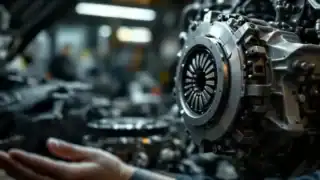
Once the hydraulic circuit is confirmed or repaired, we remove the gearbox to access the clutch assembly. Our inspection covers the clutch disc (the friction plate), the pressure plate, the release bearing (also called a thrust bearing), and the flywheel surface. On many C-Class, E-Class, and A-Class models with dual-mass flywheels, the flywheel itself may need replacing alongside the clutch kit. Dual-mass flywheels wear with the clutch and attempting to fit a new clutch to a worn dual-mass flywheel is a false economy that leads to vibration and noise.
We use OEM-specification or genuine-equivalent parts for Mercedes-Benz repairs, which means the correct torque specifications, compatible friction materials, and appropriate bearing grades for the model. Aftermarket parts that don’t meet Mercedes specifications can cause premature wear and, in some cases, vibration through the drivetrain.
What Affects the Cost and Time for Clutch Work on a Mercedes?
Clutch repair on a Mercedes-Benz is a labour-intensive job regardless of the model, because accessing the clutch means removing the gearbox. The main variables that affect the final scope of the job are:
- Whether the dual-mass flywheel needs replacement (this is common on higher-kilometre vehicles)
- The condition of the concentric slave cylinder
- Whether any hydraulic line or master cylinder work is required
- The specific model, since all-wheel-drive variants and AMG models carry more complexity
- Parts availability for your specific variant
We’ll give you a clear assessment of what needs doing before work begins. No surprises added halfway through the job. Parts sourcing is handled through the workshop, so you’re not chasing parts yourself or waiting on components from somewhere else.
Getting Your Mercedes Clutch Repaired in Gatton
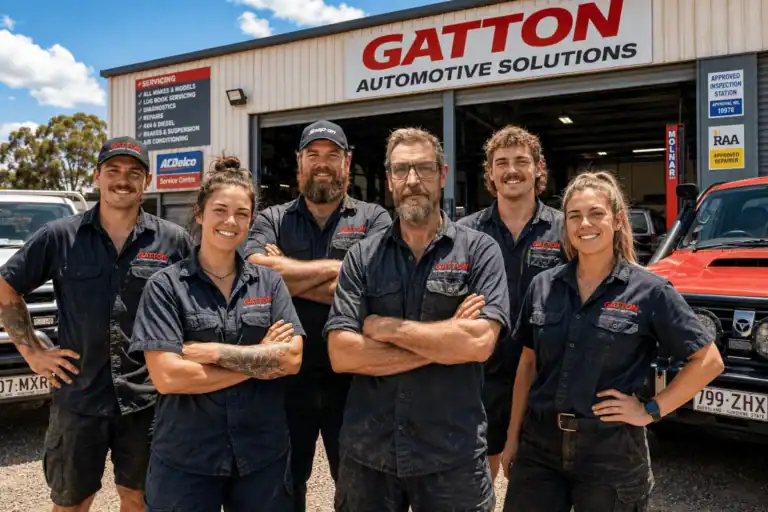
Driving to Ipswich or Toowoomba for mechanical work on a Mercedes adds time, cost, and inconvenience that most Lockyer Valley drivers would rather avoid. Gatton Automotive Solutions handles everything in-house, from the diagnosis through to the completed repair. We work on cars, 4WDs, utes, and commercial vehicles, and we carry that same practical, no-fuss approach to every job regardless of the badge on the grille.
Our workshop has earned five-star reviews from local drivers, and that reputation is built on straightforward advice and honest pricing. We don’t recommend work that isn’t needed, and we explain what we find before we ask you to make a decision. As Mercedes clutch specialists serving the Gatton region, we understand what these vehicles need and won’t cut corners on parts or process.
If your Mercedes is showing any of the symptoms above, Book Your Free Inspection online or Call Us Now and we’ll get it looked at right here in Gatton.