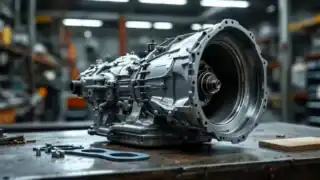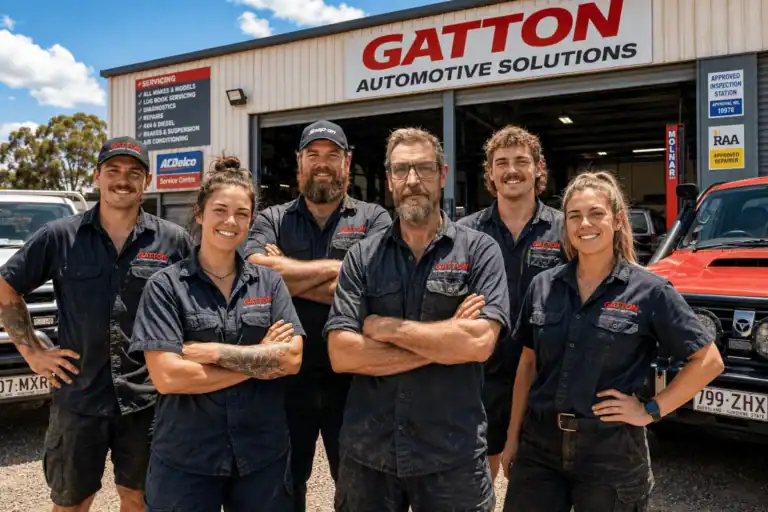
Your Honda’s transmission is one of the most complex and costly components in the vehicle, and when it starts playing up, getting the right diagnosis early makes a real difference. Honda transmission repair covers everything from fluid and filter services through to full gearbox rebuilds, and the range of symptoms that point to a transmission problem can be surprisingly easy to miss at first. At Gatton Automotive Solutions, we work on Hondas regularly, and we understand that the last thing a Lockyer Valley driver wants is to lose their car to a transmission failure that could have been caught sooner.
Warning Signs Your Honda May Have a Transmission Problem
Honda’s automatic transmissions, particularly the five-speed units found across the Accord, CR-V, and Odyssey models built through the 2000s and early 2010s, have a well-documented history of specific failure patterns. If you drive one of these models, it pays to know the signs. But transmission issues affect newer Hondas too, and the symptoms are worth knowing regardless of what you drive.
- Slipping between gears – the engine revs climb but the car doesn’t accelerate as expected
- Delayed engagement – a pause or shudder when you shift from Park into Drive or Reverse
- Rough or harsh gear changes – clunking, jerking, or banging during gear transitions
- Shuddering at highway speed – a vibration or shake, particularly in third gear on older Accord and Odyssey automatics
- Transmission warning light or D4 light flashing – Honda uses this indicator to flag a detected fault in the transmission system
- Fluid leaks – pink or reddish fluid under the car, which is transmission fluid
- Unusual smells – a burnt smell after driving, often from overheated or degraded transmission fluid
A flashing D4 or D light on a Honda dashboard is not something to ignore. It means the transmission control module has logged a fault code, and the system needs to be scanned before the root cause can be identified. Driving on with a flashing indicator often leads to more expensive damage down the track.
What Does Honda Transmission Repair Actually Involve?
Not every transmission complaint means a full rebuild. The process we follow starts with a proper diagnosis rather than jumping straight to parts replacement. We scan the transmission control module for fault codes, check the fluid condition and level, and road test the vehicle to replicate the symptoms you’ve described. From there, the picture becomes much clearer.
Honda automatic transmissions are sensitive to fluid condition. The factory-spec fluid Honda uses, known as Honda ATF (Automatic Transmission Fluid), is a specific formulation, and using a generic substitute is a common cause of shifting problems in Hondas that have been serviced elsewhere. If your Honda has had non-OEM-spec fluid put through it at some point, a proper flush and refill with the correct fluid sometimes resolves shifting complaints without any further work. That’s always the most cost-effective starting point where applicable.
Where mechanical repair is needed, we work through the transmission methodically, whether that’s replacing a solenoid (a small valve that controls fluid flow within the gearbox), addressing a worn torque converter, or carrying out a full transmission overhaul. We source parts to OEM specification where possible, so that what goes back into your Honda is matched to the original design tolerances.
Honda-Specific Transmission Issues We See Regularly
The 2003 to 2007 Accord V6 and the same-era Odyssey are the most common Hondas we see with automatic transmission concerns in this area, though CR-V and Jazz models also present with fluid-related shifting issues. The third-gear shudder in older Accords and Odysseys is a known characteristic tied to torque converter clutch wear, and Honda issued specific guidance on fluid changes to address early-stage versions of this problem. Our team is familiar with these patterns and how to approach them correctly rather than treating every Honda gearbox fault as a generic automatic transmission job.
What Affects the Cost and Timeframe of Honda Transmission Repair in Gatton?
Transmission work sits at a wide range of complexity, and so does the time and cost involved. A fluid service is straightforward. Solenoid replacement is more involved but still well within the scope of a day’s work in most cases. A full transmission rebuild or replacement takes longer and involves more parts. Several factors affect where any given job falls:
- Whether the fault is fluid-related, electrical, or internal mechanical
- The age and model of your Honda and parts availability
- Whether OEM-spec parts are sourced or quality aftermarket equivalents are used
- The severity of any wear or damage found during the initial inspection
We’ll always give you a clear picture of what’s needed and what it’s likely to involve before any work begins. No surprises, no unnecessary extras added on.
Why Gatton Drivers Bring Their Honda to Us
Gatton Automotive Solutions is a full-service workshop handling everything from everyday passenger cars and 4WDs through to trucks, heavy equipment, and agricultural machinery, all in one place. There’s no need to drive to Ipswich or Toowoomba for specialist work when it’s available locally. We handle parts sourcing in-house, which saves time and keeps the job moving. Our five-star rated reviews reflect the straightforward approach we take: tell you what’s wrong, tell you what it’ll take to fix it, and do the work properly.
If your Honda is showing any of the symptoms above, or you just want a transmission inspection before a long trip or a second-hand purchase, Call Us Now or Book Your Free Inspection online. We’re here in Gatton and ready to help.