Land Rover Transmission Repair is one of those jobs where catching a problem early makes a real difference to what you’re up for. Whether you’re running a Defender across farm tracks west of Gatton, commuting in a Discovery, or putting a Range Rover through its paces on the highway, the transmission is doing constant, heavy work. When it starts showing signs of trouble, the gap between a fluid service and a full rebuild can close quickly if the vehicle keeps working through the problem.
Signs Your Land Rover’s Transmission Needs Attention
Land Rover’s automatic gearboxes are generally well-engineered, but they do have known sensitivities, particularly around fluid condition, solenoid wear, and the torque converter. Owners of the ZF 8HP series fitted to newer Range Rovers and Discoverys often notice sluggish or hesitant shifts before anything more serious develops. Older models with the five-speed or six-speed automatics can develop shudder on take-off or late engagement into first gear.
Here are the symptoms worth paying attention to:
- Delayed engagement when shifting from park or neutral into drive or reverse, especially on a cold start
- Harsh or jerky gear changes that feel sudden or clunky rather than smooth
- Slipping between gears where the engine revs rise without a corresponding increase in speed
- Shudder or vibration at low speeds, often felt around 60-80 km/h on cruise
- Transmission warning light appearing on the dash, sometimes alongside a gearbox fault message
- Fluid leaks visible under the vehicle, particularly reddish fluid near the centre of the car
- Overheating indicated by a transmission temperature warning, which Land Rovers will flag through the instrument cluster
If you’re noticing any of these, it’s worth having the gearbox inspected before the vehicle goes further. Land Rovers will often enter a limp mode, restricting the gearbox to a single gear to prevent further damage. That’s the transmission protecting itself. It’s not a fix.
How We Approach Land Rover Gearbox Diagnostics and Repair
Our process starts with a proper read of the vehicle’s fault codes using diagnostic equipment compatible with Land Rover’s systems. Land Rover and Range Rover models store detailed transmission data in the TCM (transmission control module), and reading those codes correctly is half the job. Generic scan tools often miss manufacturer-specific fault codes that are critical to an accurate diagnosis.
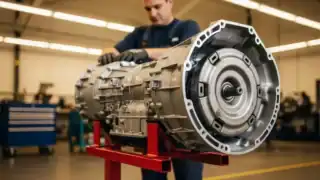
From there, we carry out a physical inspection covering fluid condition and level, the transmission pan for debris or metal contamination, solenoid operation, and the condition of the torque converter. We’ll also road test the vehicle to observe shift behaviour under real load conditions, because some faults only appear once the transmission reaches operating temperature.
Depending on findings, repairs might include a transmission fluid and filter service, solenoid replacement, a valve body recondition, torque converter replacement, or in more involved cases, a full transmission rebuild or exchange unit. We’ll explain clearly what we’ve found and what the options are before any work is authorised.
Parts and Fluid Specifications for Land Rover Transmissions
Land Rover specifies particular ATF fluids for their transmissions, and using the wrong fluid type is one of the more common causes of premature wear in ZF and GM-based units. We source parts and fluids to OEM specification or genuine-equivalent quality, and we’re transparent about what we’re using. If a rebuild requires friction plates, solenoid kits, or a valve body, we’ll source components that meet Land Rover’s original engineering tolerances rather than cutting corners on the parts that matter most.
What Affects the Cost and Time of Transmission Repairs?
Transmission work varies more than most jobs in terms of both cost and time, and it’s honest to say that upfront. A fluid service is straightforward. A valve body recondition or full rebuild is considerably more involved. The main factors are the severity of the fault, how far it has progressed, and whether parts are available locally or need to be sourced.
Land Rover parts can require more lead time than common domestic vehicles, particularly for older Defender and Discovery models. We handle parts sourcing through the workshop, which means we’re making those calls and following up rather than leaving you to chase suppliers yourself. On simpler faults, we can often complete work while you wait. More complex repairs will need the vehicle left with us, and we’ll give you a realistic timeframe once we know what we’re dealing with.
Why Lockyer Valley Land Rover Owners Choose Gatton Automotive Solutions
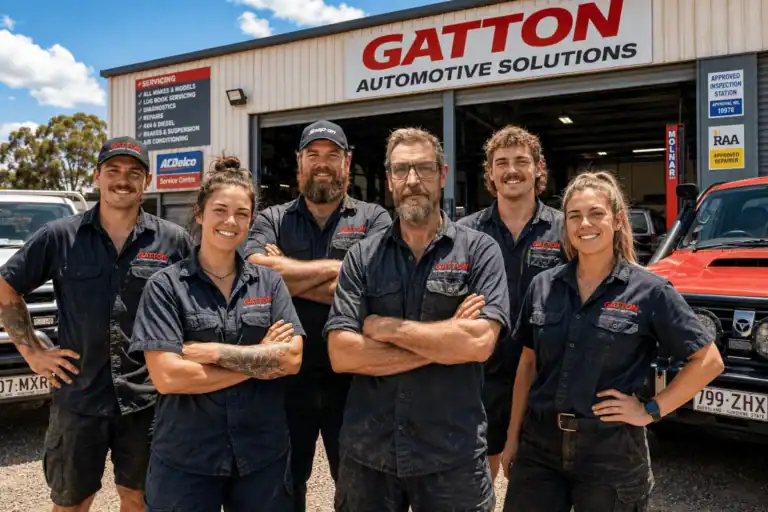
Gatton Automotive Solutions handles everything from everyday cars and utes to heavy vehicles, farm equipment, and 4WDs, all under one roof. For Land Rover owners in Gatton and across the Lockyer Valley, that means you’re not looking at an 80-kilometre round trip to Ipswich or Toowoomba every time something needs attention. We do mechanical repairs, diagnostics, tyres, suspension, roadworthy certificates, and smash repairs in-house, so if a transmission inspection turns up something else that needs looking at, we can address it without sending you somewhere else.
With five-star reviews from local customers, we’ve built our reputation by giving people straight answers and doing the work properly. No upselling, no unnecessary jobs added to the invoice.
If your Land Rover is shifting roughly, showing a gearbox warning, or just doesn’t feel right through the gears, Call Us Now or Book Your Free Inspection online. We’re here in Gatton, and we’ll give you a clear picture of what’s going on before any work begins.