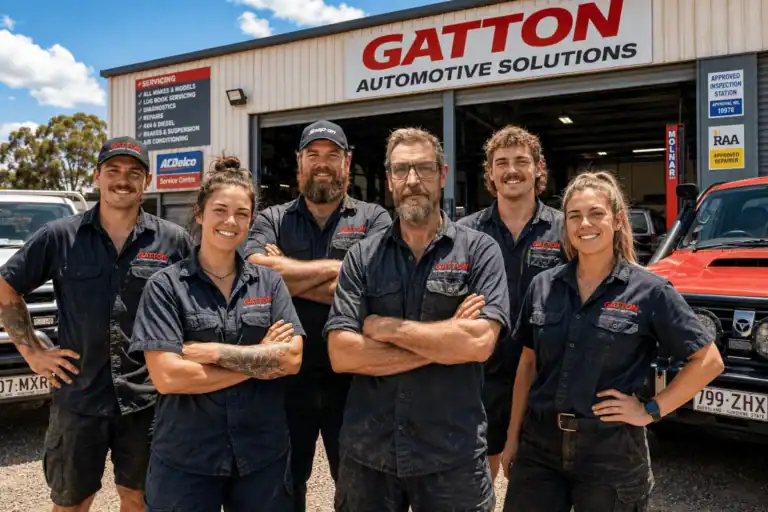
A transmission problem doesn’t announce itself politely. For many Nissan owners, it starts as something small — a slight hesitation when pulling away from the lights, a shudder on the highway, or a gear change that feels a little rougher than it used to. Nissan transmission repair is one of the more involved jobs in automotive work, but catching problems early almost always means less damage and lower costs. At Gatton Automotive Solutions, we work on Nissan vehicles regularly, and we know the transmission quirks that come with specific models and generations.
Common Transmission Problems in Nissan Vehicles
Nissan has used a wide range of transmission types across its lineup over the years, including conventional automatic gearboxes, manual transmissions, and the continuously variable transmission – better known as the CVT – which has featured heavily in models like the X-Trail, Qashqai, Navara, Pathfinder, and Pulsar. Each type has its own failure patterns, and the CVT in particular has a reputation for specific issues that Nissan owners in Gatton and the wider Lockyer Valley would do well to understand.
The most common signs that something isn’t right include:
- Delayed engagement – the car hesitates before moving when you shift from Park to Drive
- Shuddering or shaking at low speeds or during light acceleration, which is a known CVT symptom in several Nissan models
- Slipping gears – the engine revs climb but the car doesn’t accelerate as expected
- Harsh or jerky gear changes in automatic models
- Whining, humming, or clunking noises that change with speed or load
- Warning lights, including the transmission temperature light or a general fault code appearing on the dashboard
- Overheating, which in Nissan CVTs can trigger a limp mode to prevent further damage
If you’re noticing any of these, don’t put it off. Transmission faults tend to progress. A fluid issue caught today is a far simpler repair than a failed valve body or worn internal components down the track.
How We Diagnose and Repair Nissan Transmissions in Gatton
We start with a scan tool diagnostic to pull fault codes from the transmission control module. This gives us a starting point, but codes alone don’t tell the whole story – a fault code points us toward a system, not always a specific component. From there, we do a thorough inspection: checking the fluid condition and level, looking at external wiring and connectors for damage or corrosion, and assessing whether the issue is likely mechanical, electronic, or fluid-related.
For Nissan CVTs, we pay close attention to CVT fluid condition. Nissan specifies its own CVT fluid – NS-2, NS-3, or the relevant current specification depending on model year – and using the wrong fluid or running degraded fluid is one of the most common contributors to early CVT failure. A CVT fluid service at the right interval can extend the life of the transmission significantly. We source the correct fluid specification for your model rather than using a one-size-fits-all alternative.
Where a repair is needed, we work through the options honestly. That might mean a fluid flush and service, solenoid replacement, valve body repair, torque converter attention, or a more involved internal rebuild, depending on what the diagnosis reveals. We’ll explain what we’ve found and what we recommend before any work begins – no surprises.
What Affects the Cost and Timeframe of Transmission Work?
Transmission repairs vary more in cost than almost any other job on a vehicle. A fluid service is straightforward. An internal rebuild or replacement is a different matter entirely. The key variables are: how far the damage has progressed, whether the fault is electrical or mechanical, which model and year your Nissan is, and whether OEM-specification or quality aftermarket parts are appropriate for the repair.
Parts availability for Nissan models is generally reasonable, and we handle parts sourcing directly – you don’t need to chase parts yourself or wait on a third party. For some older or less common Nissan models, sourcing can take a little longer, and we’ll tell you upfront if that’s likely to be a factor. We’re not going to give you a timeframe we can’t back up.
CVT vs Conventional Automatic: Does It Change the Cost?
Generally speaking, CVT repairs can carry higher parts costs than conventional automatic gearbox work, partly because specialist fluid and components are required. That said, a CVT that has been properly maintained with regular fluid changes is far less likely to need expensive repairs in the first place. If your Nissan has a CVT and you’re not sure when it was last serviced, that’s a good place to start.
Why Gatton Drivers Choose Us for Gearbox and Transmission Work
We’re a full-service workshop in Gatton covering everything from everyday passenger cars and 4WDs through to utes, trucks, and heavy equipment. Nissan Navara utes are a common sight in the Lockyer Valley, and we see them regularly for both routine maintenance and more involved drivetrain repairs. You don’t need to drive to Ipswich or Toowoomba for quality transmission work – we have the equipment and experience to handle it locally.
Our approach is straightforward: we diagnose the problem properly, explain what we’ve found, and give you honest advice on what needs doing now versus what can wait. With five-star reviews from local customers, our reputation in the Gatton community speaks for itself. We’re not going to sell you a repair you don’t need.
If you’re dealing with gearbox trouble or just want to get your Nissan’s transmission checked before a small issue becomes a bigger one, Call Us Now or Book Your Free Inspection online. We’re here for Gatton and the surrounding Lockyer Valley, and we’ll get you sorted.