A Mitsubishi Transmission Repair isn’t something most drivers plan for, but a gearbox problem left too long rarely fixes itself. Whether you’re driving a Triton ute across the Lockyer Valley, a Pajero on the school run, or an Outlander clocking up the kilometres between Gatton and the coast, a transmission fault can sideline your vehicle fast. We work on Mitsubishi automatic and manual transmissions at our Gatton workshop, diagnosing the root cause before recommending any repair work so you’re not paying for guesswork.
Warning Signs Your Mitsubishi Gearbox Needs Attention
Transmission faults rarely announce themselves all at once. Most drivers notice something subtle first, then gradually get used to it — which is exactly how a manageable repair turns into a much bigger job. If your Mitsubishi is showing any of the following, it’s worth having it looked at sooner rather than later.
- Delayed or harsh engagement — a pause, clunk, or shudder when shifting from park into drive or reverse
- Slipping gears — the engine revs climb but the vehicle doesn’t accelerate as expected, or the transmission seems to hunt between gears
- Fluid leaks — reddish fluid under your Mitsubishi after it’s been parked is typically transmission fluid, not engine oil
- Shuddering under load — particularly noticeable in Tritons and Pajeros when towing or climbing grades, this can point to torque converter or clutch pack wear
- Warning lights — a transmission warning or check engine light on your Mitsubishi’s instrument panel should always be scanned for fault codes, not ignored
- Unusual noise in neutral — a whining or humming sound that changes with engine speed can indicate internal bearing or pump wear
Mitsubishi’s INVECS (Intelligent and Innovative Vehicle Engineering Control System) automatic transmissions, fitted across Outlander, ASX, Eclipse Cross, and earlier Magna models, are electronically managed. This means faults often trigger stored diagnostic codes before you feel anything at the wheel. A code scan is always part of how we start the diagnosis.
What a Mitsubishi Transmission Diagnosis and Repair Involves
We begin every transmission job with a scan of the vehicle’s ECU using diagnostic equipment that reads Mitsubishi-specific fault codes. Generic OBD2 scanners can miss manufacturer-level data, particularly on models with the INVECS-III or CVT (continuously variable transmission) units found in newer Outlander and ASX variants. Getting the right codes up front means we’re looking in the right place from the start.
From there, our process typically includes a road test to confirm the fault under real driving conditions, followed by a fluid condition check. Mitsubishi specifies its own transmission fluid grades for different models, and using the wrong fluid type is one of the most common causes of premature gearbox wear we see come through the workshop. If the fluid is dark, burnt, or contains fine metallic particles, that tells us a lot about what’s happening inside.
For deeper mechanical faults, we’ll inspect the transmission externally for leaks or damage, check solenoid function where accessible, and provide you with a clear assessment of what the repair involves before any work begins. We use OEM-specification or genuine-equivalent parts and fluids aligned to your specific Mitsubishi model and build year, not generic substitutes that may not meet the manufacturer’s tolerances.
What Affects the Cost and Time of a Transmission Repair in Gatton?
Transmission work spans a wide range, and it’s genuinely difficult to give a cost estimate without first knowing what’s wrong. A solenoid replacement or fluid service sits at one end of the scale. A full automatic transmission rebuild or replacement sits at the other. Several factors will influence where your job falls.
- Fault severity — early-stage issues caught before internal damage occurs are almost always cheaper to repair than faults left until components fail completely
- Model and year — Triton, Pajero, and Outlander transmissions differ substantially from each other; availability of parts for older Mitsubishi models can affect both cost and lead time
- OEM versus aftermarket parts — we’ll talk you through both options where they’re available so you can make an informed call
- Rebuild versus exchange unit — sometimes sourcing a quality reconditioned exchange transmission is the most practical and cost-effective path; we’ll give you an honest assessment of which approach suits your situation
Parts sourcing is handled by our workshop, so you’re not chasing suppliers yourself. We’ll let you know upfront if a part needs to be ordered and how that affects timing.
Why Choose Gatton Automotive Solutions for Your Mitsubishi Gearbox Work?
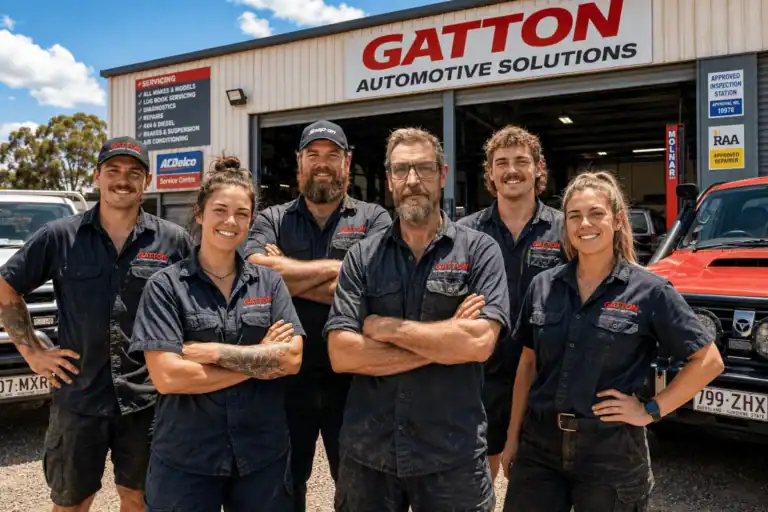
Gatton Automotive Solutions is a full-service workshop based right here in Gatton, which means you’re not driving 45 minutes to Ipswich or Toowoomba for a job we can handle locally. Our workshop covers everything from general mechanical repairs for everyday drivers through to heavy vehicle and equipment servicing, so the range and depth of experience in the team is genuine. For Mitsubishi owners in the Lockyer Valley, that means access to proper diagnostic tools, OEM-spec parts and fluids, and straight advice without upselling.
We’ve built our reputation in Gatton on telling people what they actually need, not what generates the biggest invoice. That matters especially with transmission work, where the difference between a fluid service and a full rebuild is significant. We’ll tell you clearly what we found, what it means, and what we recommend — and you decide from there. Our five-star reviews reflect the kind of honest, no-fuss service we aim to deliver on every job.
If your Mitsubishi is shifting rough, slipping, or carrying a warning light, Call Us Now or Book Your Free Inspection online and we’ll get it properly diagnosed here in Gatton.