Brake fluid is one of the most overlooked fluids in a European vehicle, yet it plays a direct role in how quickly your car stops. A European vehicles brake fluid change isn’t just routine maintenance, it’s a safety measure. Brake fluid is hygroscopic, meaning it absorbs moisture from the air over time. As water content builds up in the fluid, its boiling point drops, and under hard braking, that can cause the fluid to vapourise and your pedal to fade exactly when you need it most. For drivers in and around Gatton, keeping on top of this service is straightforward when you know what to look for.
Why Brake Fluid Degrades Faster in European Vehicles
European manufacturers, including brands like Volkswagen, BMW, Mercedes-Benz, Audi, and Peugeot, often specify tighter service tolerances than their Japanese or American counterparts. Many European OEM service schedules recommend a brake fluid change every two years regardless of kilometres travelled, because moisture ingress is time-dependent, not just mileage-dependent. Some models with condition-based service systems will even trigger a brake fluid reminder on the instrument cluster independently of the broader service interval.
European vehicles also frequently run higher-specification fluids, typically DOT 4 or DOT 4 Low Viscosity (LV) fluid rather than standard DOT 3. Using the wrong grade can compromise the performance of ABS modules, electronic stability control actuators, and brake-by-wire systems found on many modern European platforms. Getting the fluid specification right matters as much as the change itself.
Signs Your Brake Fluid Needs Attention
Most drivers won’t notice gradual fluid degradation until braking performance is already compromised. A few signs are worth paying attention to:
- A soft or spongy pedal feel that wasn’t there before, particularly noticeable in slow traffic or after downhill driving
- A brake warning light or service reminder on the dashboard, which some European vehicles display as a dedicated fluid or brake system alert
- Discolouration in the brake fluid reservoir, where fresh fluid is light golden and old, moisture-saturated fluid turns dark brown or near-black
- Reduced braking confidence at highway speed or on longer descents, which can indicate fluid near its boiling threshold
- The two-year mark has passed since your last brake fluid service, even if the car feels fine
If you’re noticing any of these, it’s worth having the system checked. For safety-critical issues like spongy pedal feel, don’t delay, book a free inspection and we’ll assess the system properly before recommending any work.
What Happens During a Brake Fluid Change at Our Gatton Workshop
We start by checking the existing fluid with a brake fluid moisture tester, which measures the water content percentage in the fluid. This gives a clear, objective reading rather than a guess based on colour alone. If the moisture level is above the acceptable threshold for your vehicle’s specification, we proceed with a full brake fluid flush.
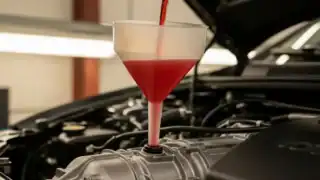
The flush itself involves evacuating the old fluid from the system and bleeding each brake calliper in the correct sequence, pushing fresh fluid through until the lines are clear of the old contaminated stock. On European vehicles with complex ABS and stability control systems, this process often requires careful attention to the hydraulic control unit to make sure no air is trapped in the ABS module. Some platforms benefit from a pressure bleed method over a manual bleed to get a consistent result through the entire circuit.
We match the replacement fluid to your vehicle’s OEM specification. If your car calls for DOT 4 LV fluid, that’s what goes in. We don’t substitute a lower-spec fluid because it’s cheaper or more convenient to stock.
What Affects the Cost and Time Involved
A brake fluid change is one of the more straightforward fluid services, but a few factors influence how long it takes and what it costs. Vehicles with larger brake systems, such as performance models or larger European SUVs, hold more fluid and take longer to flush properly. If the brake callipers show signs of corrosion or a bleeder screw is seized, that adds time to free them safely before bleeding can proceed. The grade of fluid specified for your vehicle also affects parts cost, as higher-spec DOT 4 LV fluids used in many current European models carry a small premium over standard DOT 4.
We don’t charge for diagnostics we don’t perform. If your fluid tests fine and doesn’t need changing, we’ll tell you that. Honest advice and straight pricing is how we work.
Servicing European Vehicles Locally, Without the Drive
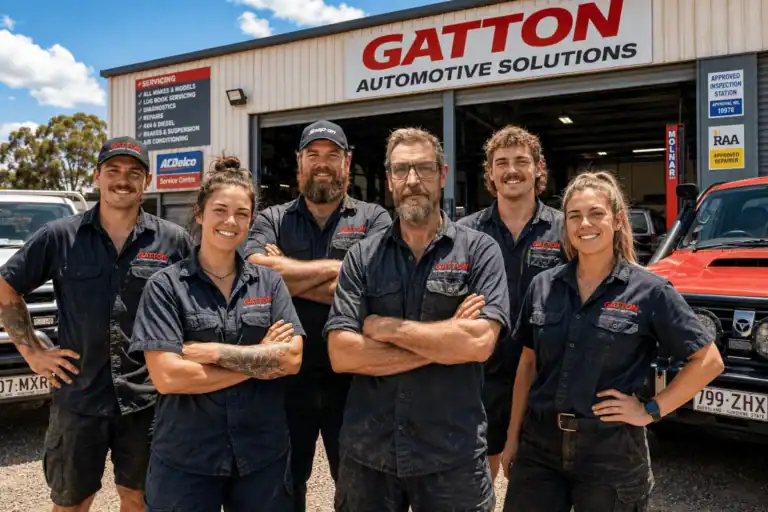
Gatton Automotive Solutions is a full-service workshop in Gatton covering everything from everyday passenger cars through to 4WDs, trucks, and heavy equipment. There’s no need to travel to Ipswich or Toowoomba for a brake fluid service on your European vehicle. We handle parts sourcing in-house, so we can match the correct fluid specification for your make and model without delays. Our team works across a wide range of European brands regularly, and we apply the same attention to service schedules and fluid specifications that your vehicle was engineered around.
We’re locally owned and operated, with five-star reviews from drivers across the Lockyer Valley who trust us to be straight with them. Whether it’s a straightforward brake fluid flush or a broader brake system inspection, we’ll give you a clear picture of what’s needed before any work starts.
Ready to get your European vehicle’s brake fluid checked? Book Your Free Inspection online or Call Us Now to talk through what your car needs. We’re here for Gatton and the surrounding region.