Brake fluid is one of the most overlooked fluids in any vehicle, yet it’s what transfers the force from your foot on the pedal to the actual stopping power at each wheel. A Toyota brake fluid change is a straightforward service, but skipping it has real consequences. Over time, brake fluid absorbs moisture from the air, lowering its boiling point and reducing its effectiveness under hard braking. For Toyota owners in Gatton and across the Lockyer Valley, keeping up with this service is a simple way to maintain safe, reliable stopping every time.
Why Brake Fluid Degrades and When Toyota Owners Should Change It
Toyota’s recommended service intervals vary by model and year, but most vehicles in the Corolla, Camry, HiLux, RAV4, LandCruiser, and Yaris range include brake fluid replacement as part of their scheduled maintenance, typically every two years regardless of kilometres. This interval exists because of hygroscopy, the technical term for a fluid’s tendency to absorb moisture from its surroundings. Once brake fluid takes on enough moisture, its boiling point drops significantly. Under sustained braking, such as descending a hill with a loaded tray or stopping repeatedly in heavy traffic, degraded fluid can begin to vaporise inside the brake lines, leading to a spongy or unpredictable pedal.
There are a few signs that a Toyota brake fluid change may be overdue:
- Spongy or soft brake pedal that doesn’t firm up the way it used to
- Brake pedal sinking lower before the vehicle slows
- Dark or discoloured fluid visible in the reservoir under the bonnet
- Brake warning light appearing on the dash, particularly if fluid level has dropped alongside contamination
- Longer stopping distances you can feel but can’t explain by tyre condition alone
If the fluid in your reservoir looks brown or murky rather than clear-to-light-yellow, it’s a reliable visual sign the fluid has aged beyond its useful life. Fresh brake fluid is nearly transparent.
What Happens During a Toyota Brake Fluid Change at Gatton Automotive Solutions
We start by inspecting the brake fluid reservoir to check the fluid’s current level and condition. On Toyota models, the reservoir cap often carries a DOT specification rating, typically DOT 3 or DOT 4, and we always use fluid that meets Toyota’s OEM specification for your specific model and year. Using the wrong fluid grade or a substandard product can cause rubber seal degradation inside the master cylinder and callipers, so this step matters.
From there, we perform a full brake fluid flush, removing the old fluid from the entire system rather than just topping up the reservoir. Topping up contaminated fluid is not a substitute for a proper flush. We bleed each calliper in the correct sequence, pushing fresh fluid through the lines until clean fluid runs through at every corner of the vehicle. On newer Toyota models with electronic stability control and ABS (anti-lock braking system) modules, we take care to follow the procedure that correctly purges fluid from those components as well, because these can trap old fluid if the bleed sequence is skipped or rushed.
We also take the opportunity to visually inspect brake lines for corrosion, check calliper condition, and look over brake pad and rotor wear while the wheels are accessible. If we spot anything that needs attention, we’ll let you know before doing any additional work.
What Affects the Cost and Time of a Brake Fluid Change
A brake fluid change is one of the more affordable items on a Toyota service schedule. A few variables can influence the time and cost. The specific DOT rating required for your model affects fluid pricing. Vehicles with more complex ABS or electronic brake-force distribution systems may take slightly longer to bleed correctly. If the brake bleed nipples are corroded from age, as is sometimes the case on older HiLux or LandCruiser models used in rural or agricultural conditions, freeing them without damage takes additional care.
We’ll give you a straight assessment of what’s involved for your specific vehicle before we start, with no hidden costs added later.
Why Lockyer Valley Toyota Owners Choose Gatton Automotive Solutions
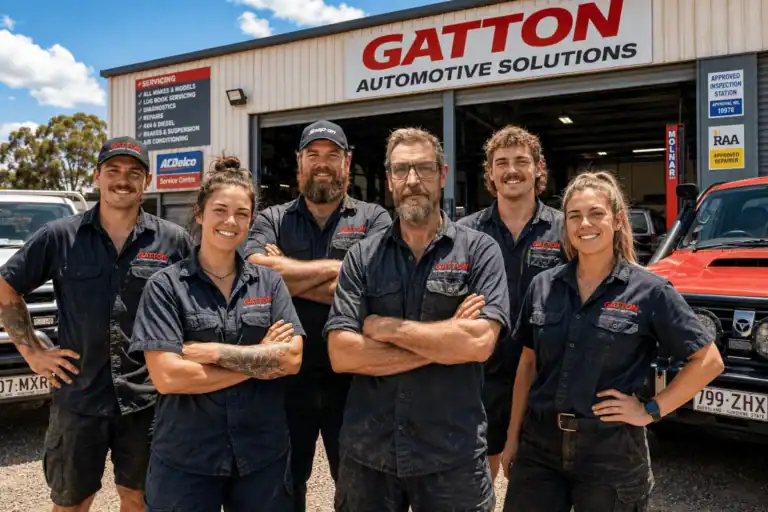
Gatton Automotive Solutions handles everything from everyday passenger cars to heavy vehicles and farm equipment, all under one roof in Gatton. There’s no need to drive to Ipswich or Toowoomba for a routine service your local workshop can handle just as well, and in many cases, faster. Our team works across all Toyota models, from the family Camry and daily Yaris through to HiLux work vehicles, Prado 4WDs, and commercial LandCruiser variants. Parts sourcing is handled by us, so you’re not chasing down components or waiting on back-orders.
We’re a locally owned workshop with five-star reviews from drivers across the Lockyer Valley, and our approach is simple: honest advice, fair pricing, and no work done that isn’t needed. If your Toyota’s brake fluid is fine and doesn’t need changing, we’ll tell you that too.
Fleet operators in the region are also welcome. Keeping a fleet’s brake systems in good order reduces risk and keeps vehicles on the road. Beyond brake fluid services, Gatton Automotive Solutions also offers roadworthy certificates, suspension upgrades, tyre supply and fitting, smash repairs, custom paintwork, and agricultural and farm equipment servicing.
Book a Toyota Brake Fluid Service in Gatton
If your Toyota is due for a brake fluid change, or you’re not sure when it was last done, get in touch today. Click Book Your Free Inspection to set up a time online, or Call Us Now to speak with someone at the workshop directly. We’re here to help Gatton drivers stay safe on the road.