Limited Time: Free Windscreen Wipers With Any Service. Subject To Availability.

Locally Owned & Operated
Honest Upfront Pricing
5★ Reviews
All Makes & Models

Verified 5★ Reviews

Highly Rated Honda Brake Fluid Change In Gatton

Brake fluid absorbs moisture over time, reducing braking performance. At Gatton Automotive Solutions, we flush and replace yours with Honda-spec fluid and inspect your full braking system right here in Gatton.

One-Stop Workshop

Honest Advice

5★ Reviews

Honda Brake Fluid Expert

Book Your Free Inspection

Tell us what you need and we'll get back to you with a clear quote.

Booking Form
  • Vehicle Details
  • Confirm Vehicle
  • Services
  • Contact Details
Honest Quotes
All Vehicle Types
Local & Reliable

Why Book With Us

Book Your Free Inspection
Drop Off Your Vehicle
We Get to Work
Collect Your Car

Brake fluid is one of those things that rarely gets a second thought until something goes wrong. A Honda brake fluid change is a straightforward service, but it plays a direct role in how safely your car stops. Over time, brake fluid absorbs moisture from the air, which lowers its boiling point and can cause the brakes to feel spongy or respond less sharply than they should. For Honda owners in Gatton and across the Lockyer Valley, keeping on top of this service is a practical way to protect both your brakes and the people in your car.

Why Brake Fluid Degrades in Honda Vehicles

Brake fluid is hygroscopic, meaning it naturally absorbs moisture through the brake lines and reservoir over time. This matters because Honda’s braking systems, like those in the Civic, CR-V, Jazz, HR-V, and Accord, use hydraulic pressure to convert your foot pressure into stopping force. As moisture builds up in the fluid, that pressure becomes less consistent. The boiling point of the fluid drops, and under hard braking or repeated stops, you risk a condition called brake fade, where the pedal feels soft or goes closer to the floor than normal.

Honda’s service documentation typically recommends replacing brake fluid every two years or at each major logbook service interval, regardless of how far the car has travelled. That time-based schedule exists because moisture contamination happens even when the car sits in the driveway. A quick check of your Honda’s service history will usually show whether this job is overdue.

Signs Your Honda’s Brake Fluid May Need Replacing

Unlike a warning light or a noise, degraded brake fluid often gives subtler signals. Some are easy to miss if you’re not looking for them.

  • Soft or spongy brake pedal that requires more pressure than usual to stop
  • Pedal travelling further toward the floor before the brakes engage
  • Visible discolouration in the reservoir, where fresh DOT fluid is nearly clear or pale yellow, and old fluid appears dark brown
  • Brake warning light illuminated on the dashboard, which can indicate low fluid level alongside other issues
  • Service due notification from your Honda’s maintenance minder system, particularly a code related to brake system checks

If the pedal feels unusual in any way, treat it as a safety concern and have the system inspected promptly. A soft pedal in particular can indicate more than just old fluid.

What Our Honda Brake Fluid Service Includes

We start by checking the current fluid in the reservoir. Fluid colour and condition alone can tell a lot, but we also assess the full hydraulic system before draining anything. On Honda models, the brake master cylinder and ABS modulator are both part of a connected system, so we check for leaks, corrosion, or damage at the reservoir, lines, and caliper bleed nipples before starting the flush.

Once we’re satisfied the system is in good shape, we drain the old fluid and flush the brake lines completely. We use fluid that meets the specification Honda calls for, which is typically DOT 3 or DOT 4 depending on the model and year. Using the correct specification matters because mixing incompatible fluid types or using a lower-rated product can affect the integrity of seals in Honda’s ABS and brake components. We do not top up degraded fluid, we replace it.

After the flush, we bleed each caliper in the correct sequence to remove any air from the lines, then verify pedal feel and firmness before the car leaves our workshop. On Honda models with electronic parking brakes or integrated ABS units, the bleed procedure may require scan tool support to cycle the ABS pump correctly. We carry the equipment needed to handle this properly.

What Affects the Time and Cost of a Brake Fluid Change?

A standard Honda brake fluid change is one of the quicker brake services we carry out. That said, a few variables can affect how straightforward the job is. Older vehicles, or those with high kilometres and a history of infrequent servicing, may have corroded bleed nipples that need careful attention to avoid damage. If leaks are found during our initial inspection, those need to be addressed before the flush makes sense.

The choice between OEM-specification fluid and a quality aftermarket equivalent with the same DOT rating can affect parts cost. We’ll talk you through what’s available and what’s appropriate for your Honda before we start. There are no surprises after the fact.

Honda Brake Fluid Service in Gatton

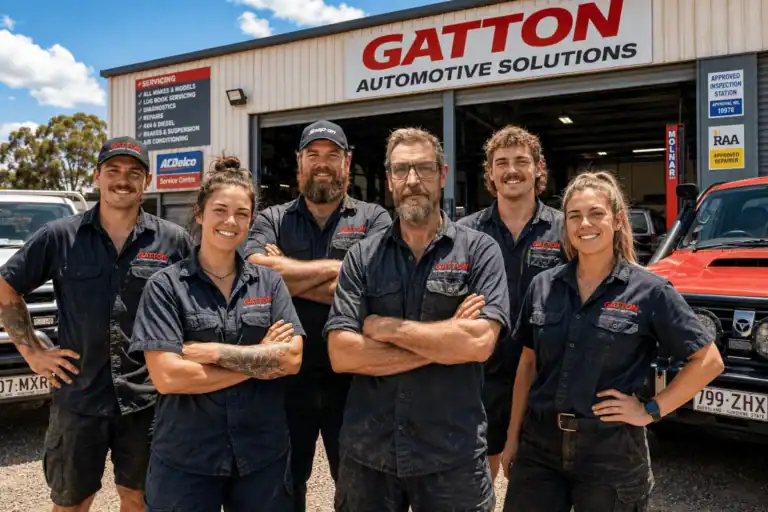
Gatton Automotive Solutions looks after all vehicle types from our workshop in Gatton, covering everything from everyday Hondas to utes, 4WDs, trucks, and farm equipment. For drivers in Gatton, Laidley, Forest Hill, Helidon, and the broader Lockyer Valley, it means you don’t need to drive 45 minutes to Ipswich or Toowoomba for brake work that we can handle here, properly, with honest advice and straight pricing. Our team won’t recommend work that isn’t needed, and we’ll always explain what we found and why it matters before touching your car.

We hold five-star reviews, which reflects the way we approach every job, whether it’s a fluid change or a full mechanical rebuild. If your Honda is due for a brake fluid change or the pedal has been feeling off, Call Us Now or Book Your Free Inspection online and we’ll take a look.

Other Services

Whatever your needs we have you covered, see some similar services below or click "See All Services" to explore our full service offering.

Your Local Workshop for Every Vehicle

Gatton Automotive Solutions is the one-stop shop for cars, 4WDs, trucks, and heavy equipment. Honest advice and fair pricing, right here in Gatton.

Honest Pricing, No Surprises

We tell you what’s needed and what it costs before we start. No upselling, no pressure.

Everything Under One Roof

Bring your car in and we’ll inspect it, explain what we find, and quote you upfront.

Honda-Spec Fluid and Parts

OEM-equivalent Honda brake fluid keeps your system performing as designed.

How Honda Brake Fluid Change Works

From booking to collection, here's how we handle your Honda's brake fluid replacement with precision and care.

Step 1

Book Your Free Inspection

Call Us Now or book your free inspection to get your Honda's brake fluid assessed and serviced.

Step 2

Brake Fluid System Check

We test your Honda's fluid condition, inspect brake lines and components, and confirm replacement is needed.

Step 3

Fluid Flush and Replacement

We drain old fluid, flush the system thoroughly, and refill with Honda-specification brake fluid to safety standards.

Step 4

Safety Test and Handover

We verify brake function with a test drive, document the work, and return your Honda ready to stop safely.

Five-Star Rated

Verified 5★ Reviews

Quality Parts From Trusted Suppliers

We use genuine and quality aftermarket parts from reputable suppliers. You get reliable components backed by proper warranties.

Book Your Free Inspection

Tell us what you need and we'll get back to you with a clear quote.

Booking Form
  • Vehicle Details
  • Confirm Vehicle
  • Services
  • Contact Details
Honest Quotes
All Vehicle Types
Local & Reliable

Why Book With Us

Book Your Free Inspection
Drop Off Your Vehicle
We Get to Work
Collect Your Car

Frequently Asked Questions

Browse answers to common questions about our services. Can't find what you're after? Give us a call and we'll help.

Honda’s general recommendation is to replace brake fluid every two years or as specified in your owner’s manual, whichever comes first. Brake fluid is hygroscopic, meaning it absorbs moisture from the air over time. As moisture content rises, the fluid’s boiling point drops, which can reduce braking performance under hard use. Some Honda models, particularly those with Honda Sensing systems, may flag a reminder through the Maintenance Minder system. Checking the fluid condition at each service is a simple way to stay on top of it.

Degraded brake fluid with high moisture content can cause the brake pedal to feel soft or spongy, especially during repeated or heavy braking. In severe cases, moisture-contaminated fluid can boil inside the brake lines, creating vapour bubbles that compress instead of transmitting force, which significantly reduces stopping power. Over time, moisture also accelerates corrosion inside the brake system, including ABS modulators and callipers. These are safety-critical components, so if you notice any change in pedal feel, get it checked promptly.

Under ACCC guidance, Australian consumer law generally supports your right to have your vehicle serviced by a qualified independent mechanic without voiding the manufacturer warranty, provided the work is carried out to the manufacturer’s specifications and documented correctly. This is general information, not legal advice, so we recommend checking your specific warranty terms if you have concerns. We record all fluid specifications and service details so your logbook stays properly maintained.

We start by testing the current fluid for moisture content using a calibrated brake fluid tester. The old fluid is then fully flushed from the system, including the master cylinder reservoir, brake lines, and each calliper. Fresh fluid meeting Honda’s specified standard, typically Honda Heavy Duty Brake Fluid or an approved equivalent, is bled through the system until clean fluid runs at every wheel. We check for any leaks, inspect brake components while we are in there, and top the reservoir to the correct level before we are done.

A brake fluid flush typically takes between 45 minutes and an hour and a half depending on the vehicle and whether any complications arise. For most Honda models, it is a straightforward job we can complete while you wait. If you are in Gatton and need to stay local, come in and we will get it sorted without needing to leave your car all day.

Yes. Most Honda models require DOT 3 brake fluid, though some newer models specify DOT 4. Honda also produces its own branded fluid formulated to suit their braking systems. Using the wrong specification can affect performance and may cause seal degradation over time. We check the correct specification for your exact Honda model before we begin, so the right fluid goes in every time. This is particularly important for models equipped with Honda’s VSA stability control or Brembo-supplied brake components on performance variants.

The most common signs are a soft or spongy brake pedal, discolouration of the fluid in the reservoir (fresh fluid is clear to pale yellow; old fluid turns dark brown), or a dashboard warning light on Honda models with a Maintenance Minder system. Some drivers notice reduced confidence in braking during long downhill stretches or repeated stops. Fluid that has been in the system for more than two years is worth testing regardless of appearance, since moisture content is not always visible to the naked eye.

Yes, we can record the service and stamp your logbook. Keeping your logbook up to date is worthwhile for warranty purposes, resale value, and having a clear record of what has been done to your vehicle. We note the fluid specification used, the date, and the odometer reading. If your Honda is still under a new car warranty, we recommend reviewing your warranty documentation or contacting Honda Australia to confirm their specific requirements, as warranty terms can vary between models and purchase dates.

The main factors are the type of fluid your Honda requires, the size of the braking system, and the time involved in a full bleed. Vehicles with more complex systems, such as those with integrated ABS or electronic brake distribution, can take longer to bleed correctly. The age of the existing fluid and any additional inspection work can also play a role. We are happy to give you a clear quote before any work begins so there are no surprises.

Dark brake fluid is a sign it has absorbed moisture and contaminants over time, which affects its performance. While discoloured fluid does not mean your brakes will fail immediately, it does indicate the fluid should be changed soon. Continuing to drive with heavily degraded fluid, particularly in demanding conditions like towing or hilly terrain, increases the risk of reduced braking response. Having it tested and replaced as soon as practical is the sensible approach rather than waiting for a problem to develop.

The most reliable way is to test it with a calibrated moisture tester, which measures the percentage of water absorbed into the fluid. Visual inspection alone is not always enough, as fluid can look acceptable but still have elevated moisture levels. At Gatton Automotive Solutions, we test fluid moisture as part of our brake fluid service so you get an accurate reading rather than a guess. If the moisture content is above the acceptable threshold, a flush is recommended regardless of when the fluid was last changed.

Honda’s service intervals for brake fluid are broadly similar to other Japanese manufacturers, generally recommending a change every two years. However, Honda’s Maintenance Minder system, fitted to most models from the mid-2000s onwards, can prompt a service based on actual driving conditions rather than fixed intervals. This means some Honda owners may be prompted earlier than the standard two-year mark. Checking your specific model’s owner’s manual is the best starting point, and we can advise based on your vehicle’s service history.

Continue to site