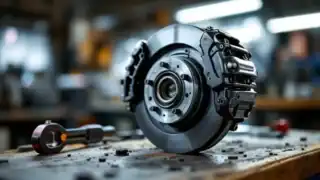
Brakes are the single most safety-critical system on any vehicle, and Japanese Vehicles brake repair is one of the most common jobs we see at our Gatton workshop. Toyota, Mazda, Honda, Subaru, Nissan, and Mitsubishi vehicles make up a huge share of the cars, utes, and 4WDs on Lockyer Valley roads, and while these vehicles are known for their reliability, brake components still wear with use and need professional attention. Catching a brake problem early is always cheaper and safer than waiting until something fails.
Warning Signs Your Japanese Vehicle’s Brakes Need Attention
Brake wear doesn’t announce itself with a big warning, but there are clear signs worth knowing. Japanese vehicles typically use wear indicators built into the brake pads that produce a high-pitched squeal when the friction material gets low. That sound is a deliberate signal, not a coincidence. If you hear it, the pads are telling you they’re nearly done.
Other symptoms worth acting on include:
- Grinding or metal-on-metal noise when braking, which usually means the pads have worn through completely and the caliper or backing plate is contacting the rotor
- Pulling to one side under braking, which can indicate a seized caliper, uneven pad wear, or a brake hose issue
- A soft or spongy brake pedal that travels further than normal before the brakes engage, often pointing to air in the brake lines or a problem with the master cylinder
- Vibration or pulsing through the pedal, commonly caused by rotor warping, which is a known issue on some Subaru and Mazda models after repeated heavy braking
- The brake warning light coming on while driving, which on most Toyota and Honda models can signal low brake fluid or a sensor fault worth investigating
If you’re noticing any of these symptoms, driving to Gatton and getting the brakes inspected promptly is a much better outcome than waiting to see if it gets worse.
How We Inspect and Repair Brakes on Japanese Vehicles in Gatton
Japanese makes follow consistent brake architectures, but there are model-specific details worth knowing. Toyota LandCruisers and HiLux utes, for example, often run larger rear drum setups on older models and frequently see rear brake shoe wear accelerated by towing or off-road use. Subaru models with all-wheel drive require careful attention to even brake wear across all four corners because uneven braking can affect the AWD system over time. Mazda’s brake caliper bolts are torqued to specific specifications, and Honda’s electronic parking brake, fitted to many newer Accord and CR-V models, requires a scan tool to retract the rear calipers safely during a pad change.
Our process starts with a visual inspection of the full brake system before any work is quoted or started. We check pad thickness, rotor condition and thickness (minimum specs vary by make and model), caliper movement and sealing, brake fluid condition, and brake lines for signs of corrosion or damage. On vehicles with ABS, we can check for fault codes that might indicate a wheel speed sensor issue affecting brake performance.
From there, we’ll give you a clear rundown of what we found, what actually needs replacing, and what can wait. No padding the job. If only the front pads need doing, that’s what we’ll tell you.
What Affects the Cost and Time Involved
A straightforward front brake pad replacement on a Toyota Corolla or Mazda 3 is a relatively quick job. More involved repairs, like replacing rotors on a LandCruiser, rebuilding a seized caliper on an older Nissan Patrol, or servicing rear drum brakes on a HiLux, naturally take longer and involve more parts.
Parts availability is rarely an issue for Japanese vehicles. The brands are widely sold in Australia, and quality OEM-equivalent pads and rotors are generally well-stocked. We source parts to match the correct specifications for your make and model, which matters for brake feel, pad bite, and rotor longevity. If you drive a vehicle used for towing or heavy work, we can discuss upgraded pad compounds suited to higher heat loads.
Cost depends on the extent of wear, which components need replacing, and whether OEM or quality aftermarket parts are used. We’re straightforward about options and pricing before any work begins.
Why Lockyer Valley Drivers Trust Gatton Automotive Solutions With Their Japanese Vehicles
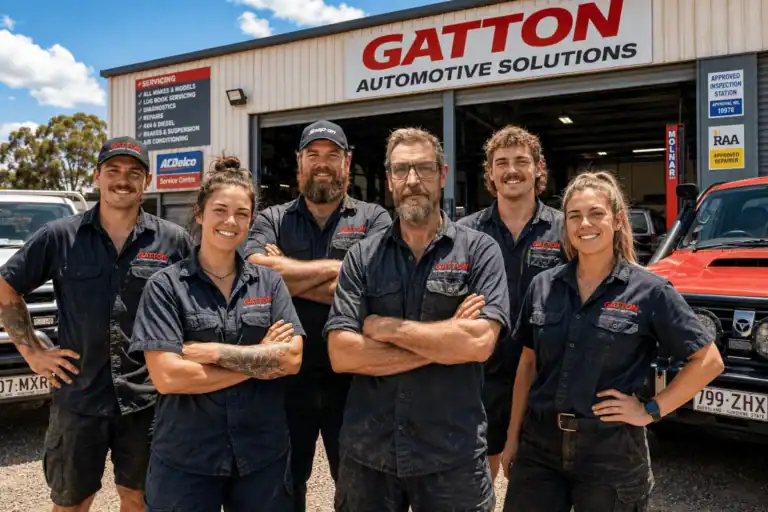
Gatton Automotive Solutions is a full-service workshop handling everything from everyday passenger cars to 4WDs, utes, trucks, and heavy equipment, all under one roof. For Japanese vehicle owners in Gatton and across the Lockyer Valley, that means you’re not driving to Ipswich or Toowoomba for a brake inspection when the same quality work is available locally.
We issue roadworthy certificates on-site, handle tyre supply and fitting, and offer fast while-you-wait servicing for jobs that suit that format. Our team works on Japanese makes every day, so we’re not guessing at part numbers or service procedures. We also hold five-star reviews from local drivers, which reflects the way we prefer to do things: honest assessment, fair pricing, no unnecessary work.
Whether you’re in Gatton, Laidley, Plainland, or further out across the valley, we’re the closest full-service workshop that can handle your brakes properly from inspection through to repair.
Call Us Now or Book Your Free Inspection online to get your brakes checked by a team that works on Japanese vehicles day in, day out.