Limited Time: Free Windscreen Wipers With Any Service. Subject To Availability.

Locally Owned & Operated
Honest Upfront Pricing
5★ Reviews
All Makes & Models

Verified 5★ Reviews

Trusted Volkswagen Cooling System Repair In Gatton

We diagnose and repair Volkswagen cooling systems in Gatton, from radiator leaks to thermostat failures. Book Your Free Inspection to avoid overheating and engine damage.

One-Stop Workshop

Honest Advice

5★ Reviews

VW Cooling Expertise

Book Your Free Inspection

Tell us what you need and we'll get back to you with a clear quote.

Booking Form
  • Vehicle Details
  • Confirm Vehicle
  • Services
  • Contact Details
Honest Quotes
All Vehicle Types
Local & Reliable

Why Book With Us

Book Your Free Inspection
Drop Off Your Vehicle
We Get to Work
Collect Your Car

A Volkswagen cooling system repair isn’t just about topping up water and hoping for the best. Volkswagen engines are engineered to tight thermal tolerances, and when the cooling system isn’t working properly, temperatures climb fast. Drivers around Gatton and the broader Lockyer Valley know that summer heat and long runs out to Ipswich or Toowoomba put real demand on a cooling system — and a VW that’s running hot is a VW that needs attention now, not next week.

Signs Your Volkswagen Cooling System Needs Attention

Cooling problems don’t always announce themselves with a dramatic cloud of steam. Often, the early warning signs are subtle, and that’s what makes them easy to miss until the damage is done.

  • Temperature gauge climbing higher than normal – especially in traffic or on a long run up the Warrego Highway
  • Low coolant warning light on the dash, or a reservoir that keeps needing a top-up
  • Sweet smell from the engine bay – that’s usually coolant burning off where it shouldn’t be
  • White smoke from the exhaust – a sign coolant may be entering the combustion chamber
  • Heater blowing cold air when it should be warm, often caused by air pockets or low coolant flow
  • Visible leaks under the vehicle after parking, or staining around hoses, the radiator, or the water pump

On many Volkswagen models – particularly the EA888 turbocharged four-cylinder engines found in the Golf, Jetta, Tiguan, and Passat – the water pump is driven electronically rather than mechanically. This is a known point of failure. When the electric water pump starts to fail, it doesn’t always trigger an obvious warning; coolant flow drops gradually, and the engine starts running warmer than it should. By the time the temperature gauge reacts, some damage may already be underway.

What We Check and Fix

Our approach to Volkswagen cooling system work starts with a proper diagnosis. We don’t replace parts at random hoping to hit the right one. Before anything comes off the car, we run a pressure test on the cooling system to identify any external leaks, and we use a combustion gas test to check whether there’s any sign of a head gasket issue allowing exhaust gases into the coolant circuit.

From there, we inspect each component in turn:

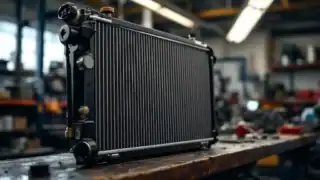
  • Radiator condition, including fins, tanks, and any signs of internal blockage or corrosion
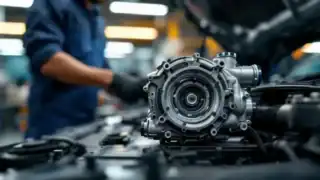
  • Water pump operation – for VW models with an electric pump, we check the pump’s function with a scan tool that can read coolant pump duty cycle and fault codes
  • Thermostat response – a stuck-open thermostat causes slow warm-up and poor heater performance; stuck-closed means rapid overheating
  • Upper and lower radiator hoses, coolant reservoir, and any auxiliary hoses for cracking, softness, or bulging
  • Radiator cap seal and pressure rating
  • Coolant condition – VW specifies G13 or G12++ coolant in most modern models, and using the wrong fluid type can cause corrosion inside aluminium components over time

Where repairs are needed, we source parts suited to your specific VW model and year. We pay attention to fluid specifications – using VW-approved coolant rather than a generic green antifreeze that may react with the alloy cooling components common in Volkswagen engines.

What Affects the Cost and Time of a VW Cooling Repair in Gatton?

There’s no single answer to what a cooling system repair costs, because the job varies significantly depending on what’s failed and on which model you’re driving. Replacing a cracked radiator hose is a straightforward job. Replacing an electric water pump on a turbocharged Golf requires more disassembly and a quality part that will last. A suspected head gasket failure on a higher-mileage VW is a more involved diagnosis and repair process.

Parts availability matters too. Because we handle our own parts sourcing here at Gatton Automotive Solutions, we’re not waiting on someone else to place the order. We can source OEM-equivalent or genuine Volkswagen parts depending on your vehicle’s age, condition, and your preference – and we’ll be straight with you about the difference.

Some cooling repairs can be turned around in a single day. Others, particularly if the head or gasket is involved, take longer. We’ll give you a clear picture of what’s needed and what it will cost before any work begins.

Why Gatton Automotive Solutions?

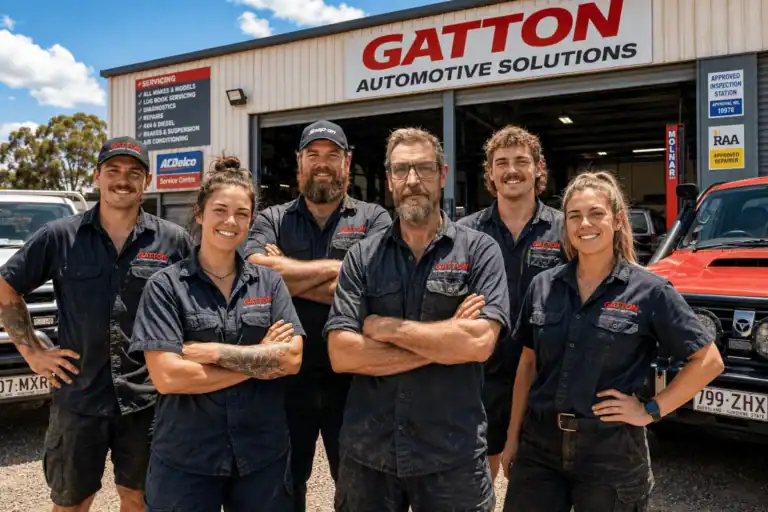
We’re a full-service workshop based right here in Gatton, covering cars, 4WDs, utes, trucks, and heavy equipment under the one roof. For Lockyer Valley drivers, that means you don’t need to load a sick VW onto a trailer and head 45 minutes down the road to Ipswich or Toowoomba for mechanical work. We handle it locally, with honest advice and pricing that reflects the job – not your desperation to get back on the road.

We’ve built a strong local reputation – our five-star reviews reflect the way we work. No upselling, no invented faults, no parts replaced unless they’re actually the problem. We tell you what’s wrong, what it’ll cost, and we get it done properly. And because we look after everything from passenger cars through to farm equipment and commercial vehicles, there’s very little we haven’t seen.

If your VW is showing signs of a cooling problem, don’t wait for the gauge to hit red. Book Your Free Inspection online or Call Us Now – we’ll get your Volkswagen diagnosed and back on the road from our Gatton workshop.
Your Local Workshop for Every Vehicle

Gatton Automotive Solutions is the one-stop shop for cars, 4WDs, trucks, and heavy equipment. Honest advice and fair pricing, right here in Gatton.

Honest Pricing, No Surprises

We tell you what’s needed and what it costs before we start. No upselling, no pressure.

Everything Under One Roof

Bring your car in and we’ll inspect it, explain what we find, and quote you upfront.

Volkswagen Cooling Diagnostics

We pinpoint cooling faults fast with VW-specific diagnostic tools and OEM-spec parts.

How Volkswagen Cooling System Repair Works

From diagnosis to roadworthy cooling, here's how we get your Volkswagen running cool again.

Step 1

Book Your Free Inspection

Call Us Now or book your free inspection to diagnose overheating, leaks, or cooling faults.

Step 2

Cooling System Diagnosis

We pressure test the system, scan for fault codes, and inspect radiator, thermostat, and hoses.

Step 3

Precision Cooling Repair

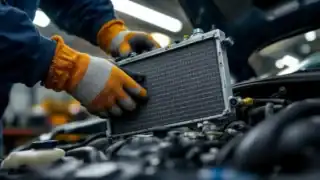
Faulty components are replaced with OEM-spec parts, the system flushed and refilled for your Volkswagen.

Step 4

Test and Collection

We run a full cooling test, verify temperature stability, then hand your vehicle back ready to drive.

Five-Star Rated

Verified 5★ Reviews

Quality Parts From Trusted Suppliers

We use genuine and quality aftermarket parts from reputable suppliers. You get reliable components backed by proper warranties.

Book Your Free Inspection

Tell us what you need and we'll get back to you with a clear quote.

Booking Form
  • Vehicle Details
  • Confirm Vehicle
  • Services
  • Contact Details
Honest Quotes
All Vehicle Types
Local & Reliable

Why Book With Us

Book Your Free Inspection
Drop Off Your Vehicle
We Get to Work
Collect Your Car

Frequently Asked Questions

Browse answers to common questions about our services. Can't find what you're after? Give us a call and we'll help.

Volkswagen cooling system repair covers diagnosing and fixing any part of the system that keeps your engine at the right operating temperature. That includes the radiator, coolant hoses, thermostat, water pump, coolant reservoir, and the cooling fans. We start with a pressure test and visual inspection to find where the problem is, then work through the repair with parts suited to your VW’s specifications. You’ll know what we’ve found and what’s needed before any work begins.

No. An overheating Volkswagen can cause serious internal engine damage within minutes, including warped cylinder heads or a blown head gasket. Both repairs are significantly more involved and costly than fixing the underlying cooling fault. If your temperature gauge climbs toward the red, pull over safely, turn off the engine, and let it cool before moving the vehicle. Get it inspected as soon as possible rather than risking it on the road.

Yes. VW models, particularly those with the 1.4 TSI, 1.8 TSI, and 2.0 TSI turbo petrol engines, have a known tendency for coolant leaks from plastic coolant flanges and expansion tanks, which can crack over time from heat cycling. Water pump failures are also relatively common on timing chain and belt-driven setups in these engines. Volkswagen diesels, including TDI variants, can develop thermostat housing leaks. Catching these early makes the difference between a minor repair and a major one.

Watch for a rising temperature gauge, especially in slow traffic or on hills. Steam from under the bonnet, a sweet smell inside the car, coolant puddles under the vehicle after it’s been parked, or a heater that suddenly blows cold air when it normally gets warm are all signs worth taking seriously. Low coolant warnings on your VW’s dashboard should never be dismissed. Any one of these on its own is worth a proper inspection.

Under ACCC guidance, Australian consumer law generally does not require you to have your vehicle serviced or repaired at a Volkswagen dealer to maintain your manufacturer’s warranty, provided the work is carried out to the required standard using appropriate parts. This is general information, not legal advice, so we’d recommend checking your specific warranty terms if you’re unsure. Our team works to manufacturer specifications and uses parts suited to VW vehicles, which matters when warranty considerations are in play.

The main variables are which component has failed, the complexity of accessing it on your specific VW model, and the parts required. A simple hose replacement is straightforward. A water pump on a timing-chain driven engine involves significantly more labour. Whether you need a full coolant flush alongside the repair also adds to the scope. We’ll give you a clear rundown of what’s needed and why before we start, so there are no surprises on the bill.

It depends on the fault. A thermostat swap or hose replacement can often be done within a few hours. A water pump replacement, particularly on TSI engines where the pump is driven off the timing system, takes longer because more components need to come off first. After the repair, we refill and bleed the system correctly, then run the engine up to temperature to confirm everything is working before the car leaves. We’ll give you an honest time estimate once we’ve had a look.

We source parts that meet the specifications for your VW. Depending on the job, that might be genuine VW parts, OEM-equivalent parts from suppliers who manufacture to the same standard as the original equipment, or quality aftermarket components. We’ll discuss the options with you, including any cost differences, so you can make an informed call. For cooling system components where quality matters for longevity, we won’t cut corners on what goes back into your vehicle.

VW recommends specific coolant service intervals that vary by model and engine type, and they use a long-life coolant that differs from generic green coolant. Many VW owners in Gatton and surrounding areas find the coolant change is overlooked during standard services because the interval can stretch out, but degraded coolant loses its corrosion inhibitors and starts attacking metal and rubber components from the inside. Your logbook or service schedule will have the correct interval for your specific model. We can check and advise when we have your car in.

A pressure test involves attaching a hand pump to the coolant reservoir cap fitting and pressurising the system to a set level, then monitoring whether that pressure holds or drops. A drop in pressure tells us there’s a leak somewhere in the system, even if it’s not yet visible externally. We then trace the source, which might be a hose, the radiator, the reservoir, a hose clamp, or an internal component like the head gasket. It’s a reliable first step for diagnosing any VW cooling fault accurately.

Continue to site