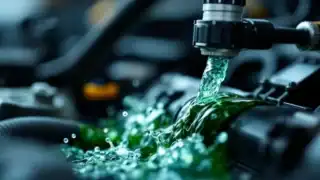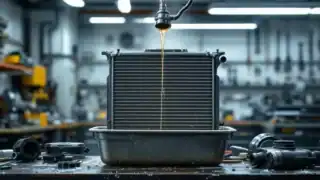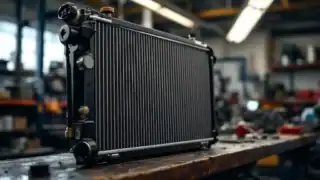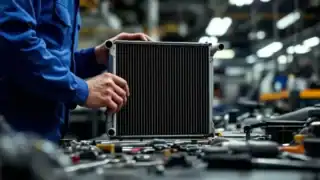
A failed water pump is one of the more reliable ways to turn a functioning Land Rover into a problem on the side of the road. The water pump is the heart of your cooling system, circulating coolant through the engine to keep temperatures in check. When it starts to fail, your engine temperature climbs fast, and the damage that follows can be serious. Land Rover water pump replacement is something we carry out regularly here in Gatton, and getting it sorted early is always cheaper than dealing with the aftermath of an overheated engine.
Warning Signs That Your Land Rover’s Water Pump Is Failing
Land Rovers are capable, well-engineered vehicles, but their cooling systems do develop specific failure points over time. Knowing what to look for can save you a significant repair bill.
- Rising temperature gauge: If your temperature needle is climbing above its normal range, particularly in slow traffic or on warm days, the water pump may not be circulating coolant effectively.
- Coolant leak under the engine: A pool of green, orange, or pink fluid beneath the front of the vehicle often points to a weeping pump seal or a cracked impeller housing.
- Whining or grinding noise near the front of the engine: This is typically the pump’s bearing starting to wear. Left too long, the bearing can fail completely and the pump shaft can seize.
- Coolant loss without a visible external leak: In some cases, coolant is pushed past a failing pump seal slowly enough that you only notice the drop in the overflow reservoir over time.
- Steam from under the bonnet: This is a late-stage warning. Pull over and Call Us Now rather than driving on.
Land Rover Discovery, Defender, and Range Rover models have water pumps that are often driven by the timing belt or timing chain assembly. This is particularly relevant because in many Rover V6 and V8 engines, as well as the TD5 and TDV6 diesel variants, pump failure can interfere with belt tension and timing. That interaction makes early detection important, and it also makes the replacement job one that requires proper workshop access rather than a quick roadside fix.
How We Approach Land Rover Water Pump Replacement
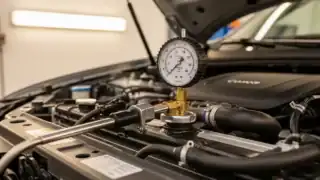
Before any parts are ordered, we carry out a proper diagnostic check. We inspect the pump for bearing play, check for leaks at the housing and weep hole, assess coolant condition, and run a pressure test on the cooling system. This tells us whether the pump alone is the issue or whether there are other contributing factors, such as a blocked thermostat, a failing radiator, or degraded coolant that has been accelerating component wear.
On models where the water pump is driven by the timing belt, we’ll look closely at the belt’s condition and age at the same time. Replacing the timing belt and water pump together during one job is a straightforward decision on most Land Rover platforms because the labour overlap is significant. Doing them separately means paying to disassemble the same components twice. We’ll walk you through what makes sense for your vehicle’s age and kilometres before any work starts.
We use OEM-spec or genuine-equivalent parts suited to your specific Land Rover model and engine. Cooling system components are not an area to cut corners on, and the fit and material tolerances on a quality replacement pump make a real difference to longevity. We also flush and replace the coolant as part of the job, using a fluid compatible with Land Rover’s specified coolant type to protect alloy components and prevent electrolytic corrosion.
What Affects the Cost of a Water Pump Replacement on a Land Rover?
Several things influence how long the job takes and what the parts will cost. The engine variant matters considerably. A Defender with a TD5 diesel has a different pump location and access route compared to a Discovery 4 with a TDV6. Timing-belt-driven pumps generally involve more labour than externally driven ones simply because more components need to come off to reach the pump. If we’re doing the timing belt at the same time, the combined job costs more upfront but less overall than two separate services.
Parts availability for Land Rover in regional Queensland has improved significantly, and we handle parts sourcing directly so you’re not chasing components yourself. For older Defenders and early Discovery models, some parts require a short lead time, and we’ll be upfront about that when you book. We’ll also let you know clearly what’s needed before the work begins so there are no surprises when you come to collect your vehicle.
Land Rover Cooling Work at Our Gatton Workshop
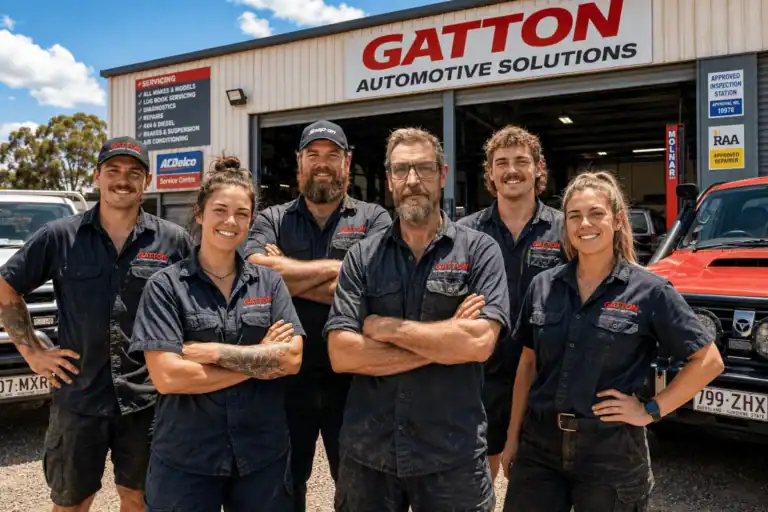
Gatton Automotive Solutions services Land Rovers alongside every other vehicle type that comes through our doors, from everyday cars and utes to trucks and farm equipment. That breadth means we’re set up properly, with the tools and the workshop space to handle whatever the job requires. Drivers from across the Lockyer Valley bring their vehicles to us specifically because travelling 45 to 80 kilometres to a dealership in Ipswich or Toowoomba is a real inconvenience for something that can be done locally here in Gatton. We’re locally owned, we give straight advice, and we don’t recommend work that isn’t needed.
Our customers have left five-star reviews, and we think that reflects what it’s actually like to bring a vehicle here. We’re not interested in upselling or finding extra jobs on your invoice. If your Land Rover needs a water pump and nothing else, that’s what we’ll do. Beyond cooling system work, Gatton Automotive Solutions also handles roadworthy certificates, smash repairs, custom paintwork, suspension upgrades, tyre supply and fitting, and agricultural and farm equipment servicing, all under one roof.
If you’ve noticed any of the symptoms above or it’s simply been a while since your cooling system was checked, Call Us Now or Book Your Free Inspection online. We’ll take a proper look and tell you exactly what’s going on.