A Land Rover radiator flush is one of those services that tends to get overlooked until something goes wrong. The coolant running through your Land Rover’s engine doesn’t last forever. Over time it degrades, becomes acidic, and picks up contaminants that eat away at metal components, rubber hoses, and seals from the inside. For Land Rover owners in Gatton and across the Lockyer Valley, where summer temperatures push engines hard and dusty conditions accelerate wear, keeping that cooling system in good shape is worth taking seriously.
What Happens When Coolant Gets Old?
Fresh coolant does two jobs: it transfers heat away from the engine and it protects the internal components of the cooling system from corrosion. As the fluid ages, its corrosion inhibitors break down. What’s left behind is an acidic mixture that starts attacking the aluminium components in your Land Rover’s engine and cooling circuit. Land Rover vehicles use a high proportion of aluminium in their engines and cooling systems, which makes them particularly sensitive to degraded coolant.
You might notice the first signs of a cooling problem as a temperature gauge that creeps higher than usual, especially at highway speeds or while towing. A sweet smell from under the bonnet can point to a coolant leak or boiling fluid. Some drivers notice the heater becoming less effective inside the cabin, which often indicates air trapped in the system or a drop in coolant volume.
Signs It Might Be Time for a Radiator Flush
- Coolant that looks brown, rusty, or murky rather than its original colour
- Temperature gauge running higher than normal during regular driving
- White or sweet-smelling exhaust, particularly when the engine is warm
- Visible sediment or residue when the coolant reservoir is checked
- Heater performance dropping off even when the engine is at operating temperature
- The vehicle has been used for heavy towing or spent extended time idling
If your Land Rover hasn’t had its coolant refreshed in line with the manufacturer’s service schedule, it’s worth having the system inspected regardless of whether any of the above symptoms are present.
How We Carry Out a Land Rover Radiator Flush in Gatton
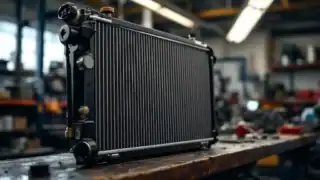
The process starts with a proper inspection rather than just draining and refilling. Our technicians check the condition of the existing coolant using test strips and a visual inspection, look at the coolant level and reservoir condition, and check for any visible signs of contamination or leakage across the hoses, radiator, thermostat housing, and expansion tank. Land Rover Discovery, Defender, and Range Rover models all have slightly different cooling system layouts, so the inspection process accounts for the specific configuration of your vehicle.
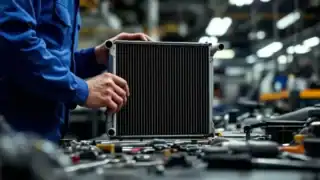
Once the system is assessed, we drain the old coolant fully and flush the system to clear out built-up deposits, rust particles, and degraded fluid. This matters because simply topping up over old coolant leaves the contamination in place. After flushing, we refill with a coolant that meets Land Rover’s fluid specification. Land Rover has specific requirements around coolant type and concentration, and using a product that doesn’t align with those specifications can cause compatibility issues with the system’s aluminium components and seals. We source parts and fluids appropriate to the vehicle’s requirements, not generic off-the-shelf alternatives.
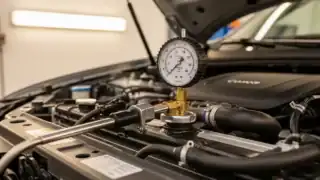
After the refill, we bleed the system to remove any air pockets. Air trapped in a cooling circuit causes hot spots in the engine and inconsistent temperature readings. We run the engine up to operating temperature and check that the thermostat is opening correctly and that the system is holding pressure before the vehicle leaves the workshop.
What Affects the Cost and Time Involved?
A straightforward radiator flush on a Land Rover in reasonable condition is typically a same-day job, and many customers wait while it’s done. The main variables that affect time and cost are the condition of the existing system and whether any related components need attention. If a hose shows cracking, a clamp has corroded, or the radiator cap isn’t sealing properly, it makes sense to address those at the same time rather than have you return in a few weeks. We’ll tell you what we find before doing anything beyond the flush itself.
Coolant specification also plays a role. Land Rover vehicles typically require a specific coolant type rather than a universal product, which affects parts cost. We’ll explain what’s needed for your specific model before the work starts.
Why Gatton Land Rover Owners Choose Gatton Automotive Solutions
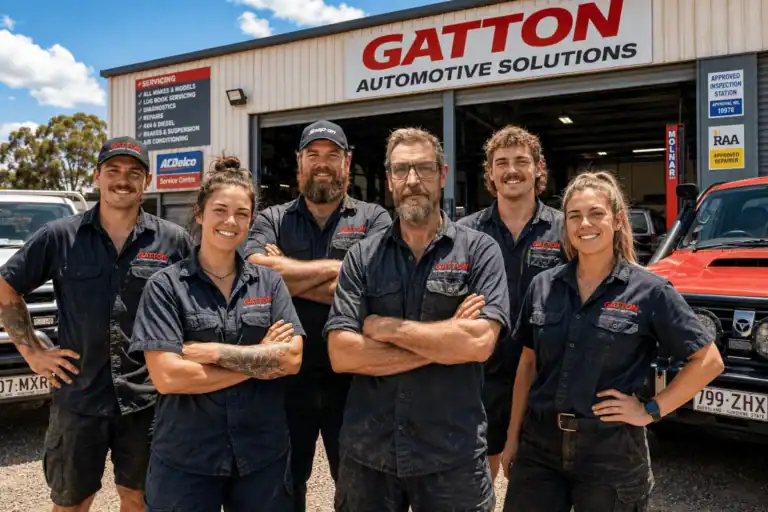
Gatton Automotive Solutions is a full-service workshop covering everything from everyday passenger cars and 4WDs through to trucks and heavy equipment, so there’s no job too small or too involved to handle under one roof. Land Rover cooling system work is part of our broader mechanical servicing capability, and we handle parts sourcing directly so you’re not chasing down components from multiple suppliers.
For Land Rover owners who’d otherwise have to drive to Ipswich or Toowoomba for specialist servicing, we offer a genuine local alternative. Our five-star reviews reflect the consistent, honest service that keeps Lockyer Valley drivers coming back rather than travelling an hour each way for work they can get done right here in Gatton.
Our approach is straightforward: we tell you what we find, explain what needs doing and what can wait, and price the job fairly. No upselling, no unnecessary work. From general mechanical work for everyday drivers through to heavy vehicle servicing, smash repairs, custom paintwork, suspension upgrades, tyre supply and fitting, and roadworthy certificates, everything is available in-house.
If your Land Rover is due for a coolant service or you’ve noticed any of the warning signs above, Call Us Now or Book Your Free Inspection online. We’re based in Gatton and ready to help you get back on the road with confidence.