Limited Time: Free Windscreen Wipers With Any Service. Subject To Availability.

Locally Owned & Operated
Honest Upfront Pricing
5★ Reviews
All Makes & Models

Verified 5★ Reviews

Dependable Land Rover Radiator Replacement In Gatton

We replace Land Rover radiators to factory specifications and test your entire cooling system for leaks and performance. Book Your Free Inspection in Gatton today.

One-Stop Workshop

Honest Advice

5★ Reviews

Land Rover Cooling Specialists

Book Your Free Inspection

Tell us what you need and we'll get back to you with a clear quote.

Booking Form
  • Vehicle Details
  • Confirm Vehicle
  • Services
  • Contact Details
Honest Quotes
All Vehicle Types
Local & Reliable

Why Book With Us

Book Your Free Inspection
Drop Off Your Vehicle
We Get to Work
Collect Your Car

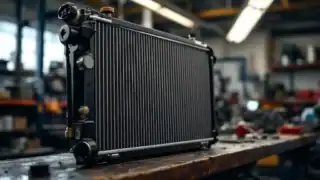
A radiator failure in a Land Rover isn’t just an inconvenience – it can turn a straightforward trip into a roadside breakdown fast. Land Rover radiator replacement is one of the more common cooling system jobs we handle at Gatton Automotive Solutions, and it’s worth understanding what’s actually happening inside your vehicle before you decide on a path forward. The radiator is the core of your cooling system: it pulls heat out of the engine coolant and releases it through the front grille as you drive. When it cracks, clogs, or starts leaking, the rest of the engine doesn’t take long to feel it.

Warning Signs Your Land Rover Radiator May Need Attention

Land Rover models – including the Discovery, Defender, and Range Rover series – tend to put serious demands on their cooling systems. Many are used for towing, off-road driving, and carrying loads across Queensland’s warmer months, all of which push coolant temperatures higher than a typical city car ever sees. Because of that, knowing what to look for early can save you a much bigger repair bill later.

  • Temperature gauge climbing past the normal range, especially under load or in slow traffic
  • Coolant pooling under the vehicle after it’s been parked, often with a sweet smell
  • Low coolant warning light coming on repeatedly even after topping up
  • Visible discolouration or debris in the coolant reservoir, sometimes a rusty or oily tinge
  • Steam or a burning smell coming from under the bonnet during or after driving
  • Coolant mixing with engine oil, which shows as a milky residue on the oil cap – a serious symptom requiring immediate attention

If you’re seeing any of these signs, it’s worth getting the cooling system inspected before driving further. Continuing to drive with an overheating engine, even for a short distance, can cause head gasket damage that costs considerably more to fix than a radiator alone.

What We Do: Land Rover Cooling System Diagnostics and Radiator Replacement

We don’t just pull a radiator and fit a new one without understanding why it failed. Land Rovers have plastic end tanks on many of their aluminium radiators, and these tanks are a known weak point across Discovery 3, Discovery 4, and Range Rover Sport models in particular. Over time the plastic becomes brittle, the crimped seals lose their integrity, and a crack appears – often gradually. Our diagnostic process checks the full picture before we recommend replacement.

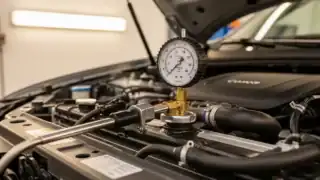
We pressure-test the cooling system to confirm the fault location, inspect hoses, thermostat, water pump, and coolant condition, and check for signs of head gasket involvement using a combustion leak test where appropriate. This matters because replacing a radiator on a Land Rover with a compromised head gasket won’t stop the overheating – you’ll be back in the workshop within weeks.

For the replacement itself, we source radiators built to OEM specification or genuine-equivalent quality. Land Rover cooling systems run specific coolant formulations (typically an OAT-based coolant), and we flush and refill with the correct type rather than a generic mix. Fitting the wrong coolant chemistry accelerates corrosion inside aluminium components and degrades seals over time – something we see occasionally in vehicles that have been serviced without attention to manufacturer fluid specs.

Once the new radiator is fitted, we bleed the system properly to remove air pockets, bring the engine up to operating temperature, and verify stable coolant levels and temperature gauge behaviour before the vehicle leaves our workshop.

What Affects the Cost and Time Involved?

A few variables influence how straightforward a Land Rover radiator replacement turns out to be. The model matters significantly – a Defender 130 with a turbo diesel has different access and fitment requirements than a Discovery Sport or a Freelander 2. Older Defender models are often more straightforward to work on; newer models with tighter engine bays and integrated cooling module designs can require more time to pull apart safely.

Parts availability is another factor. We handle parts sourcing directly, which means we can advise on lead times upfront rather than leaving you waiting without clarity. OEM-spec parts for Land Rover are generally available through our supplier network, though some older or discontinued models may require a short lead time. We’ll let you know before we start.

If the diagnostic process reveals additional faults – a failing water pump, cracked hoses, a damaged overflow bottle, or early signs of head gasket stress – we’ll walk you through what’s needed and what can reasonably wait, rather than adding work without a conversation first.

Gatton Land Rover Owners: No Need to Travel to the City

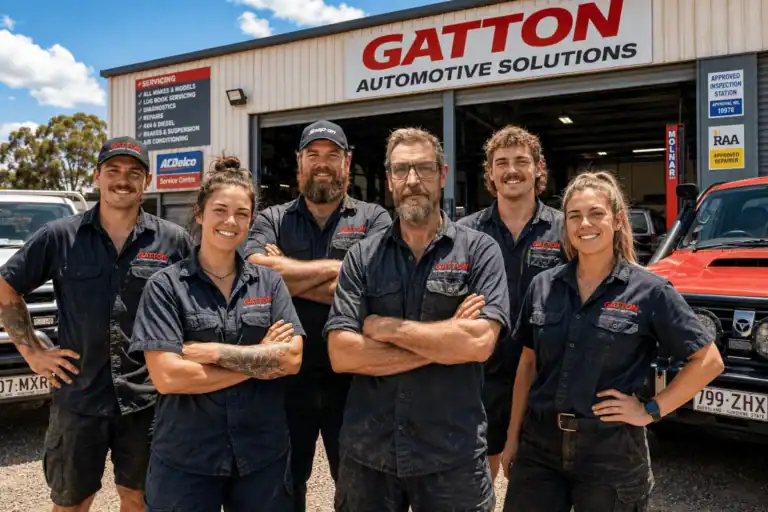
Plenty of Lockyer Valley Land Rover owners have historically felt they needed to drive to Ipswich or Toowoomba for anything beyond basic servicing. That’s a real cost in time and fuel, especially if your vehicle is running warm and you’re not confident in a long drive. Gatton Automotive Solutions handles Land Rover cooling system work locally, with the diagnostic equipment and parts access to do the job properly. We’re a full-service workshop covering cars, 4WDs, trucks, and heavy equipment – not a narrow specialist shop that turns away anything complicated.

Our five-star reviews reflect the same approach we bring to every job: tell people what’s actually wrong, fix what needs fixing, and charge a fair price for the work. No upselling, no unnecessary add-ons.

If your Land Rover is showing cooling system symptoms or you’ve already been told the radiator needs replacing, Book Your Free Inspection online or Call Us Now – we’re based in Gatton and ready to help.

Other Services

Whatever your needs we have you covered, see some similar services below or click "See All Services" to explore our full service offering.

Your Local Workshop for Every Vehicle

Gatton Automotive Solutions is the one-stop shop for cars, 4WDs, trucks, and heavy equipment. Honest advice and fair pricing, right here in Gatton.

Honest Pricing, No Surprises

We tell you what’s needed and what it costs before we start. No upselling, no pressure.

Everything Under One Roof

Bring your car in and we’ll inspect it, explain what we find, and quote you upfront.

Land Rover Parts Sourcing In-House

OEM-spec radiator parts sourced in-house, no waiting on city mail orders.

How Land Rover Radiator Replacement Works

From diagnosis through to collection, here's how we handle your Land Rover's cooling system repair.

Step 1

Book Your Free Inspection

Call Us Now or book your free inspection to assess your radiator and identify cooling system issues.

Step 2

Cooling System Diagnosis

We pressure test the radiator, inspect hoses and connections, and run diagnostics to confirm the fault.

Step 3

Radiator Replacement

We remove the old radiator, fit an OEM-spec replacement, and refill with the correct coolant for your Land Rover.

Step 4

Final Test & Collection

We run a cooling system check, verify temperature stability, and hand your vehicle back ready for the road.

Five-Star Rated

Verified 5★ Reviews

Quality Parts From Trusted Suppliers

We use genuine and quality aftermarket parts from reputable suppliers. You get reliable components backed by proper warranties.

Book Your Free Inspection

Tell us what you need and we'll get back to you with a clear quote.

Booking Form
  • Vehicle Details
  • Confirm Vehicle
  • Services
  • Contact Details
Honest Quotes
All Vehicle Types
Local & Reliable

Why Book With Us

Book Your Free Inspection
Drop Off Your Vehicle
We Get to Work
Collect Your Car

Frequently Asked Questions

Browse answers to common questions about our services. Can't find what you're after? Give us a call and we'll help.

Most Land Rover radiator replacements are completed within a few hours, though the exact time depends on the model and how accessible the radiator is. Defenders and older Series vehicles tend to be more straightforward, while newer Discovery and Range Rover models have tighter engine bays that take longer to work through. We’ll give you a realistic timeframe when you book so you can plan your day around it.

Continuing to drive with a leaking radiator risks serious engine damage. As coolant levels drop, the engine loses its ability to regulate temperature and can overheat quickly. On Land Rovers in particular, overheating can cause head gasket failure, warped cylinder heads, or worse. If your temperature gauge is climbing, you’re seeing coolant under the car, or there’s a sweet smell coming from the engine bay, stop driving and get it inspected as soon as possible.

Land Rovers, especially older Defenders, Discoverys, and Range Rovers, have a known history of cooling system issues. Plastic end tanks on aluminium radiators can crack or weep over time, and coolant hose connections are a common failure point on higher-mileage vehicles. Vehicles used for off-road work or towing are under additional heat load, which accelerates wear. Regular coolant checks and catching small leaks early can prevent what starts as a minor drip from turning into a full radiator replacement.

We source quality OEM-equivalent radiators that meet Land Rover specifications for fit and cooling capacity. For some models, genuine Land Rover parts are also available and we can discuss which option suits your vehicle and budget. Whichever route we go, the radiator will be matched to your specific model to handle the cooling demands of your engine correctly, including vehicles fitted with tow packages or upgraded engines.

Under ACCC guidance, Australian consumer law generally allows you to have your vehicle serviced by a qualified independent workshop without voiding your manufacturer warranty, provided the work meets the required standard and is properly documented. This is general information, not legal advice, so we’d recommend checking your specific warranty terms if you’re unsure. We record all work carried out and can provide documentation to support your service history.

We start by draining the old coolant safely, then remove any components blocking access to the radiator. The old unit is unbolted and disconnected from the hoses, overflow tank, and any transmission cooling lines if fitted. The new radiator goes in, hoses and connections are refitted and checked for tightness, and the system is refilled with the correct coolant mix. We then run the engine up to temperature and check for leaks before returning the vehicle. Customers coming to us from across the Lockyer Valley can usually wait or arrange a drop-off for the day.

The cost varies depending on the model, the parts required, and how much labour is involved in accessing the radiator. Older Defenders are generally simpler to work on, while late-model Range Rovers or Discoverys with more complex engine bays take longer. Whether you go with OEM-equivalent or genuine parts also affects the total. We provide a clear quote before any work starts so there are no surprises when you pick up your vehicle.

A radiator can sometimes be repaired if the damage is minor and isolated, such as a small hose fitting leak. However, if the core is cracked, the plastic end tanks are brittle or splitting, or the unit has significant corrosion, replacement is the more reliable long-term fix. On older Land Rovers especially, a radiator that has been leaking for a while may have internal scale build-up that reduces cooling efficiency even after a repair, making a new unit the better call.

Coolant should generally be inspected at every service and replaced according to the manufacturer’s schedule, which is typically every two to four years depending on the model and coolant type. Land Rovers used for towing, off-roading, or in hot conditions should be checked more frequently, as these conditions put greater demand on the cooling system. Catching coolant degradation early reduces the risk of corrosion inside the radiator and helps extend the life of hoses and the water pump.

Gatton Automotive Solutions services Land Rovers and a wide range of other vehicles right here in Gatton, making it convenient for locals across the Lockyer Valley. If you’re noticing signs of a cooling system problem, Call Us Now to talk through what you’re experiencing, or Book Your Free Inspection so we can take a look and give you an honest assessment of what’s needed.

Continue to site