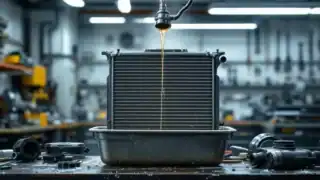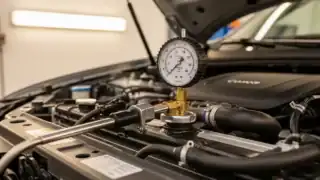
A Land Rover cooling system flush is one of those services that doesn’t get much attention until something goes wrong. The cooling system in your Land Rover does a demanding job, circulating coolant through the engine and radiator to keep temperatures stable whether you’re crawling through Gatton traffic or pushing hard on the highway. Over time, that coolant degrades, picks up corrosion particles, and loses the chemical inhibitors that protect aluminium components from damage. Flushing the system removes old fluid along with any contaminants and replaces it with fresh coolant that actually does what it’s supposed to do.
Signs Your Land Rover Cooling System Needs Attention
Land Rover engines are capable performers, but they’re also more sensitive to cooling system neglect than many other vehicles. The aluminium engine blocks and cylinder heads used across models like the Discovery, Defender, Range Rover Sport, and Freelander react badly to coolant that’s lost its corrosion protection. By the time you see obvious symptoms, some damage may already be underway.
Watch for these warning signs:
- The temperature gauge climbing higher than normal, especially in slow traffic or when towing
- A sweet, slightly sickly smell from the engine bay after driving
- Visible sludge or discolouration if you check the coolant reservoir (healthy coolant is typically a clean, bright colour)
- White residue or deposits around hose connections or the radiator cap
- The heater delivering less warmth than it used to, which can indicate flow restriction or air in the system
- Coolant level dropping without a visible external leak
Some of these symptoms overlap with other cooling system faults like a failing thermostat, water pump wear, or a developing head gasket issue. A proper flush service includes inspection of the full system, which means those underlying problems get identified rather than masked.
What Happens During a Land Rover Coolant Flush
We start by inspecting the current coolant condition, checking the colour, testing the freeze protection level, and looking for contamination. On Land Rovers, we pay particular attention to the condition of the coolant reservoir and the hoses, because the extended service intervals some owners follow can leave coolant in a worse state than it appears from the outside.
The old coolant is fully drained and the system is flushed to remove scale, rust particles, and degraded fluid residue. We inspect the radiator cap, the thermostat housing, and visible hoses for wear, cracking, or weeping joints while the system is accessible and empty. Then we refill with fresh coolant mixed to the correct concentration for Australian conditions, and bleed the system to remove air pockets, which is a step that’s easy to skip but causes real problems on Land Rover engines if it’s overlooked.
Land Rover specifies particular coolant types across its model range. Some older Defender and Discovery models run on a different specification to newer Range Rover and Evoque variants. We match the fluid to your specific vehicle rather than using a one-size-fits-all product, which matters for long-term protection of your engine’s aluminium components.
Land Rover-Specific Considerations
One detail worth knowing: certain Land Rover models, particularly those with the TD5 diesel engine or the 2.7 and 3.0 TDV6 units, have a reputation for coolant leaks around the heater matrix and at specific hose junctions. A flush service gives us a good opportunity to check these known trouble spots before a small weep becomes a bigger repair. If you drive a Defender that works double duty as a farm or work vehicle around the Lockyer Valley, the cooling system is under more stress than most, and staying on top of the flush interval pays off in reliability.
What Affects the Cost and Time of a Cooling System Flush?
A straightforward coolant flush on a Land Rover takes less time than most people expect, and if your schedule allows, it’s a service we can often turn around while you wait. A few things do affect the total time and cost involved.
The coolant specification required for your model varies, and some Land Rover variants require a specific OEM-equivalent product that costs more than a generic universal coolant. If we find worn hoses, a seized radiator drain plug, or signs of contamination that suggest a deeper problem, that changes what’s needed before we can refill the system correctly. We’ll always talk you through what we find before any additional work is approved, because honest advice is how we do things here.
The age and condition of the vehicle also matters. A well-maintained Land Rover that’s had regular service intervals is a quicker job than one where the coolant hasn’t been touched in several years and the system needs a more thorough clean-out.
Land Rover Cooling System Service in Gatton
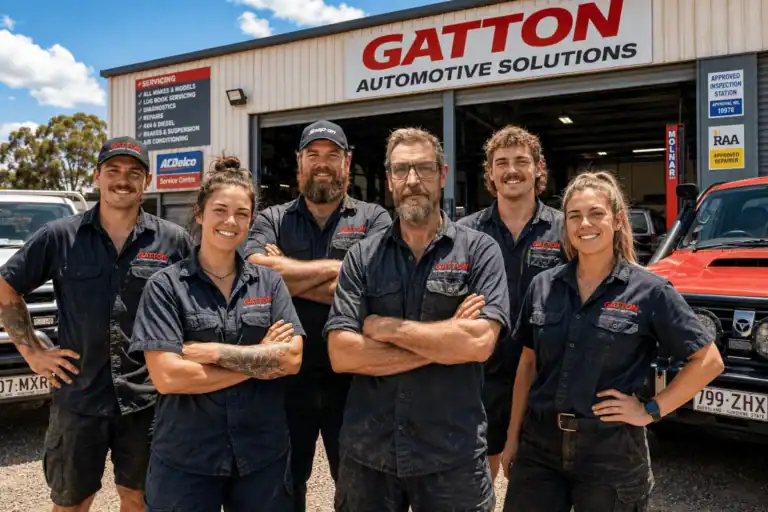
Gatton Automotive Solutions handles the full range of Land Rover servicing and mechanical work without sending you to Ipswich or Toowoomba for a job that can be done right here. We work on all body styles and generations, from older Defenders doing genuine farm work to late-model Range Rovers used as daily drivers. Parts sourcing is handled in-house, and we stock or can quickly order the correct coolant specification for your vehicle.
We’re a full-service workshop covering everything from everyday mechanical jobs through to heavy vehicle work, smash repairs, suspension upgrades, and tyres, so whatever else comes up during your service, we can deal with it in one visit. With five-star reviews from local drivers, the reputation speaks for itself.
If your Land Rover is due for a coolant flush or you’ve noticed any of the warning signs above, Call Us Now or Book Your Free Inspection online and we’ll sort it out from here in Gatton.