Your brakes are the single most important safety system on your vehicle. When they start showing signs of wear, every kilometre driven puts more pressure on components that are already past their best. An Australian Vehicles brake service at Gatton Automotive Solutions gives you a clear picture of what’s actually happening with your braking system, so you’re not guessing at the roadside and you’re not paying for parts that don’t need replacing.
Warning Signs Your Brakes Need Attention
Brake wear doesn’t always announce itself with drama. Sometimes it’s subtle, and that’s what makes it worth knowing the early signals. If you’re noticing any of the following, it’s worth getting the vehicle looked at sooner rather than later.
- Squealing or grinding sounds when you apply the brakes, particularly at low speed or on first use in the morning
- A pulsing or vibrating sensation through the brake pedal, which can point to warped rotors (the spinning discs that your brake pads clamp against)
- A longer stopping distance than you’d expect, or the vehicle pulling to one side when you brake
- A soft or spongy pedal that sinks lower than usual before the brakes engage, which can indicate air in the brake lines or a fluid leak
- The brake warning light appearing on the dashboard
- Visible wear through the wheel spokes, where the brake pad appears very thin against the rotor
For Australian Vehicles models, the ABS (anti-lock braking system) warning light is worth taking seriously. Many Australian-made vehicles had ABS systems that relied on wheel speed sensors prone to contamination from road grime over time. If that light comes on, it doesn’t mean your brakes have failed entirely, but it does mean the system isn’t operating as designed.
What Happens During an Australian Vehicles Brake Service in Gatton
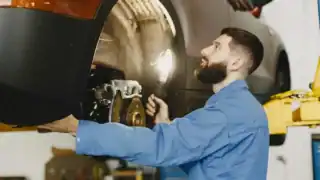
We start with a proper inspection before any work is recommended. That means pulling the wheels off and physically measuring what’s there, not just eyeballing it through the wheel spokes.
Our Inspection and Service Process Covers:
- Measuring brake pad thickness on all four corners against the manufacturer’s minimum specification
- Assessing rotor condition for scoring, cracking, heat discolouration, and minimum thickness (rotors can’t be machined indefinitely, and re-using a rotor that’s under minimum spec creates real risk)
- Checking brake calliper operation, including that pistons are moving freely and slide pins are lubricated and not seized
- Inspecting brake lines and hoses for cracking, corrosion, or signs of weeping fluid
- Checking brake fluid condition; brake fluid absorbs moisture over time and its boiling point drops as it does, which affects braking performance, especially on longer downhill runs
- Testing handbrake operation and adjustment where applicable
- On ABS-equipped models, checking sensor operation and ABS module fault codes using diagnostic scanning
For Australian Vehicles specifically, we pay attention to rear drum brake configurations common on older Holden Commodore, Ford Falcon, and similar models. Rear drum brakes require a different inspection process to disc brakes and include checking the wheel cylinders for leaks, shoe thickness and contact, and the self-adjuster mechanism. These components are often overlooked because they’re less visible, but a seized wheel cylinder or glazed brake shoe has a real effect on stopping performance.
We only recommend parts replacement when inspection confirms it’s genuinely needed. If the pads have good life remaining, we’ll tell you that and explain what to watch for going forward.
What Affects the Cost and Time Involved
Brake work varies considerably depending on the vehicle’s age, condition, and what the inspection actually turns up. A straightforward front brake pad and rotor replacement on a well-maintained vehicle is a different job to one where callipers are seized, rotors are deeply scored, or brake lines are showing corrosion.
Parts selection also makes a difference. For Australian Vehicles models, we can source quality-equivalent aftermarket components that meet the original specification. Where customers prefer OEM-spec or branded parts, we can discuss that when booking. Older Australian models may have reduced parts availability for some components, and we’ll be upfront about lead times if that applies.
Many standard brake services can be completed while you wait, particularly if the inspection confirms a straightforward pad and rotor replacement. More involved work, including calliper replacement, brake line repair, or ABS fault diagnosis, may require additional time, and we’ll let you know before the work begins.
Why Gatton Drivers Choose Us for Brake Work
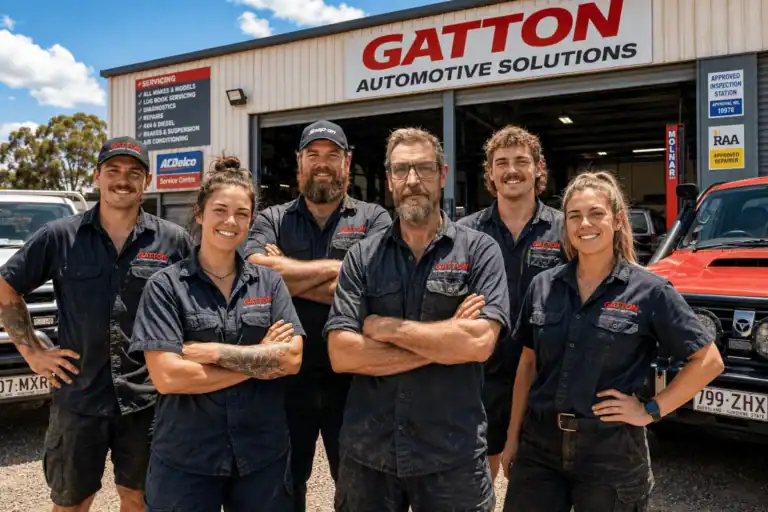
Gatton Automotive Solutions is a full-service workshop that handles everything from everyday cars and 4WDs through to trucks and heavy equipment. Brake work across all vehicle types is part of what we do, and we issue roadworthy certificates on-site, which means our brake inspections are done to the standard required under Queensland vehicle safety regulations.
We’re locally owned and operated in Gatton, which means you’re not travelling to Ipswich or Toowoomba for something that can be handled right here in the Lockyer Valley. Our pricing is straightforward, and we don’t recommend work unless the inspection shows it’s needed. With five-star reviews behind us, we’re happy to let the results speak for themselves.
If your brakes are overdue for inspection or you’re noticing any of the symptoms listed above, Call Us Now or Book Your Free Inspection online. We’ll give you an honest assessment and get your vehicle braking the way it should, right here in Gatton.