Limited Time: Free Windscreen Wipers With Any Service. Subject To Availability.

Locally Owned & Operated
Honest Upfront Pricing
5★ Reviews
All Makes & Models

Verified 5★ Reviews

Licensed & Insured Honda Brake Service In Gatton

Honda brake service in Gatton means expert inspection and repair you can trust. We test your brakes thoroughly and fix what's needed, nothing more.

One-Stop Workshop

Honest Advice

5★ Reviews

Honda Brake Experts

Book Your Free Inspection

Tell us what you need and we'll get back to you with a clear quote.

Booking Form
  • Vehicle Details
  • Confirm Vehicle
  • Services
  • Contact Details
Honest Quotes
All Vehicle Types
Local & Reliable

Why Book With Us

Book Your Free Inspection
Drop Off Your Vehicle
We Get to Work
Collect Your Car

Your Honda’s braking system is one of the few things on your car that genuinely has no margin for error. A Honda brake service covers everything from pad and rotor inspection through to fluid condition, caliper function, and brake line integrity. Drivers around Gatton and the Lockyer Valley often notice a problem only after it’s been building for a while, which is exactly why routine brake inspections matter as much as waiting for a warning sign to appear.

Warning Signs Your Honda Brakes Need Attention

Honda vehicles are generally well-engineered, but their braking components still wear over time and under real-world driving conditions. Some warning signs are obvious. Others are easy to dismiss until they become something more serious.

  • Squealing or squeaking when braking: Honda brake pads include a wear indicator tab that produces a high-pitched noise when the pad material is running low. This is a deliberate design feature, not a random noise.
  • A grinding sensation through the pedal or steering wheel: This usually means the pad material has worn through completely and metal is contacting the rotor. The rotor may already be damaged.
  • A soft or spongy brake pedal: This is often related to moisture contamination in the brake fluid or air in the brake lines. Both reduce your stopping power in ways that are not always obvious until you need to brake hard.
  • Pulling to one side under braking: A seized caliper or uneven pad wear on one side of the axle can cause the car to drift when you apply the brakes.
  • Vibration through the pedal: Warped rotors are a common cause here, particularly on Hondas that do regular towing, carry heavy loads, or have had their brakes overheated through aggressive or repeated heavy braking.
  • The brake warning light staying on: On most Honda models, this indicates a fault in the brake system itself, not just low fluid. It should be inspected promptly rather than monitored.

How We Inspect and Service Honda Brakes

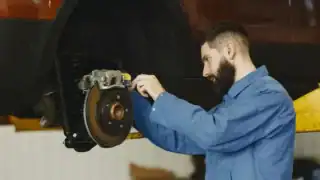
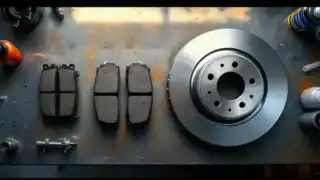
A proper Honda car brake service starts with a systematic visual and physical inspection before any parts are replaced. We measure pad thickness across both axles, check rotor surface condition and thickness against Honda’s minimum specifications, and test caliper movement to confirm pistons are extending and retracting properly. Sticking calipers are a known issue on older Civic and CR-V models, particularly those that have covered higher kilometres or spent time in dusty, rural conditions.

We also check the brake fluid. Honda recommends replacing brake fluid every two to three years regardless of mileage, because the fluid absorbs moisture over time and this lowers its boiling point. In real terms, that means your brakes are more likely to fade under hard use or in hilly conditions. We test fluid condition and discuss the replacement option with you before proceeding.

For models fitted with electronic parking brake systems, such as the Accord and some CR-V variants, the rear calipers require a specific electronic retraction process during pad replacement. Attempting to wind back these pistons manually, as you would with a conventional caliper, can damage the motor mechanism inside the caliper. Our process accounts for this at the start, not after the fact.

Parts for Your Honda

We source brake parts to OEM-equivalent specification for Honda vehicles, which means pad compounds and rotor grades matched to your model’s original design intent. For drivers who want genuine Honda parts, we can discuss that option too. Our workshop handles its own parts sourcing, so we are not waiting on a third party to confirm availability before we can book your car in.

What Affects the Cost of a Honda Brake Service?

Brake service costs vary depending on what the inspection actually finds. Replacing pads on a straightforward Civic is a different job from replacing pads, rotors, and calipers on a well-used HR-V that has been doing a mix of highway and regional running. The main factors are how much work is needed across both axles, whether rotors can be machined or need replacing, caliper condition, and whether the brake fluid is due for a change.

We will always tell you what we find before starting work, and we separate what is needed now from what can wait. No unnecessary work, no upselling. That is how we have built the reputation we have in Gatton.

Why Gatton Drivers Choose Us for Honda Brake Work

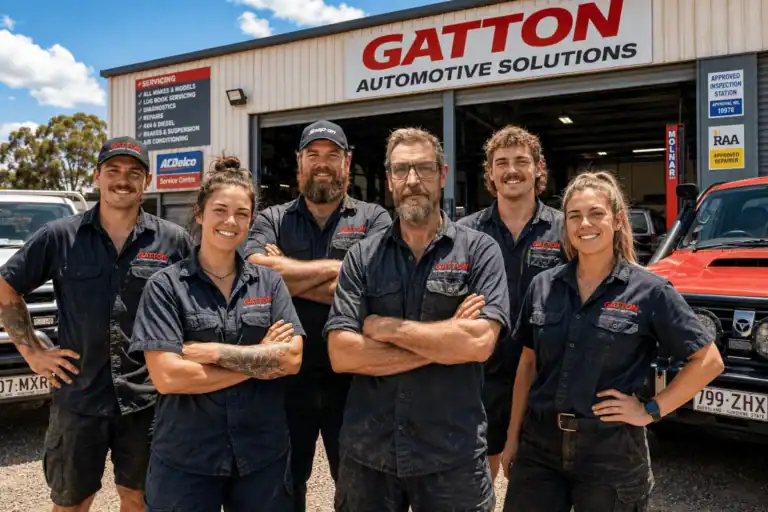
Gatton Automotive Solutions is a full-service workshop covering cars, 4WDs, trucks, and heavy equipment. We issue roadworthy certificates on-site, handle suspension and tyre work in-house, and manage our own parts sourcing. For Honda owners in the Lockyer Valley, that means you are not driving to Ipswich or Toowoomba for work that can be handled locally at a fair price.

We have five-star reviews from local drivers, which reflects the straightforward approach we take: tell people what their car needs, do the job properly, and charge an honest price for it. That applies to a basic brake pad check just as much as a full four-wheel brake overhaul.

If your Honda’s brakes are making noise, feeling different, or you are simply due for an inspection, Call Us Now or Book Your Free Inspection online. Our team in Gatton is ready to take a look.
Other Services

Whatever your needs we have you covered, see some similar services below or click "See All Services" to explore our full service offering.

Your Local Workshop for Every Vehicle

Gatton Automotive Solutions is the one-stop shop for cars, 4WDs, trucks, and heavy equipment. Honest advice and fair pricing, right here in Gatton.

Honest Pricing, No Surprises

We tell you what’s needed and what it costs before we start. No upselling, no pressure.

Everything Under One Roof

Bring your car in and we’ll inspect it, explain what we find, and quote you upfront.

Honda-Trained Technicians

Our team knows Honda brake systems inside out, sourcing OEM-spec parts for safety.

How Honda Brake Service Works

From your first call to safe brakes on the road, here's how we handle your Honda brake service in Gatton.

Step 1

Book Your Free Inspection

Call Us Now or book your free inspection to have our technicians assess your Honda's brake condition.

Step 2

Brake System Inspection

We measure pad thickness, inspect rotors, test brake fluid, and check Honda-specific brake components.

Step 3

Precision Brake Repair

We replace pads, resurface or replace rotors, and service hydraulic lines using Honda-specification parts.

Step 4

Safety Check & Handover

We test-drive your Honda, confirm smooth braking response, and walk you through the work completed.

Five-Star Rated

Verified 5★ Reviews

Quality Parts From Trusted Suppliers

We use genuine and quality aftermarket parts from reputable suppliers. You get reliable components backed by proper warranties.

Book Your Free Inspection

Tell us what you need and we'll get back to you with a clear quote.

Booking Form
  • Vehicle Details
  • Confirm Vehicle
  • Services
  • Contact Details
Honest Quotes
All Vehicle Types
Local & Reliable

Why Book With Us

Book Your Free Inspection
Drop Off Your Vehicle
We Get to Work
Collect Your Car

Frequently Asked Questions

Browse answers to common questions about our services. Can't find what you're after? Give us a call and we'll help.

A Honda brake service covers an inspection of your brake pads, rotors (the discs your pads clamp against), brake fluid, callipers, and brake lines. We check pad thickness, measure rotor wear, and test the feel and responsiveness of the whole system. If pads or rotors need replacing, we’ll tell you before any work starts. Honda models like the Civic and CR-V use specific rotor and pad specifications, so we make sure any replacements meet those requirements rather than fitting generic parts and hoping for the best.

The most common signs are a squealing or grinding noise when you brake, a pulsing or vibrating sensation through the pedal, the car pulling to one side under braking, or a pedal that feels soft and travels further than usual before biting. A lit brake warning light on your dashboard is also a clear signal. If you notice any of these, it’s worth getting the brakes looked at promptly rather than waiting for the next scheduled service.

A squealing noise often means your brake pads are worn down to their wear indicators, which are designed to make exactly that sound as a warning. At that stage, driving short distances while you arrange an inspection is generally manageable, but continuing to ignore it means metal grinding on metal, which damages the rotors and turns a straightforward pad replacement into a more involved job. A grinding or scraping sound is a stronger signal to stop driving and book an inspection as soon as possible.

Some Honda models, particularly earlier Civic and Accord variants, are known to develop brake judder over time, where the rotors develop uneven thickness and cause a vibration through the pedal under braking. This is sometimes mistaken for a simple pad issue but usually requires rotor resurfacing or replacement to fix properly. Older Honda CR-Vs can also develop sticking rear callipers, especially if the handbrake mechanism inside the rear callipers hasn’t been serviced for a while. Both are straightforward to diagnose and address when caught early.

Under Australian consumer law, ACCC guidance generally indicates that having your vehicle serviced at a qualified independent workshop does not void your manufacturer warranty, provided the work meets the manufacturer’s specifications. This applies to brake servicing just as it does to logbook servicing. We’d always recommend checking your specific warranty terms for your own peace of mind, as individual circumstances can vary, but for most Honda owners, using an independent mechanic for brake work is a straightforward and legitimate option.

A brake inspection on its own is usually quick, often completed while you wait. If pads need replacing, most Honda models can have both front or rear axles done within a couple of hours. Rotor replacement adds some time depending on what’s needed. We’ll give you a clear estimate once we’ve had a look at the vehicle, so you’re not left guessing about your day. If you’re in Gatton and need a fast turnaround, Call Us Now and we can work out what fits.

Most manufacturers recommend a brake inspection at every service interval, which typically means at least once a year or every 10,000 to 15,000 kilometres depending on how the vehicle is used. Stop-start driving in town, towing, or carrying heavy loads will wear pads faster than highway driving. Honda’s service schedules build brake checks into routine servicing, but if you’re covering lots of kilometres or driving in hilly terrain around the Lockyer Valley, it’s worth having them looked at more frequently rather than waiting for symptoms to appear.

We use quality OEM-equivalent parts that meet Honda’s specifications, sourced through reputable automotive suppliers. For most brake jobs this means you’re getting components that match the performance and fitment of genuine parts without the premium dealership price. If you specifically want genuine Honda parts, let us know and we can discuss what’s available and what the difference in cost looks like. Either way, we’ll only fit parts that are appropriate for your model and the way you use the vehicle.

Continue to site