Limited Time: Free Windscreen Wipers With Any Service. Subject To Availability.

Locally Owned & Operated
Honest Upfront Pricing
5★ Reviews
All Makes & Models

Verified 5★ Reviews

Reliable Japanese Vehicles Brake Service In Gatton

We service Japanese vehicle braking systems to factory specifications right here in Gatton. Expert inspection identifies wear before it becomes a safety risk - book your free inspection now.

One-Stop Workshop

Honest Advice

5★ Reviews

Japanese Brake Specialists

Book Your Free Inspection

Tell us what you need and we'll get back to you with a clear quote.

Booking Form
  • Vehicle Details
  • Confirm Vehicle
  • Services
  • Contact Details
Honest Quotes
All Vehicle Types
Local & Reliable

Why Book With Us

Book Your Free Inspection
Drop Off Your Vehicle
We Get to Work
Collect Your Car

Japanese vehicles have earned a strong following across the Lockyer Valley for good reason. Toyotas, Hondas, Mazdas, Mitsubishis, Subarus, and Nissans are everywhere on Gatton’s roads, and they generally hold up well with the right maintenance. Brakes are where that maintenance really counts. A proper Japanese vehicles brake service isn’t just about replacing worn pads, it’s about understanding how each manufacturer designs and calibrates their braking systems so the work is done to the right spec. At Gatton Automotive Solutions, we service Japanese vehicles across the full range, from daily hatchbacks to utes and 4WDs, so we know what to look for on these cars specifically.

Warning Signs Your Japanese Vehicle’s Brakes Need Attention

Japanese vehicles are generally well-engineered, but their braking components still wear with time and kilometres. Some warning signs are easy to miss until they become a bigger problem. If you notice any of the following, it’s worth getting your brakes inspected before the issue develops further.

  • Squealing or squeaking when you apply the brakes, particularly after the car has warmed up, which often indicates brake pads approaching the wear indicator
  • Grinding or metal-on-metal scraping, a sign that pad material has worn through and the backing plate is contacting the rotor (disc)
  • A soft or spongy brake pedal that sits lower than usual, which can point to air in the hydraulic lines or a brake fluid issue
  • Vibration or shuddering through the pedal or steering wheel when braking, often caused by warped rotors or uneven rotor wear
  • The vehicle pulling to one side under braking, which may indicate a stuck or seized caliper
  • The brake warning light illuminating on your dashboard, which some Japanese models use to alert you to pad wear or a fluid level drop

Subaru and Toyota in particular use electronic parking brake systems on newer models, which have their own calibration requirements after servicing. If your Subaru Forester or RAV4 has had brake work elsewhere and the parking brake feels off, it may simply need the electronic actuator recalibrated correctly.

What a Japanese Vehicles Brake Service Includes at Gatton Automotive Solutions

We start with a full visual inspection before any parts are ordered or replaced. That means pulling the wheels and examining the pads, rotors, caliper operation, brake lines, and brake fluid condition. For Japanese vehicles, we cross-reference the manufacturer’s service intervals and specifications, because pad thickness minimums and rotor wear limits vary between a Honda Civic and a Toyota HiLux.

Where pads need replacing, we use quality parts that meet the OEM specifications for your vehicle. For most Japanese makes, that means sourcing pads matched to the compound and friction rating the manufacturer originally specified. Fitting undersized or incompatible aftermarket pads on a Japanese vehicle can affect pedal feel and braking distance, which isn’t a trade-off worth making.

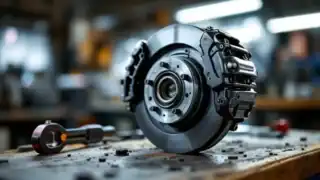
Rotors are measured for thickness and checked for lateral runout (disc wobble) and surface scoring. Light scoring can sometimes be machined flat, but heavily worn or warped rotors are replaced. We replace in pairs across an axle to keep braking balanced. Brake fluid is tested for moisture content, particularly important in Queensland’s humidity, and flushed if it has absorbed enough water to compromise the system’s boiling point. On models with electronic brake force distribution or stability control, we also verify these systems are functioning correctly after the service.

How Long Does a Brake Service Take and What Affects the Cost?

A straightforward pad and rotor replacement on a typical Japanese sedan or SUV can often be completed while you wait, depending on parts availability and what our inspection reveals. The cost varies based on several honest factors: whether pads alone are needed or rotors require replacement too, whether the vehicle is a standard passenger car or a heavier 4WD with larger brake components, and whether OEM-spec or quality aftermarket parts are the right fit for your situation. We’ll tell you clearly what we’ve found and what’s needed before any work starts. No surprises, no unnecessary add-ons.

Why Choose Gatton Automotive Solutions for Your Japanese Vehicle’s Brakes?

We’re a full-service workshop in Gatton handling everything from standard passenger cars to commercial vehicles and heavy equipment, all under one roof. For Japanese vehicles, that broad capability matters because many of these cars, particularly Mazda CX-series, Nissan Navara, and Mitsubishi Triton utes, combine mainstream components with model-specific calibration requirements that a generalist workshop might miss.

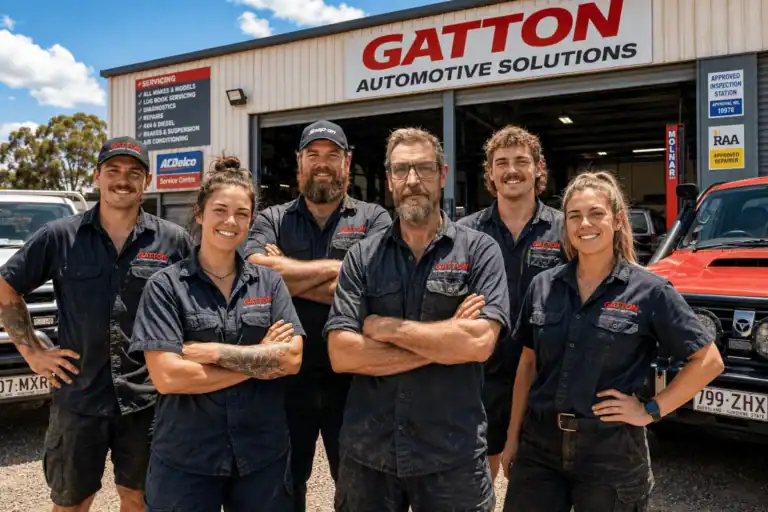
We’re locally owned and operated, which means you’re not travelling to Ipswich or Toowoomba for a brake service you can have sorted right here in Gatton. With five-star reviews, our reputation in the Lockyer Valley has been built on straightforward advice and work done properly the first time. If your vehicle needs a roadworthy certificate as part of the process, we issue those on-site too.

If you’ve noticed any of the warning signs above, or your Japanese vehicle is due for its next brake inspection as part of a logbook service, Book Your Free Inspection online or Call Us Now to talk it through with our team in Gatton.
Other Services

Whatever your needs we have you covered, see some similar services below or click "See All Services" to explore our full service offering.

Your Local Workshop for Every Vehicle

Gatton Automotive Solutions is the one-stop shop for cars, 4WDs, trucks, and heavy equipment. Honest advice and fair pricing, right here in Gatton.

Honest Pricing, No Surprises

We tell you what’s needed and what it costs before we start. No upselling, no pressure.

Everything Under One Roof

Bring your car in and we’ll inspect it, explain what we find, and quote you upfront.

Japanese Vehicle Brake Expertise

We know Japanese brake systems inside out and source OEM-spec parts to suit your make.

How Japanese Brake Repair Works

From booking your free inspection to driving home with safe, responsive brakes, here is what to expect.

Step 1

Book Your Free Inspection

Call Us Now or book your free brake inspection online to get started with a qualified assessment.

Step 2

Brake System Inspection

We measure pad thickness, inspect rotors for damage, test fluid condition, and verify brake response.

Step 3

Precision Brake Repair

We replace pads, resurface or fit new rotors, and flush fluid using OEM-spec parts and procedures.

Step 4

Safety Check and Collection

We test brakes under load, confirm firm pedal feel, and hand over your vehicle ready for safe driving.

Five-Star Rated

Verified 5★ Reviews

Quality Parts From Trusted Suppliers

We use genuine and quality aftermarket parts from reputable suppliers. You get reliable components backed by proper warranties.

Book Your Free Inspection

Tell us what you need and we'll get back to you with a clear quote.

Booking Form
  • Vehicle Details
  • Confirm Vehicle
  • Services
  • Contact Details
Honest Quotes
All Vehicle Types
Local & Reliable

Why Book With Us

Book Your Free Inspection
Drop Off Your Vehicle
We Get to Work
Collect Your Car

Frequently Asked Questions

Browse answers to common questions about our services. Can't find what you're after? Give us a call and we'll help.

A Japanese vehicles brake service covers a thorough inspection and service of your braking system from front to back. We check brake pad thickness, inspect rotors for wear and scoring, examine brake fluid condition, test caliper operation, and check brake lines for any signs of deterioration. Where pads or rotors are worn beyond safe limits, we’ll walk you through what needs replacing before any work starts. Japanese vehicles like Toyota, Mazda, Honda, and Subaru each have specific pad and rotor specifications, and we work to those rather than a generic fit.

A squealing or grinding noise from your brakes is a sign you should not ignore. Squealing often means pad wear indicators are contacting the rotor, which is a warning that pads are running low. Grinding typically means metal-on-metal contact, which can damage rotors quickly and significantly increase repair costs. Either way, continued driving puts your stopping ability at risk. If you’re hearing unusual brake noises, get the car looked at promptly rather than waiting for your next scheduled service.

A few patterns do come up regularly with Japanese makes. Some Toyota and Lexus models are known for brake shudder caused by rotor warping, particularly in vehicles used for a lot of stop-start driving. Certain Subaru models can experience rear caliper seizing, especially if the handbrake mechanism has not been serviced for a while. Mazda’s brake-by-wire systems on newer models behave differently during pad bedding. Knowing the platform matters, and it’s one reason a Japanese vehicles brake service done by someone familiar with these makes tends to catch issues a generic inspection might miss.

Most manufacturers recommend a brake inspection at every major service interval, generally around every 15,000 to 20,000 kilometres, though actual wear depends heavily on driving habits and conditions. Vehicles doing a lot of towing, regular mountain driving, or frequent heavy braking will go through pads faster. In the Lockyer Valley region, driving habits tend to vary a lot between locals commuting daily and those using vehicles for farm or property work, so mileage alone is not always the best guide. A quick visual check at each service is the most reliable way to stay ahead of it.

Under ACCC guidance, Australian consumer law generally does not require you to have your vehicle serviced at a dealership to maintain your manufacturer warranty, provided the servicing is carried out by a qualified mechanic using appropriate parts and procedures. This is general information rather than legal advice, so if you have specific concerns about your warranty terms, it’s worth reviewing your warranty documentation or checking with the manufacturer directly. We can service Japanese vehicles to manufacturer specifications and keep your logbook up to date.

Several things influence the final cost. The main factors are how many components need replacing, which axle is affected, and the specific make and model. Some Japanese vehicles use parts that are straightforward to source, while newer models or performance variants may require parts that cost more to supply. Labour time also varies depending on whether it’s a straightforward pad swap or a more involved job like seized calipers or rotor replacement. In Gatton, we’ll give you a clear rundown of what’s needed and why before the work begins, so there are no surprises.

Continue to site