Your Land Rover’s brakes carry a lot of responsibility. Whether you’re hauling gear across the Lockyer Valley in a Defender or making daily runs between Gatton and Ipswich in a Discovery, the braking system is the one thing you genuinely can’t compromise on. A Land Rover brake service isn’t just a routine tick on the maintenance list — it’s a direct investment in your safety and the safety of everyone else on the road. If something feels off with your brakes, getting it looked at promptly matters.
Warning Signs Your Land Rover Brakes Need Attention
Land Rover vehicles are built to handle demanding conditions, but that capability puts real load on the braking system. Heavier kerb weights across the range mean brake components wear at a pace that lighter vehicles simply don’t match. There are some clear signs it’s time to bring your Land Rover in.
- Squealing or high-pitched noise when braking — this is often the wear indicator on the brake pads signalling they’re getting thin
- Grinding or metal-on-metal scraping — the pads may be fully worn through, with the backing plate contacting the rotor directly
- Pulsing or vibration through the brake pedal — a common sign of warped rotors, which can occur more frequently on heavier SUVs under repeated load
- The vehicle pulling to one side under braking — this often points to a seized caliper or uneven pad wear across an axle
- Soft, spongy, or low brake pedal feel — can indicate air in the hydraulic lines or a problem with the master cylinder
- Brake warning light on the dashboard — Land Rovers use electronic brake monitoring, and an illuminated warning should never be dismissed
Some of these symptoms develop gradually, which makes them easy to ignore. But gradual wear on a vehicle this size doesn’t mean a gradual safety risk — it can deteriorate quickly once you’re past the threshold. If you’ve noticed any of these, booking your free inspection in Gatton is the right next move.
What a Land Rover Brake Service Actually Involves
Not every brake job is the same, and Land Rovers in particular have a few characteristics worth knowing about. The range spans from the Defender and Discovery to the Range Rover Sport and Freelander, and braking setups differ meaningfully across these models. Some feature larger ventilated rotors with multi-piston calipers up front, and later models incorporate electronic parking brake systems that require specialist reset procedures after rear pad replacement.
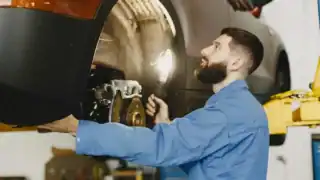
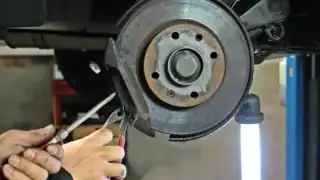
Our process starts with a thorough inspection before any work begins. We measure pad thickness across all four corners, check rotor (disc) thickness and surface condition against manufacturer tolerances, inspect caliper operation and slide pin movement, and assess brake fluid condition. Brake fluid is hygroscopic — it absorbs moisture over time — and degraded fluid raises the boiling point risk, which is a real concern on a heavy 4WD descending an incline. Land Rover’s service schedules typically recommend brake fluid replacement every two years regardless of distance, and we check that as part of any brake service.
Where brake pads and rotors need replacement, we use parts that meet OEM specifications for your specific Land Rover model. Fitting undersized or lower-spec components to a vehicle in this weight class isn’t a trade-off worth making. We’ll talk you through what we find before any repair work starts, so there are no surprises on the invoice.
What Affects the Cost and Time of a Land Rover Brake Service in Gatton?
A few variables will influence what your brake service involves and what it costs. The most significant are how far the wear has progressed and whether the rotors can be machined back to tolerance or need full replacement. Land Rover’s larger disc assemblies are more expensive than those on smaller passenger cars, and that’s a reality of owning a vehicle in this class. Parts sourcing is handled directly by our workshop, so you’re not chasing components yourself or waiting on a separate supplier.
Whether your model has a conventional handbrake mechanism or an electronic parking brake (EPB) also affects the process. EPB-equipped models require the caliper pistons to be wound back electronically rather than manually, which needs the right diagnostic tooling. We have that capability in-house. For most standard brake pad and rotor replacements, many jobs can be turned around while you wait or within the same day, though we’ll give you a realistic expectation when we assess the vehicle.
Why Gatton Drivers Bring Their Land Rovers to Us
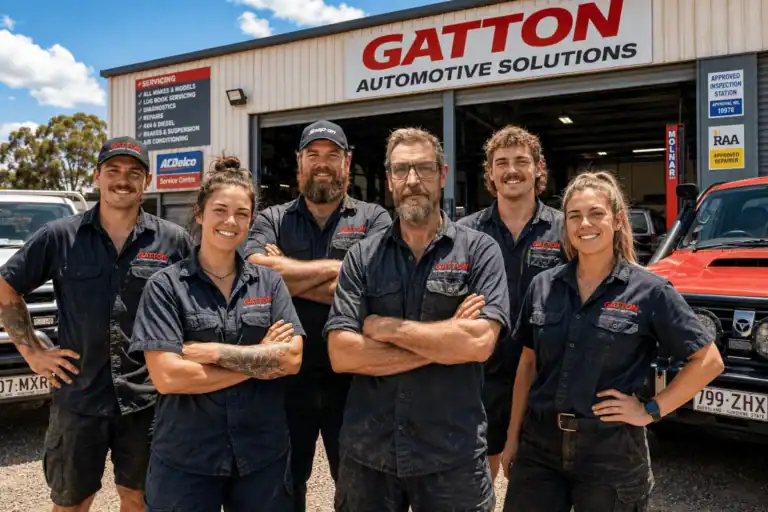
Gatton Automotive Solutions operates as a full-service workshop — cars, 4WDs, trucks, and heavy equipment all under one roof. Land Rovers sit squarely in our wheelhouse. There’s no need to take a half-day out of your schedule to drive to Ipswich or Toowoomba for a brake service that we can handle right here in Gatton.
Our approach is straightforward: we inspect, we tell you what we found, and we only recommend work that’s genuinely needed. With five-star reviews from drivers across the Lockyer Valley, that’s not just something we say — it’s how we operate. Roadworthy certificates are issued on-site, and if your brake condition is flagging a roadworthy concern, we can address it in the same visit. For fleet or commercial Land Rover operators in the region, we can also accommodate multi-vehicle servicing to keep your vehicles on the road.
If your Land Rover’s brakes are due for a look, Call Us Now or Book Your Free Inspection online. We’re here in Gatton and ready to help.