Your Jeep’s braking system is doing serious work every time you drive. Whether you’re hauling gear through the Lockyer Valley or doing the daily run in and out of Gatton, a Jeep brake service isn’t something to push to the back of the queue. These vehicles are built for performance and load, which means the braking components need to be up to the job. When something’s off, the signs are usually there well before anything becomes urgent.
Warning Signs Your Jeep’s Brakes Need Attention
Jeep owners often notice brake issues in a particular way: a grinding sound when slowing on gravel or dirt, a soft or spongy feel through the pedal, or a pull to one side under braking. These aren’t quirks of the vehicle. They’re the brake system telling you it’s time to get things looked at.
- Squealing or grinding when braking – worn brake pads are the most common cause, and on Jeeps the noise can be easy to dismiss at first, especially on rougher roads
- Pulling to one side – can indicate a sticking caliper, uneven pad wear, or a seized slide pin
- Vibration through the pedal or steering wheel – often points to warped rotors, which is a known issue on heavier Jeep models that run hot under load
- Longer stopping distances – if your Jeep feels like it needs more road to slow down, the pads or fluid could be the cause
- Brake warning light – Jeep’s instrument cluster monitors pad wear and fluid level; don’t ignore it
- A burning smell after towing or descending hills – overheated brakes need inspection before the next drive, not after
Any one of these symptoms warrants a proper inspection. Catching worn pads before they reach metal-to-metal contact can save you the cost of rotor replacement as well.
What Happens During a Jeep Brake Service at Our Workshop
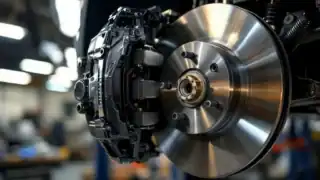
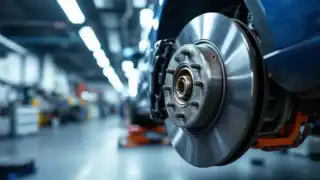
We start with a visual and functional inspection before recommending any work. That means pulling the wheels, measuring pad thickness against Jeep’s service specifications, inspecting rotor surfaces for scoring or heat cracking, and checking caliper operation. We also look at brake hoses and lines for cracking or swelling, which is particularly relevant on older Cherokees, Wranglers, and Grand Cherokees that have seen a few years of Queensland summers.
Jeep uses a range of brake setups across its lineup. The Wrangler JL and Gladiator, for example, have larger front rotor diameters to handle the increased load capacity, while the Compass and Renegade run smaller-diameter setups closer to a passenger car spec. We check what’s fitted to your specific model year before sourcing parts, so nothing gets mixed up between platforms.
If the fluid hasn’t been changed in the last two years, we’ll flag it. Brake fluid absorbs moisture over time, which lowers its boiling point and can cause the pedal to feel soft under heavy braking. This matters more on a Jeep used for towing or off-road work than on a lightly loaded daily driver.
Parts and Specifications
For pad replacement, we use quality parts that meet or exceed Jeep’s OEM specifications. Depending on your model and how you use the vehicle, we’ll talk through whether standard pads suit your driving, or whether a higher-performance compound makes sense if you’re towing regularly. We source parts through our own supply network and handle ordering in-house, so there’s no extra delay waiting on a third party.
What Affects the Cost and Time for a Jeep Brake Service?
Cost depends on what the inspection finds. A standard front pad replacement is a different job to a full four-corner service with rotor machining or replacement. Variables that affect the final price include whether rotors need to be replaced or can be resurfaced, the specific Jeep model and brake setup, whether the calipers are operating freely or need attention, and whether brake fluid replacement is due at the same time.
We give you a clear picture of what’s needed before any work starts. No work happens without your approval, and we don’t add jobs to the ticket that aren’t necessary.
Why Gatton Drivers Bring Their Jeeps to Us
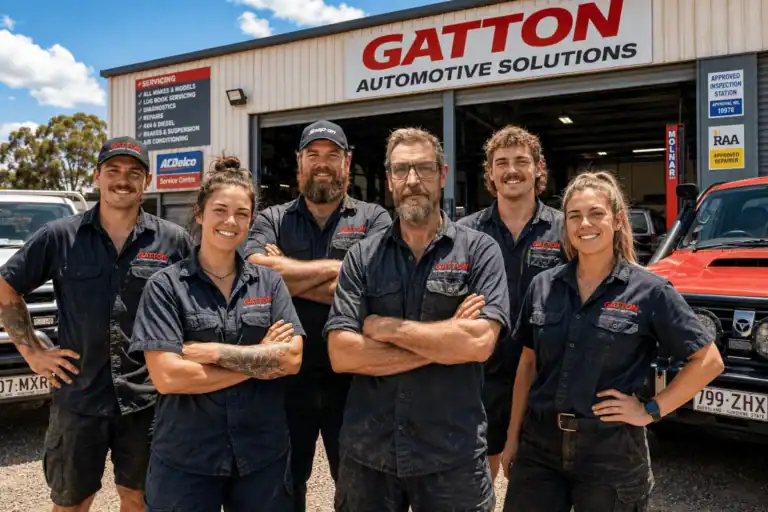
Gatton Automotive Solutions handles everything from everyday Cherokees used for school runs to lifted Wranglers that earn their living off-road. Our workshop covers cars, 4WDs, trucks, and heavy equipment under one roof, so a Jeep that needs brake work plus a suspension check or tyre inspection doesn’t have to go to three different places. We do roadworthy certificates on-site, fit and supply tyres in-house, and handle suspension upgrades as part of the same workflow.
For drivers in Gatton, Laidley, Forest Hill, Plainland, and across the Lockyer Valley, that means no 45-minute trip to Ipswich or Toowoomba for something we can take care of locally. We’re a locally owned workshop and we’re not interested in adding unnecessary work to the bill. With five-star reviews behind us, the approach seems to work.
Fleet operators running Jeep vehicles as work transport are welcome too. We understand that a vehicle off the road is a cost, and we work to get things turned around without cutting corners.
If your Jeep’s brakes are due for a look, Call Us Now or Book Your Free Inspection online. Our Gatton workshop is ready to help.