Limited Time: Free Windscreen Wipers With Any Service. Subject To Availability.

Locally Owned & Operated
Honest Upfront Pricing
5★ Reviews
All Makes & Models

Verified 5★ Reviews

Affordable Hyundai Brake Service In Gatton

We inspect and service Hyundai brakes in Gatton using quality parts and factory specifications. Safe, reliable brakes are non-negotiable. Book Your Free Inspection today.

One-Stop Workshop

Honest Advice

5★ Reviews

Hyundai Brake Specialists

Book Your Free Inspection

Tell us what you need and we'll get back to you with a clear quote.

Booking Form
  • Vehicle Details
  • Confirm Vehicle
  • Services
  • Contact Details
Honest Quotes
All Vehicle Types
Local & Reliable

Why Book With Us

Book Your Free Inspection
Drop Off Your Vehicle
We Get to Work
Collect Your Car

Your brakes are the most important safety system on your Hyundai, and a dedicated Hyundai brake service is about more than swapping out worn pads. It means understanding how your specific model’s braking system is designed, using parts and procedures that match Hyundai’s specifications, and catching problems before they become dangerous. At Gatton Automotive Solutions, we carry out Hyundai brake servicing for drivers across the Lockyer Valley, so there’s no need to head to Ipswich or Toowoomba for quality work.

Warning Signs Your Hyundai Brakes Need Attention

Hyundai builds a wide range of vehicles, from the Accent and i30 through to the Tucson, Santa Fe, and Staria. Each has its own brake specifications, but the warning signs are fairly consistent across the range. Knowing what to look for can save you from a much more costly repair down the track.

  • Squealing or squeaking when braking – Hyundai factory brake pads include a wear indicator that creates a high-pitched squeal when the pads are getting low. It’s not a fault; it’s the system working as designed. It means book in soon.
  • Grinding or scraping sounds – Once you’re hearing metal on metal, the pad material is gone. At this point, rotors are likely being damaged with every stop.
  • Brake pedal that sits low or feels soft – This can point to air in the brake lines, a fluid leak, or a failing master cylinder. Don’t leave this one.
  • Pulling to one side when braking – Often caused by a seized calliper or uneven pad wear. Common on higher-kilometre Hyundai models where callipers haven’t been serviced in some time.
  • Vibration through the steering wheel or brake pedal – Warped rotors are a likely cause, particularly if the vehicle has done a lot of stop-start driving or towing.
  • Brake warning light on the dash – On Hyundai vehicles, this can indicate low brake fluid or a fault detected by the ABS module. Either way, it needs a proper read of the system, not just a visual check.

How We Service Hyundai Braking Systems

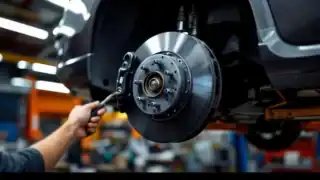
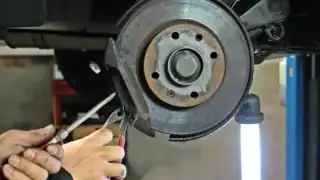
A thorough Hyundai car brake service starts with a full inspection before any parts are recommended. We remove each wheel and assess the brake pads, rotors, callipers, brake lines, and fluid condition. For Hyundai models with electronic parking brakes (common on the Tucson and Santa Fe from around 2015 onwards), rear calliper retraction requires a specific process using a scan tool, not just a manual wind-back. Using the wrong technique on these callipers can damage the motor inside the unit.

We also check rotor thickness against Hyundai’s minimum specifications. A rotor that looks fine may already be below the safe discard thickness for your particular model. Resurfacing a rotor that’s already too thin doesn’t fix it, it just delays the problem. We measure, report, and give you a straight answer about what’s actually needed.

Brake fluid condition gets checked as part of every service. Hyundai recommends brake fluid replacement every two years for most models, regardless of visible condition, because the fluid absorbs moisture over time. Moisture-laden fluid has a lower boiling point, which can cause fade under heavy braking. If your fluid hasn’t been touched in a few years, we’ll let you know.

OEM-Spec and Genuine-Equivalent Parts

We source brake pads, rotors, and fluid that meet Hyundai’s OEM specifications. For most everyday Hyundai models, quality OEM-equivalent parts from reputable suppliers perform just as well as dealer-supplied parts at a noticeably better price. If you want genuine Hyundai parts fitted, we can discuss that too. The choice is yours, and we’ll give you honest advice on both options rather than defaulting to whatever’s most convenient for us.

What Affects the Cost of a Hyundai Brake Service in Gatton?

Brake service costs vary depending on a few straightforward factors. The main ones are whether you need pads only, pads and rotors, or a more involved repair involving callipers or brake lines. Hyundai’s larger SUVs (Santa Fe, Palisade) have bigger braking components than a small hatchback, so parts costs reflect that. Models with electronic rear callipers also take a bit more time to service correctly.

Labour time is affected by how long it’s been since the brakes were last serviced. Callipers that haven’t been cleaned and lubricated in years can take more work to free up safely. We’ll let you know what we find before we proceed with any additional work beyond the standard inspection and quote.

Why Lockyer Valley Hyundai Owners Bring Their Cars to Us

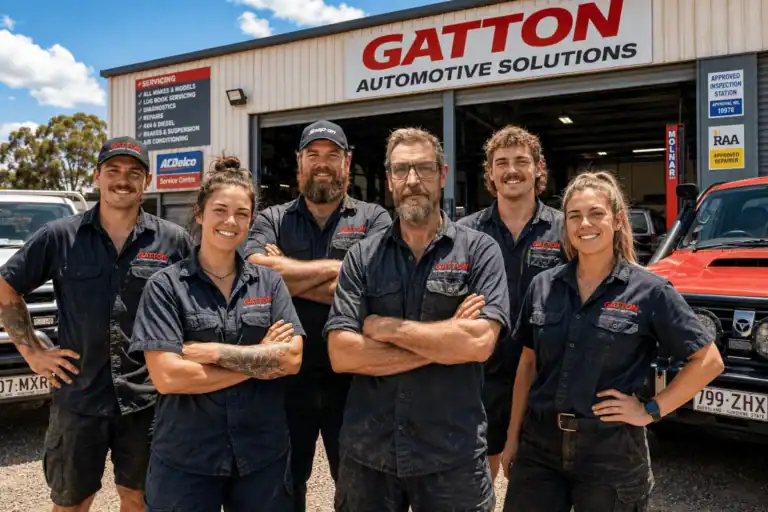
Gatton Automotive Solutions is a full-service workshop handling everything from everyday Hyundai hatchbacks to 4WDs, commercial vehicles, and heavy equipment, all under one roof. That means our team works across a broad range of braking systems regularly, not just standard passenger car setups. We have five-star reviews from local drivers who keep coming back because we say what we’ll do and do it.

We’re locally owned and based here in Gatton, which means you’re not driving 45 minutes each way for a brake inspection. We also issue roadworthy certificates on-site, so if your Hyundai needs a safety certificate as part of a sale or rego check, that’s handled in the same visit. Parts sourcing is managed by the workshop, so there’s no chasing suppliers on your end.

If your Hyundai’s brakes are due for a check, don’t put it off. Book Your Free Inspection online or Call Us Now to speak with the team about what you’re experiencing, and we’ll get it looked at promptly here in Gatton.
Other Services

Whatever your needs we have you covered, see some similar services below or click "See All Services" to explore our full service offering.

Your Local Workshop for Every Vehicle

Gatton Automotive Solutions is the one-stop shop for cars, 4WDs, trucks, and heavy equipment. Honest advice and fair pricing, right here in Gatton.

Honest Pricing, No Surprises

We tell you what’s needed and what it costs before we start. No upselling, no pressure.

Everything Under One Roof

Bring your car in and we’ll inspect it, explain what we find, and quote you upfront.

Hyundai Brake System Knowledge

We work on Hyundai brake systems regularly, from pad wear to full system repairs.

How Hyundai Brake Service Works

From booking to brake safety verification, here is how we handle your Hyundai's brake service.

Step 1

Book Your Free Inspection

Call Us Now or book your free brake inspection online to get your Hyundai's brakes assessed.

Step 2

Hyundai Brake System Inspection

We measure pad thickness, rotor wear, and fluid condition using Hyundai-spec tools and procedures.

Step 3

Precision Brake Repair

We fit quality pads and rotors to Hyundai specification, flush fluid lines, and adjust components.

Step 4

Safety Check and Collection

We road test your brakes, confirm all components meet safety standards, and hand your Hyundai back.

Five-Star Rated

Verified 5★ Reviews

Quality Parts From Trusted Suppliers

We use genuine and quality aftermarket parts from reputable suppliers. You get reliable components backed by proper warranties.

Book Your Free Inspection

Tell us what you need and we'll get back to you with a clear quote.

Booking Form
  • Vehicle Details
  • Confirm Vehicle
  • Services
  • Contact Details
Honest Quotes
All Vehicle Types
Local & Reliable

Why Book With Us

Book Your Free Inspection
Drop Off Your Vehicle
We Get to Work
Collect Your Car

Frequently Asked Questions

Browse answers to common questions about our services. Can't find what you're after? Give us a call and we'll help.

A Hyundai brake service typically covers an inspection of the brake pads and rotors (the discs your pads press against to slow the car), brake fluid condition and level, caliper operation, brake lines, and the handbrake. We check wear measurements against Hyundai’s recommended tolerances and let you know what needs replacing now versus what can wait. If we find anything outside the normal inspection scope, we’ll walk you through it before any work begins.

A squeal is usually the first warning sign, and in many cases it means the brake pad wear indicators are doing their job by telling you it’s time for a look. Continuing to drive without getting it checked risks wearing the pads down to metal-on-metal contact, which damages the rotors and significantly reduces stopping ability. A brief inspection is always worth it. If the noise is accompanied by grinding, pulling to one side, or a spongy pedal, treat it as urgent.

Under ACCC guidance, Australian consumer law generally allows you to have your vehicle serviced by a qualified independent mechanic without voiding your manufacturer warranty, provided the work meets the manufacturer’s specifications and is properly documented. This is general information rather than legal advice, so if you have specific concerns about your Hyundai’s warranty conditions, it’s worth checking your warranty documents or contacting Hyundai Australia directly. We record all work and parts used so your service history stays complete.

A straightforward brake inspection takes around 30 to 45 minutes. If pads need replacing, most jobs are completed within an hour or two. Rotor replacement or more involved work may take longer depending on parts availability and what else is found during the inspection. We can often handle smaller jobs while you wait here in Gatton, which saves you the trip to Ipswich or Toowoomba for something that can be done locally.

Some Hyundai models, particularly older i30, Elantra, and Tucson variants, are known for rear brake pad wear that outpaces the fronts, which is the opposite of what many drivers expect. Certain Hyundai electronic parking brake systems also require specific scan tool procedures to retract the caliper pistons during a pad change, something a generic approach can get wrong. We use appropriate diagnostic tools for Hyundai vehicles so the job is done correctly, not just quickly.

Driving style plays the biggest role. Frequent hard braking, riding the brake pedal, and heavy towing all accelerate wear. Contaminated brake fluid can cause caliper seals to degrade, leading to partially applied brakes that wear pads unevenly. Cheap or incorrect pad compounds for your vehicle’s weight and use can also wear quickly. For Hyundai owners doing a lot of stop-start driving or towing a trailer, we can recommend pad compounds suited to those conditions.

We source quality OEM-equivalent parts that meet or exceed Hyundai’s original specifications. These are not the cheapest generic parts on the market; they’re matched to the correct grade and friction rating for your model. Genuine dealer parts are also available if that’s your preference. We’ll discuss options with you before ordering anything, because the right part depends on how you use the vehicle, your budget, and what the manufacturer specifies for that application.

Most Hyundai logbooks recommend a brake inspection at every service interval, typically every 10,000 to 15,000 kilometres depending on the model. That said, driving habits matter more than odometer readings alone. If you do a lot of town driving around Gatton and the Lockyer Valley, brakes can wear faster than the schedule suggests. A quick visual check costs nothing during a regular service, and catching worn pads early almost always prevents more expensive rotor damage later.

Continue to site