Mercedes-Benz vehicles are engineered to perform at a high level, and the braking system is one area where that engineering really shows. A proper Mercedes brake service isn’t just about swapping pads and moving on — it involves understanding how the system was designed, what wear patterns are normal for the model, and which components need attention before they become a safety issue. At Gatton Automotive Solutions, we service Mercedes vehicles for drivers across Gatton and the broader Lockyer Valley, and we treat the brake system with the attention it deserves.
Warning Signs Your Mercedes Brakes Need Attention
Mercedes-Benz brakes are designed to last, but they do wear over time and will tell you when something isn’t right. Ignoring the early signs usually means more expensive repairs down the track. If you notice any of the following, it’s worth getting the brakes looked at sooner rather than later.
- Brake pad wear indicator light on the dashboard – many Mercedes models have electronic wear sensors built into the front and rear pads that trigger a warning light before the pads reach their minimum thickness
- Squealing or grinding sounds when braking, particularly during the first few stops of the day or under light pressure
- A pulsing or vibrating feeling through the brake pedal, which often points to rotor (disc) warping or uneven wear
- The car pulling to one side when you apply the brakes, which can indicate uneven pad wear or a sticking calliper
- A longer stopping distance than usual or a pedal that feels softer or lower than normal
- Visible corrosion or scoring on the rotors when you look through the wheel spokes
On older Mercedes models, rust can develop on the rotor surface quickly if the vehicle sits for extended periods. This is usually surface rust that clears after a few stops, but deeper pitting or heavy corrosion warrants a proper inspection.
What a Mercedes Brake Service Involves
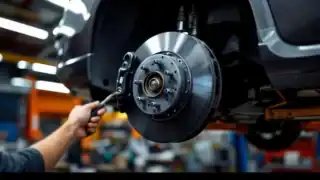
We start with a thorough inspection of the entire brake system before recommending any work. That means measuring pad thickness front and rear, checking rotor thickness against the manufacturer’s minimum specification, inspecting callipers for leaks and freedom of movement, and checking the brake fluid condition and level.
Mercedes-Benz uses electronic pad wear sensors on most of their current and recent model lineup, including the C-Class, E-Class, GLC, and GLE. After fitting new pads, these sensors need to be reset through the vehicle’s on-board electronics. If the reset isn’t done correctly, the warning light will stay on even after the service is complete. We handle this as part of the job, not as an afterthought.
Brake fluid is another area that often gets overlooked on Mercedes vehicles. Mercedes recommends brake fluid replacement every two years regardless of distance, because the fluid absorbs moisture over time and its boiling point drops as a result. Degraded fluid can cause spongy pedal feel and, under heavy braking conditions, unpredictable brake response. We test fluid condition and advise on replacement if it’s due.
For the pads and rotors themselves, we use parts that meet OEM (original equipment manufacturer) specifications. That doesn’t always mean the most expensive option, but it does mean we’re selecting components that match the friction characteristics, dimensions, and heat tolerances that Mercedes designed the system around. Mismatched aftermarket parts can cause premature wear, noise, and uneven braking force.
What Affects the Cost and Time of a Brake Service on a Mercedes?
Several factors influence what a brake service will involve and how long it takes. The main ones are how much wear is present across the pads and rotors, whether the callipers need any attention, and whether the brake fluid is being replaced at the same time.
Mercedes vehicles with active park assist or integrated electronic parking brake systems add a step to rear brake servicing. On these vehicles, the electronic parking brake actuator needs to be retracted using a scan tool before the rear callipers can be compressed – it’s not something you can do by hand. We have the equipment to handle this on current Mercedes models, which saves you a trip to a dealership in Ipswich or Toowoomba.
Parts availability is generally good for popular Mercedes models, and in most cases we can source what’s needed promptly. On some older or less common variants, specialist parts may take longer, and we’ll let you know upfront if that applies to your vehicle.
Brake Services for Mercedes in Gatton and the Lockyer Valley
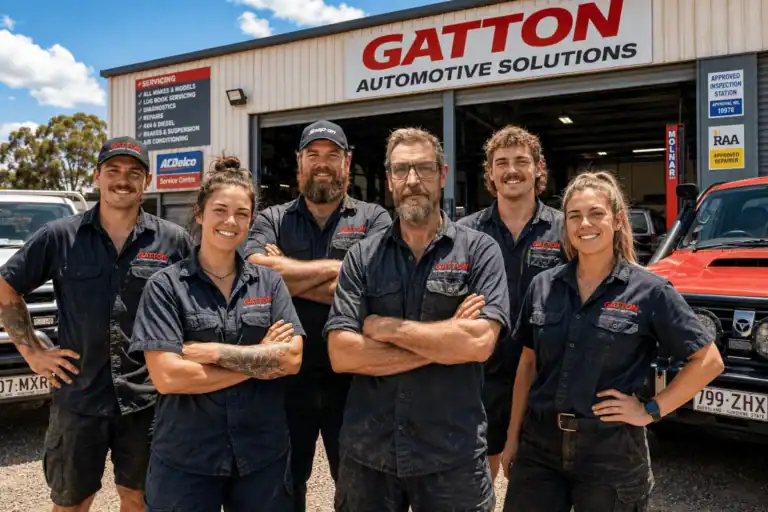
Gatton Automotive Solutions is a full-service workshop covering everything from everyday mechanical work and logbook servicing through to roadworthy certificates, suspension upgrades, tyre supply and fitting, and smash repairs. We work on cars, 4WDs, utes, trucks, and heavy equipment, all under one roof. For Mercedes owners in Gatton, Laidley, Plainland, Hatton Vale, and across the Lockyer Valley, that means you don’t need to drive 45 minutes or more for specialist mechanical care.
We give honest assessments. If your brakes are in good shape and don’t need work, we’ll tell you. If something genuinely needs attention, we’ll explain what it is and why, and give you a clear picture of what’s involved before anything gets touched. Our five-star reviews reflect the way we work – straightforward, fair, and locally focused.
Book a Brake Inspection for Your Mercedes
If your Mercedes is showing any brake warning signs, or you’re simply due for a check, Call Us Now or Book Your Free Inspection online. We’re here in Gatton and ready to help.