Your brakes are the single most important safety system on your Holden, and when something feels off, it’s not worth waiting to see how it plays out. Whether you’re driving a Commodore around town, a Colorado on a worksite run, or an Astra doing school pickups, a proper Holden brake repair starts with understanding what’s actually happening inside the system. At Gatton Automotive Solutions, we work on Holdens regularly and know how these vehicles are put together, so the inspection process is thorough from the start.
Warning Signs Your Holden’s Brakes Need Attention
Brakes rarely fail without warning. Most problems announce themselves well before anything dangerous happens, but the signals are easy to dismiss if you don’t know what to look for.
- Squealing or squeaking when you apply the brakes – this is often the wear indicator on the brake pads doing its job, telling you the friction material is running low.
- Grinding or a metal-on-metal sound – if the squealing has progressed to grinding, the pads may be gone entirely and the caliper or backing plate could be contacting the rotor directly.
- A soft or spongy brake pedal – this points toward the hydraulic side of the system, possibly air in the brake lines, a failing master cylinder, or a worn brake booster.
- The steering wheel pulling to one side under braking – a sticking caliper or uneven pad wear can cause the vehicle to drift left or right when you slow down.
- Vibration or pulsing through the pedal – warped rotors are a common cause, particularly on Holdens that have done a lot of town driving with frequent heavy stops.
- The brake warning light staying on – this can indicate low brake fluid, worn pads triggering a sensor, or a fault in the ABS system.
Any one of these symptoms is a reason to book an inspection. If you’re experiencing more than one at the same time, don’t put it off.
How We Inspect and Repair Holden Brakes
We don’t take a one-size-fits-all approach to Holden brake repair in Gatton. Different models have different setups, different OEM pad specifications, and different wear patterns depending on how they’re used. A Colorado used for towing puts very different demands on its brakes compared to a Cruze used mostly for highway commuting.
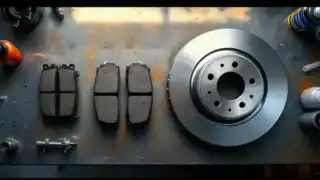
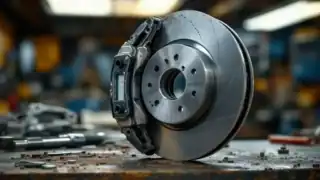
Our inspection covers both axles. We check pad and shoe thickness, measure rotor (disc) thickness against manufacturer tolerances, inspect caliper operation and slides, check brake fluid condition and level, and look at brake lines and hoses for cracking, corrosion, or leakage. On Holden models equipped with electronic brake systems or integrated stability control, we can also check for fault codes that indicate an issue with the ABS module or wheel speed sensors.
One area that catches some Holden owners off guard is the brake booster. This component uses vacuum assistance to amplify the force you apply to the pedal, making braking feel firm and controlled. A failing brake booster on a Commodore or Captiva will often present as a hard, heavy pedal that requires noticeably more effort than normal. It’s a less obvious symptom than grinding or squealing, but it’s equally important to address. Holden brake booster repair is something we handle as part of a full system inspection, not as an afterthought.
If the rotors are within serviceable tolerance, we can machine (resurface) them rather than replace them outright. Where replacement is needed, we source parts that meet OEM specifications for your specific Holden model. Genuine-equivalent brake components are matched to the original design specs for pad compound, rotor metallurgy, and caliper dimensions, so the system performs the way it was designed to.
What Affects the Cost and Time Involved
Brake repair costs vary depending on what the inspection finds. A straightforward pad replacement on a single axle is a much simpler job than replacing pads, rotors, and calipers on both axles, bleeding the system, and addressing a fault code. Parts availability for most Holden models is generally good, though some older or less common variants may require a short wait for specific components.
Vehicle type matters too. A Holden Colorado or Trax with larger disc assemblies will have different part costs compared to a Barina or Spark. We’re upfront about what’s needed before any work starts, and we don’t recommend replacements you don’t actually require.
Holden Brake Repairs in Gatton, Without the Drive to the City
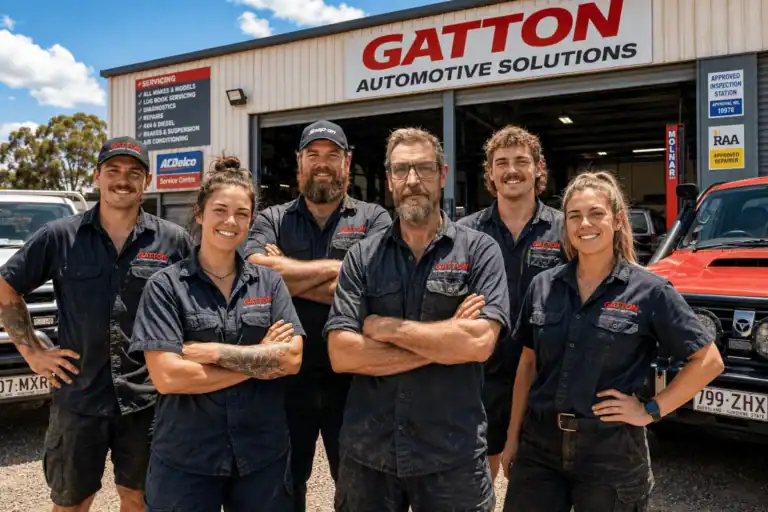
Driving 45 to 80 kilometres to Ipswich or Toowoomba for a brake repair that could be handled locally isn’t anyone’s idea of a good use of a morning. Gatton Automotive Solutions is a full-service workshop covering everything from everyday cars and 4WDs through to trucks, heavy equipment, and agricultural machinery. We issue roadworthy certificates on-site, handle tyre fitting and suspension work in-house, and have sourced parts for a wide range of Holden models over the years.
With five-star reviews from local drivers, the feedback we get consistently comes back to honest advice and fair pricing. We tell you what we find, explain what it means, and give you the information to make your own call. No unnecessary work gets recommended.
If your Holden’s brakes are due for a check, or something doesn’t feel right when you’re slowing down, Call Us Now or Book Your Free Inspection online – Gatton Automotive Solutions is ready to help.