Limited Time: Free Windscreen Wipers With Any Service. Subject To Availability.

Locally Owned & Operated
Honest Upfront Pricing
5★ Reviews
All Makes & Models

Verified 5★ Reviews

Licensed & Insured Hyundai Brake Repair In Gatton

We inspect and repair Hyundai brakes to factory specifications in Gatton. If your brakes feel soft, noisy, or unresponsive, book your free inspection and we will tell you exactly what is needed.

One-Stop Workshop

Honest Advice

5★ Reviews

Hyundai Brake Specialists

Book Your Free Inspection

Tell us what you need and we'll get back to you with a clear quote.

Booking Form
  • Vehicle Details
  • Confirm Vehicle
  • Services
  • Contact Details
Honest Quotes
All Vehicle Types
Local & Reliable

Why Book With Us

Book Your Free Inspection
Drop Off Your Vehicle
We Get to Work
Collect Your Car

Your brakes are the single most important safety system on your Hyundai. Whether you’re driving a Tucson through the Lockyer Valley, commuting in an i30, or running a Santa Fe as a family car, Hyundai brake repair is something that should never sit on the back burner. At Gatton Automotive Solutions, we work on Hyundai vehicles regularly and understand the specific brake components, service intervals, and common wear patterns that affect these cars. If something feels off with your braking, getting it looked at promptly is the right call.

Warning Signs Your Hyundai’s Brakes Need Attention

Hyundai brake systems are generally well-engineered, but like any vehicle, components wear down over time. Some warning signs are obvious. Others are easy to dismiss until they become a real problem.

  • Squealing or high-pitched noise when braking: Hyundai brake pads include a built-in wear indicator that produces this sound deliberately. It’s the system telling you the pads are getting low.
  • Grinding or metal-on-metal sound: This usually means the pad material is gone and the caliper bracket or backing plate is contacting the rotor directly. At this point, rotor damage is likely.
  • Pulling to one side under braking: Can indicate a seized caliper, uneven pad wear, or a brake hose that’s partially collapsed and restricting fluid flow on one side.
  • Soft or spongy brake pedal: Often points to air in the brake lines or a failing master cylinder. Some Hyundai models, particularly older Elantras and i30s, can develop brake booster issues that affect pedal feel. A soft pedal that firms up after pumping is worth investigating straight away.
  • Vibration through the pedal or steering wheel: Typically caused by warped rotors. This is common after repeated heavy braking, particularly on hilly routes through the Lockyer Valley.
  • Brake warning light on the dash: This can indicate low brake fluid, worn pads triggering a sensor, or a fault in the ABS system. Don’t ignore it.

Not every symptom leads to a major repair. Sometimes it’s just worn pads on one axle. The only way to know is a proper inspection.

How We Inspect and Repair Hyundai Brakes

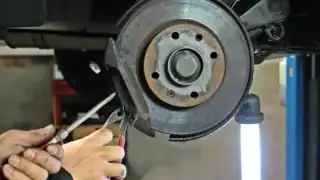
We start with a thorough visual and functional check across the entire braking system before recommending anything. For Hyundai vehicles, this includes checking pad thickness against Hyundai’s recommended minimum wear limits, measuring rotor thickness to see whether they can be machined or need replacing, and inspecting caliper condition and slide pin movement. Sticking slide pins are a known issue on some Hyundai models and can cause uneven pad wear that goes unnoticed until it becomes a brake car repair job rather than a simple pad swap.

We also check the brake fluid. Hyundai recommends brake fluid replacement at regular intervals because moisture absorbed into the fluid over time lowers its boiling point, which can cause fade under heavy or repeated braking. If your fluid is dark or has absorbed water, we’ll flag that during the inspection.

For vehicles where a soft pedal or unusual pedal travel is present, we inspect the brake booster and master cylinder. Hyundai brake booster repair is less common than pad and rotor work, but it does come up, particularly on higher-kilometre vehicles. We test the booster vacuum supply and check for any signs of internal failure before making a recommendation.

Where parts are needed, we source quality components that meet OEM specifications for your specific Hyundai model and build year. Brake parts vary across the Hyundai range, so using the right grade of pad compound and correctly sized rotors matters for both performance and safety.

What Affects the Cost of Hyundai Brake Repairs in Gatton?

Brake repair costs depend on what’s actually needed. Replacing front pads on an i30 is a straightforward job. Replacing all four pads and rotors on a larger Hyundai Tucson or Santa Fe involves more parts and more time. Other factors include whether rotors can be machined rather than replaced, whether calipers need servicing or replacement, and parts availability for less common Hyundai variants.

We’ll tell you what we find and what it means before any work starts. If only one axle needs attention, we won’t push you toward doing all four. That’s just how we operate.

Are OEM or Aftermarket Parts Right for Your Hyundai?

Both options have a place depending on the vehicle’s age, condition, and how it’s being used. For newer Hyundais still under manufacturer warranty conditions, or vehicles where the owner wants to maintain genuine-equivalent specifications, we can source OEM-grade components. For older models where the priority is reliable, safe braking at a fair price, quality aftermarket parts from reputable suppliers are a sensible choice. We’ll give you the options and let you decide.

Why Hyundai Owners in Gatton Choose Us

Gatton Automotive Solutions is a full-service workshop handling everything from everyday Hyundai car brake repairs through to trucks, heavy equipment, and fleet vehicles. There’s no need to drive to Ipswich or Toowoomba for brake work, roadworthy certificates, or anything else your vehicle needs. Our workshop handles suspension upgrades, tyre fitting, smash repairs, and panel work in-house, so if a brake inspection uncovers something else, we can often deal with it in the same visit without sending you elsewhere.

With five-star reviews from local drivers, we’ve built our reputation on doing honest work and giving straight advice. No upselling, no unnecessary repairs.

If your Hyundai’s brakes are overdue for a look, Call Us Now or Book Your Free Inspection online. We’re here in Gatton and ready to help you get back on the road safely.

Other Services

Whatever your needs we have you covered, see some similar services below or click "See All Services" to explore our full service offering.

Your Local Workshop for Every Vehicle

Gatton Automotive Solutions is the one-stop shop for cars, 4WDs, trucks, and heavy equipment. Honest advice and fair pricing, right here in Gatton.

Honest Pricing, No Surprises

We tell you what’s needed and what it costs before we start. No upselling, no pressure.

Everything Under One Roof

Bring your car in and we’ll inspect it, explain what we find, and quote you upfront.

Hyundai Brake System Knowledge

We know Hyundai brake systems well, so faults are found fast and fixed right.

How Hyundai Brake Repair Works

From booking your free inspection through to collecting your vehicle with safe, reliable brakes.

Step 1

Book Your Free Inspection

Call Us Now or book your free brake inspection online to assess your Hyundai's stopping performance.

Step 2

Hyundai Brake System Inspection

We inspect pads, rotors, and fluid using Hyundai-compatible diagnostics to measure wear and identify safety issues.

Step 3

Precision Brake Repair

We fit quality OEM-spec pads, machine or replace rotors, and bleed the system to Hyundai standards.

Step 4

Safety Check & Collection

We test-drive your Hyundai, confirm responsive braking, and hand over your vehicle ready for the road.

Five-Star Rated

Verified 5★ Reviews

Quality Parts From Trusted Suppliers

We use genuine and quality aftermarket parts from reputable suppliers. You get reliable components backed by proper warranties.

Book Your Free Inspection

Tell us what you need and we'll get back to you with a clear quote.

Booking Form
  • Vehicle Details
  • Confirm Vehicle
  • Services
  • Contact Details
Honest Quotes
All Vehicle Types
Local & Reliable

Why Book With Us

Book Your Free Inspection
Drop Off Your Vehicle
We Get to Work
Collect Your Car

Frequently Asked Questions

Browse answers to common questions about our services. Can't find what you're after? Give us a call and we'll help.

If you’re hearing grinding or squealing, feeling the pedal sink lower than usual, or noticing the car pulling to one side under braking, those are signs that need attention soon rather than later. Worn brake pads can damage rotors quickly, turning a straightforward job into a more involved one. A soft or spongy pedal is a more serious warning, as that can point to a hydraulic issue and shouldn’t be left. When in doubt, get it inspected before your next long drive.

The main variables are which components need replacing, which model you drive, and whether OEM-equivalent or genuine parts are used. Replacing brake pads on a small Hyundai hatch is a different job to servicing the rear brakes on an i30 N or a Santa Fe with larger rotors and more complex calipers. Labour time also varies depending on whether the rotors need machining or full replacement. We’ll give you a clear rundown of what’s needed before any work starts.

Some Hyundai models, particularly older i30s and Elantras, are known to wear rear brake pads faster than the fronts, which catches owners off guard if they’re only expecting fronts to need attention. Certain Hyundai brake booster and master cylinder assemblies have also been flagged in technical service bulletins over the years. We check both axles during any brake inspection and can flag anything model-specific to your vehicle rather than just replacing what’s obviously worn.

Under ACCC guidance, Australian consumers are generally not required to have their vehicles serviced exclusively at a dealership to maintain a manufacturer warranty, provided the work is carried out to the manufacturer’s standard using appropriate parts. This is general information, not legal advice, so it’s worth checking your specific warranty terms if you’re unsure. We use quality parts suited to your Hyundai’s specifications, and we can record the work for your service history.

We start by removing the wheels and inspecting the pads, rotors, callipers, brake lines, and brake fluid condition. Pad thickness is measured, rotor surfaces are assessed for wear, scoring, or runout, and the callipers are checked for free movement and any fluid leaks. If everything checks out, we’ll tell you that. If something needs replacing, we’ll explain what and why before proceeding. Most straightforward Hyundai brake repair jobs at our Gatton workshop are completed the same day.

There’s no fixed kilometre interval that applies to every driver, because brake wear depends heavily on driving style, load, and how much stop-start driving you do. Hyundai’s own service schedules recommend periodic brake inspections at each service interval. A driver doing a lot of highway kilometres around the Lockyer Valley will generally get more life from their pads than someone in heavy commuter traffic. As a rough guide, pads often need attention somewhere between 30,000 and 60,000 kilometres, but a visual check at each service is the most reliable indicator.

Continue to site