Your Mitsubishi’s brakes are doing serious work every single day. From the school run to the highway, a brake system that’s worn or degraded puts you and everyone else on the road at real risk. Mitsubishi brake repair covers everything from worn pads and scored rotors through to brake fluid changes, caliper rebuilds, and brake booster faults. If something feels off with how your Mitsubishi stops, getting it looked at promptly in Gatton is far better than waiting until the problem gets worse.
Warning Signs Your Mitsubishi Brakes Need Attention
Mitsubishi vehicles share some brake wear patterns that are worth knowing about. A high-pitched squeal when you first press the pedal is usually the wear indicator doing its job, telling you the pads are getting close to their limit. A grinding noise is more serious, and often means the pad material has worn through entirely and metal is contacting the rotor.
A soft or spongy pedal that sinks further than usual before the car slows down can indicate air in the brake lines or deteriorated brake fluid. Brake fluid absorbs moisture over time, which lowers its boiling point and reduces stopping performance. A vibration through the steering wheel or pedal under braking often points to warped rotors, which is common on Mitsubishi Tritons and Pajeros that do regular towing or carry heavy loads. Pulling to one side under braking can mean a sticking caliper, an uneven pad, or a brake hose fault.
- Squealing or grinding noise when braking
- Pedal feels soft, spongy, or travels further than normal
- Steering wheel or pedal vibrates under braking
- Vehicle pulls left or right when you brake
- Brake warning light on the dash
- Burning smell after driving, particularly after hills or heavy use
How We Inspect and Repair Mitsubishi Brakes
We start with a full inspection before recommending any work. Mitsubishi models use different brake setups depending on the vehicle, so we approach the diagnosis with that in mind. The Triton, for instance, uses a rear drum and front disc setup on older series that requires different inspection techniques than the fully disc-braked Outlander or ASX.
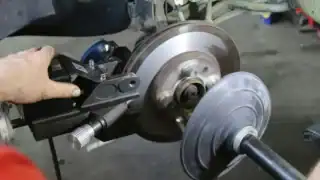
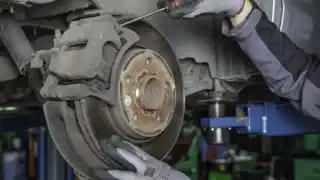
Our inspection covers pad thickness on all corners, rotor condition including wear grooves and surface runout, caliper operation and slide pin movement, brake fluid condition and level, brake lines and hoses for cracks or swelling, and the brake booster for correct vacuum assist. On Mitsubishi models equipped with ABS, we can also check the ABS system and wheel speed sensors if braking feels inconsistent.
For repairs, we use quality parts that meet or exceed Mitsubishi’s OEM specifications. When replacing pads, we always inspect the rotors at the same time, because fitting new pads to damaged rotors shortens the life of the repair. We machine rotors where they’re within serviceable limits, and replace them when they’re not. Brake fluid is flushed to manufacturer spec, typically every two years regardless of distance, as Mitsubishi’s service documentation recommends moisture content testing as part of routine brake maintenance.
Brake Booster and Master Cylinder Faults in Mitsubishi Vehicles
Some older Mitsubishi Pajeros and Tritons present with brake booster issues that can feel like a stiff or heavy pedal, requiring noticeably more effort to stop the vehicle than it should. Mitsubishi brake booster repair is something we diagnose specifically rather than guessing at the cause. A faulty master cylinder can produce a slow pedal fade under sustained pressure. Both are safety-critical faults that we treat as priorities.
What Affects the Cost and Time of Mitsubishi Car Brake Repair?
The honest answer is that it depends on what we find. A straightforward pad and rotor replacement on a standard Mitsubishi Outlander or Triton is a different job to a full system inspection on a Pajero that’s also presenting with caliper and booster issues. We don’t quote you for work we haven’t checked yet, and we won’t recommend more than what the vehicle actually needs.
Parts cost varies between OEM-spec components and quality aftermarket equivalents. We’ll talk you through the options and what makes sense for your vehicle’s age, usage, and how long you plan to keep it. Heavier-use vehicles like Tritons doing regular towing or Pajeros used on property may need higher-performance pads than standard. Rear brake drums, where fitted, take more labour time than disc replacements, which is worth knowing upfront.
Why Mitsubishi Owners in Gatton Choose Us for Brake Work
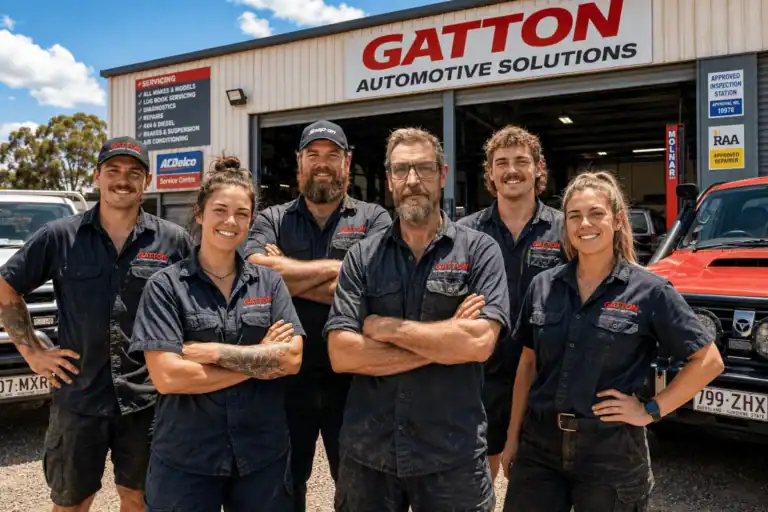
Gatton Automotive Solutions is a full-service workshop in Gatton, which means Mitsubishi car brake repair is part of a much broader capability. We service everything from everyday family cars and utes through to trucks, 4WDs, and heavy equipment. There’s no need to drive to Ipswich or Toowoomba for a brake repair when we can handle it right here, often while you wait for straightforward jobs.
We issue roadworthy certificates on-site, which means if your Mitsubishi needs brake work to pass its rego check or RWC, we can handle both in one visit. Our approach is straight advice and fair pricing, with no upselling and no recommending parts your vehicle doesn’t need. With five-star reviews from drivers across the Lockyer Valley, we’ve built a reputation for being the kind of workshop you actually want to come back to.
If your Mitsubishi is showing any of the brake symptoms above, or if it’s been a while since the brake system was checked, Book Your Free Inspection online or Call Us Now to speak with our team. We’re ready to help keep you and your family safe on the roads in and around Gatton.