Your brakes are the single most important safety system on your Ford. Whether you drive a Ranger ute around the Lockyer Valley, a Transit van on the highway, or a Falcon doing daily school runs through Gatton, getting Ford brake repair right matters far more than getting it done cheap. Worn pads, a soft pedal, or grinding noise are not things to monitor and see how they go. They are signs that something needs attention now, from people who understand how Ford braking systems are designed and how they wear.
Warning Signs Your Ford’s Brakes Need Attention
Ford braking systems are generally reliable, but like any vehicle, they follow wear patterns that show up as recognisable symptoms before they become dangerous failures. Catching these early usually means a straightforward repair. Ignoring them often means replacing components that could have been saved.
- Squealing when you slow down – Most Ford brake pads include a wear indicator, a small metal tab that contacts the rotor when the pad gets low. That high-pitched squeal is it doing exactly what it is supposed to do.
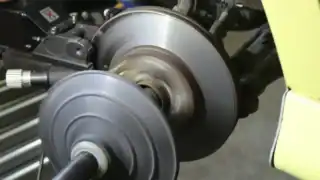
- Grinding or scraping under braking – This typically means the pads are fully worn and metal is contacting metal. Rotor damage is usually already occurring at this stage.
- Soft or spongy brake pedal – A pedal that travels further than normal before the brakes engage can point to air in the brake lines, worn brake hoses, or a failing master cylinder.
- Pulling to one side when braking – Uneven pad wear or a seized calliper can cause the vehicle to drift left or right under braking. On unsealed roads around the Lockyer Valley, this can be especially difficult to manage.
- Vibration or pulsing through the pedal – Warped rotors are a common cause. Ford Ranger and Territory owners in particular often experience this after repeated heavy braking or towing in hilly terrain.
- Brake warning light on the dash – Some Ford models use a low-pad sensor that triggers a dash warning. It should not be dismissed as a glitch.
How We Approach Ford Brake Repairs in Gatton
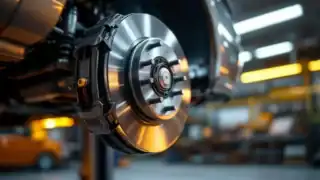
We do not work off assumptions. Before recommending any brake work, we inspect the system properly. That means pulling wheels, measuring pad thickness against Ford’s service specifications, checking rotor condition for wear, scoring, and runout (the technical term for a rotor that has developed a slight warp), and assessing callipers for even movement and seal integrity.
Ford’s braking systems vary meaningfully across their model range. A Ranger with a tow pack has different rotor sizing and pad compound requirements than a Focus or a Fiesta. The Transit uses a heavier-duty calliper setup suited to commercial load ratings. We factor in what the vehicle is actually used for, not just what the part number says. If you are regularly towing or carrying loads, we will factor that into the parts selection to give you brake performance that holds up to how you actually drive.
Where brake fluid is due for replacement, we carry out a proper flush rather than a top-up. Ford recommends brake fluid be replaced on a set interval because the fluid absorbs moisture over time, which lowers its boiling point and can contribute to a spongy pedal feel during hard braking. We also check the brake booster while we are in there. Ford brake booster repair is less common than pad or rotor work, but a booster that is losing vacuum can make the pedal feel heavier than normal and increase stopping distances.
Parts and Specifications
We source quality parts that meet or exceed Ford’s original specifications. Depending on the repair, that might mean OEM-equivalent pads and rotors or a step up for vehicles doing harder work. We will walk you through the options honestly. No padding the bill with parts you do not need, no cutting corners with components that will not last.
What Affects the Cost and Time of a Brake Repair?
The main variables are how much wear has occurred and which components need replacing. A set of front pads on a Fiesta is a straightforward job. A full four-corner brake service on a dual-cab Ranger, including rotors and a fluid flush, is a larger job and takes more time. Parts availability matters too. Common Ford models are generally well-stocked, though some Transit and older Falcon components may need to be ordered in.
We will always tell you what is actually needed before any work starts. If only the fronts need doing, we will say so. If a rotor can be machined rather than replaced, we will tell you that too. Straight advice is how we work.
Why Gatton Drivers Bring Their Fords to Us
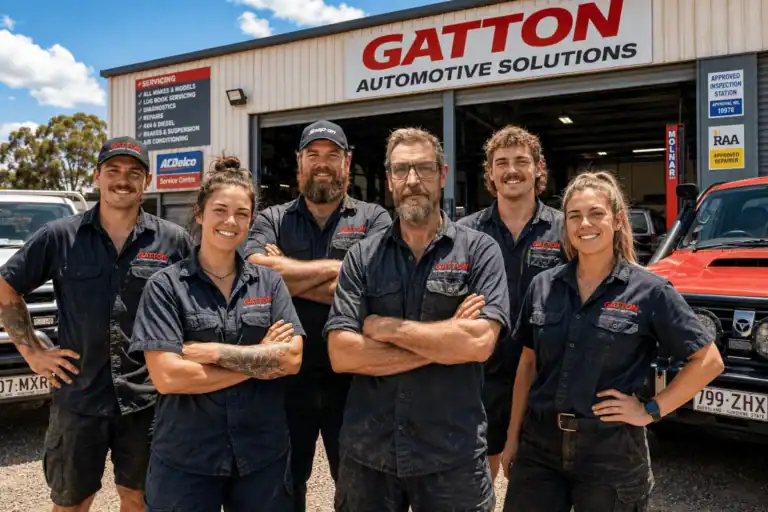
Gatton Automotive Solutions handles Ford car brake repairs alongside the full range of mechanical work, from everyday servicing to heavy vehicle and equipment repairs, tyres, suspension, roadworthy certificates, and smash repairs. Everything is done in one place. You do not need to drive to Ipswich or Toowoomba for quality brake work on your Ford.
We have built a reputation in Gatton on honest advice and fair pricing, backed by five-star reviews from drivers across the Lockyer Valley. Fleet operators with Ford Transit or Ranger fleets can also talk to us about keeping their vehicles on the road with minimal downtime.
If your Ford is showing any of the signs above, Book Your Free Inspection online or Call Us Now. We are here to help Gatton and Lockyer Valley drivers stay safe on the road.