Limited Time: Free Windscreen Wipers With Any Service. Subject To Availability.

Locally Owned & Operated
Honest Upfront Pricing
5★ Reviews
All Makes & Models

Verified 5★ Reviews

Licensed & Insured Honda Brake Repair In Gatton

Brake repairs for Honda vehicles in Gatton, carried out to factory specs. We inspect pads, rotors, and fluid to keep your car safe on the road. Honest pricing, no guesswork.

One-Stop Workshop

Honest Advice

5★ Reviews

Honda Brake Specialists

Book Your Free Inspection

Tell us what you need and we'll get back to you with a clear quote.

Booking Form
  • Vehicle Details
  • Confirm Vehicle
  • Services
  • Contact Details
Honest Quotes
All Vehicle Types
Local & Reliable

Why Book With Us

Book Your Free Inspection
Drop Off Your Vehicle
We Get to Work
Collect Your Car

Your Honda’s brakes are one of the few systems where early action genuinely matters. Honda brake repair covers everything from worn brake pads and scored rotors through to brake booster faults, caliper seizures, and brake fluid contamination. If you’re hearing something unusual or noticing a change in how your Honda stops, getting it looked at by a workshop familiar with the way Honda brake systems are engineered is a smart first step. We handle Honda car brake repair regularly here in Gatton, and we see a fairly consistent pattern of issues across popular models like the Civic, CR-V, HR-V, Jazz, and Accord.

Warning Signs Your Honda’s Brakes Need Attention

Honda brake systems are generally reliable, but they do have some tendencies worth knowing. The rear brake caliper sliders on several Honda models are prone to seizing over time, especially in vehicles that do a lot of highway kilometres without many hard stops. A seized slider can cause uneven pad wear, a pulling sensation under braking, or a dragging feeling even when your foot is off the pedal. Left too long, a seized caliper can score the rotor and turn a straightforward repair into a more involved job.

Beyond caliper issues, watch for:

  • A soft or spongy brake pedal that sinks further than usual before the brakes engage
  • A pulsing or vibrating sensation through the pedal when slowing from highway speeds, which often points to rotor warping
  • Squealing or grinding sounds during braking, particularly during the first few stops of the day
  • A high-pitched squeal that stops when you apply the brake pedal (that’s the wear indicator doing its job)
  • The vehicle pulling to one side under braking
  • A longer stopping distance than you’re used to

Any of these signs warrant an inspection before the situation gets worse. On safety-critical systems like brakes, waiting to see if a noise goes away is rarely the right call.

How We Approach Honda Brake Repair in Gatton

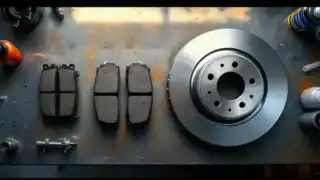
We start with a full brake system inspection rather than jumping straight to replacing parts. That means measuring pad thickness and rotor depth against Honda’s minimum specifications, checking caliper condition and slider movement, testing brake fluid for moisture contamination (Honda recommends brake fluid replacement every two to three years regardless of kilometres), and inspecting brake lines and hoses for signs of cracking or weeping.

If your Honda has an electric parking brake, which appears on newer CR-V and Accord models, the rear caliper pistons cannot be wound back manually the way older mechanical systems can. Resetting them correctly requires electronic tool support. We’re set up to handle this properly so the parking brake recalibrates and functions as it should after a pad or rotor change.

For Honda brake booster repair, we check vacuum supply, booster response, and the master cylinder condition together, since these components work as a unit and a fault in one often affects how the others feel under pedal pressure.

Parts for Honda Vehicles

We fit quality-equivalent parts that meet Honda’s specifications. For most models, this means sourcing brake pads with the correct friction rating for how Honda has tuned the ABS and brake bias on that platform. Fitting pads with the wrong friction coefficient can affect stopping distances and ABS threshold behaviour, so we pay attention to getting the spec right rather than just finding something that physically fits.

What Affects the Cost of Honda Brake Repairs in Gatton?

A few variables have the biggest influence on what a Honda brake repair costs. First is how far the wear or damage has progressed. Pad replacement on its own is a different job to pad and rotor replacement, and seized calipers add labour time on top of that. Second is the model and year. Older Civics and Jazz models tend to use more commonly available parts, while newer HR-V and CR-V variants with electric parking brakes or larger brake packages may have slightly longer parts lead times. Third is whether brake fluid replacement is due, which we’ll flag clearly during the inspection rather than add without discussion.

We give you a clear quote before any work starts. No surprises on the invoice.

Why Gatton Automotive Solutions for Your Honda’s Brakes

We’re a full-service workshop based in Gatton, which means there’s no need to drive to Ipswich or Toowoomba for repairs your car needs now. Honda car brake repair sits alongside our broader mechanical work covering cars, 4WDs, light trucks, and heavy equipment, all under one roof. If your inspection reveals related issues, like worn tyres affecting braking confidence or a suspension component affecting brake bias, we can address those here as well.

Our customers rate us five-star, and the feedback we hear most is that we’re straight with people. We tell you what we found, what it means, and what it will cost. If something doesn’t need replacing, we’ll say so. Roadworthy certificates are issued on-site, so if your Honda is coming up for a safety inspection, that’s something we can handle in the same visit.

If your Honda’s brakes don’t feel right, don’t put it off. Book Your Free Inspection online or Call Us Now and we’ll get it assessed quickly from our Gatton workshop.
Other Services

Whatever your needs we have you covered, see some similar services below or click "See All Services" to explore our full service offering.

Your Local Workshop for Every Vehicle

Gatton Automotive Solutions is the one-stop shop for cars, 4WDs, trucks, and heavy equipment. Honest advice and fair pricing, right here in Gatton.

Honest Pricing, No Surprises

We tell you what’s needed and what it costs before we start. No upselling, no pressure.

Everything Under One Roof

Bring your car in and we’ll inspect it, explain what we find, and quote you upfront.

Honda-Specific Brake Diagnostics

We diagnose and repair Honda brake systems with factory-level knowledge and tooling.

How Honda Brake Repair Works

From inspection to safe brakes, here's what to expect when you book your Honda brake repair in Gatton.

Step 1

Book Your Free Inspection

Call Us Now or book your free inspection online to have your Honda's brake system assessed by our technicians.

Step 2

Honda Brake System Inspection

We measure pad thickness, inspect rotors for wear and damage, test brake fluid condition, and check all components.

Step 3

Precision Brake Repair

We fit quality pads and rotors, machine or replace components as needed, bleed the system, and verify all work.

Step 4

Safety Check and Collection

Your brakes are tested for stopping power and feel, then you're ready to drive with confidence and safety restored.

Five-Star Rated

Verified 5★ Reviews

Quality Parts From Trusted Suppliers

We use genuine and quality aftermarket parts from reputable suppliers. You get reliable components backed by proper warranties.

Book Your Free Inspection

Tell us what you need and we'll get back to you with a clear quote.

Booking Form
  • Vehicle Details
  • Confirm Vehicle
  • Services
  • Contact Details
Honest Quotes
All Vehicle Types
Local & Reliable

Why Book With Us

Book Your Free Inspection
Drop Off Your Vehicle
We Get to Work
Collect Your Car

Frequently Asked Questions

Browse answers to common questions about our services. Can't find what you're after? Give us a call and we'll help.

The most common signs are a squealing or grinding noise when you brake, a soft or spongy brake pedal, the car pulling to one side when stopping, or the brake warning light coming on. Vibration through the steering wheel or pedal under braking is another signal worth taking seriously. Honda braking systems are generally reliable, but worn pads and glazed rotors can develop gradually, so the symptoms are easy to dismiss early on. If you notice any of these, get the brakes inspected before the issue goes further.

It depends on the sound, but we would recommend against delaying an inspection. A high-pitched squeal often means the wear indicators on your brake pads are touching the rotor, which is a built-in warning designed to get your attention. A grinding sound usually means the pads are worn through entirely, and metal-on-metal contact is happening. At that stage, stopping distances increase and rotor damage becomes likely. Neither situation improves on its own. Book Your Free Inspection and we will tell you exactly what is going on.

We start with a full brake inspection covering pad thickness, rotor condition, brake fluid level and quality, caliper operation, and brake lines. From there, we walk you through what we have found before any work starts. Depending on what is needed, the job might involve replacing pads, machining or replacing rotors, bleeding the brake fluid, or addressing a faulty caliper or brake booster. We source parts suited to your Honda’s specifications and make sure the system is properly bedded in before handing the car back.

Honda models like the Civic and CR-V generally have dependable brake systems, but a few patterns come up in the workshop. Rear brake pads on some CR-V variants can wear faster than expected if the electronic parking brake has not been correctly retracted during a pad change, which causes dragging. Some Civic owners also report rotor warping after heavy use or repeated hard stops, often presenting as steering wheel vibration under braking. These are not defects as such, just wear patterns worth knowing about so they are caught early.

Under Australian consumer law, ACCC guidance generally indicates that having your vehicle serviced or repaired by a qualified independent mechanic does not void your manufacturer warranty, provided the work meets the required standard and appropriate parts are used. This applies to brake repairs as it does to servicing. That said, warranty terms vary between manufacturers and individual agreements, so it is worth checking your specific Honda warranty documentation if you have concerns. We are happy to discuss what is involved so you can make an informed call.

A straightforward brake pad and rotor replacement on a standard Honda typically takes one to two hours. If we are also bleeding the brake fluid, inspecting the brake booster, or dealing with a seized caliper, it may take a little longer. We will give you a clear timeframe once we have had a look at the vehicle. For drivers in Gatton and the Lockyer Valley, we offer while-you-wait servicing for many brake jobs, so you are not stuck without your car for the day.

Several factors influence the final price. The biggest variables are which components need replacing, how many axles are involved (front, rear, or both), and the condition of the rotors. A basic pad replacement is quite different in scope and cost from a job that also requires new rotors, caliper work, or a brake fluid flush. Honda models vary in parts pricing too, with newer or higher-spec vehicles sometimes requiring more specific components. We will inspect the brakes first and give you a clear quote before starting any work.

There is no fixed interval because it depends heavily on driving style, load, and conditions. City driving with frequent stops wears pads faster than open road driving. As a general guide, many drivers find brake pads last somewhere between 30,000 and 70,000 kilometres, but this varies widely. Honda’s service schedule does not specify a set brake pad replacement interval, relying instead on inspection at each service. Having your brakes checked during every logbook service is the most reliable way to catch wear before it becomes a problem.

Continue to site