Limited Time: Free Windscreen Wipers With Any Service. Subject To Availability.

Locally Owned & Operated
Honest Upfront Pricing
5★ Reviews
All Makes & Models

Verified 5★ Reviews

Reliable Subaru Brake Repair In Gatton

We inspect and repair Subaru brakes in Gatton with the same care we'd give our own vehicles. Safe, reliable brakes start with honest diagnosis and quality work.

One-Stop Workshop

Honest Advice

5★ Reviews

Subaru Brake Specialists

Book Your Free Inspection

Tell us what you need and we'll get back to you with a clear quote.

Booking Form
  • Vehicle Details
  • Confirm Vehicle
  • Services
  • Contact Details
Honest Quotes
All Vehicle Types
Local & Reliable

Why Book With Us

Book Your Free Inspection
Drop Off Your Vehicle
We Get to Work
Collect Your Car

Your Subaru’s brakes are one of the few systems where a small problem can become a serious one very quickly. Subaru brake repair covers everything from worn pads and grooved rotors through to brake fluid flushes, caliper replacements, and brake booster faults. At Gatton Automotive Solutions, we work on Subarus regularly and know the quirks these vehicles carry across different models and generations. If your Subaru isn’t stopping the way it should, getting it looked at sooner rather than later is always the right call.

Signs Your Subaru Brakes Need Attention

Subarus are generally well-built, but the braking system still wears over time and certain warning signs are worth taking seriously. The most common thing drivers notice first is a squealing or squeaking noise when applying the brakes. This is often the wear indicator on the brake pad making contact with the rotor, letting you know the pad material is running low. That squealing can become a grinding metal-on-metal sound if it’s left too long, and at that point rotor damage is usually involved.

Other signs that your Subaru car brakes need a repair or inspection include:

  • A pulsing or vibrating brake pedal when stopping, which often points to warped rotors, particularly common after sustained use on the Warrego Highway or repeated heavy braking with a loaded vehicle
  • The brake pedal sitting lower than usual or feeling soft and spongy under foot, which can indicate worn brake fluid, air in the brake lines, or a failing master cylinder
  • The vehicle pulling to one side when braking, which usually suggests uneven pad wear or a sticking caliper
  • A lit ABS warning light on the dash, which in many Subaru models triggers when there’s a fault in the wheel speed sensors or the ABS module
  • Longer stopping distances than you’d expect, even in dry conditions

If you’re seeing any of these, booking a brake inspection is the right next step. Don’t wait until your next logbook service if something feels off.

What Subaru Brake Repair Involves at Our Workshop

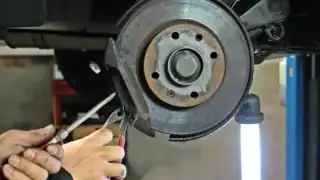
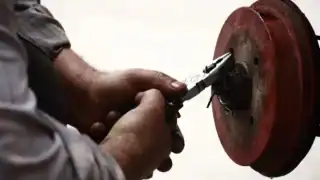
We start every Subaru brake job with a proper inspection before we quote anything. That means pulling the wheels, measuring pad thickness on all four corners, inspecting rotor surface condition and measuring for thickness and runout (lateral wobble that causes pedal pulsing), checking caliper operation, inspecting brake hoses for cracking or swelling, and testing brake fluid for moisture content.

On Subaru models, a few things are worth paying specific attention to. The rear brake caliper on many Subaru models includes an integrated park brake mechanism, which means rear caliper replacement or pad changes need to be done correctly to avoid park brake issues. Some older Subarus also have a reputation for brake booster degradation over time, with the booster losing its ability to amplify pedal pressure effectively. This results in a noticeably harder pedal and reduced brake response. Subaru brake booster repair or replacement is something we’re set up to handle here in Gatton without needing to send the vehicle elsewhere.

We source parts to OEM specification or genuine-equivalent quality depending on the job. For a daily driver, quality aftermarket brake pads and rotors that meet the correct friction rating for your Subaru model work well and represent good value. Where a vehicle warrants OEM components, we can source those too through our in-house parts ordering. We don’t recommend the cheapest parts available and we’ll always explain what we’re fitting and why.

What Affects the Cost and Time of a Brake Repair?

Brake repair pricing across any vehicle type depends on how much work the system actually needs. A Subaru coming in for a straightforward front pad and rotor replacement will be a different job to one needing all four corners done plus a brake fluid flush and a caliper rebuild. The number of axles involved, whether rotors need replacing or can be machined, and parts availability for your specific model all factor in.

Subaru parts are generally accessible and we carry common items or can have them here quickly through our supplier network. Labour time varies by model. Some Subaru variants have tight rear access compared to others, which can add time to what looks like a simple job on paper. We’ll give you a clear picture of what’s needed and what it’ll cost before any work starts.

Why Gatton Drivers Bring Their Subarus to Us

Gatton Automotive Solutions handles everything from everyday passenger cars and Subaru all-wheel-drive wagons through to 4WDs, utes, trucks, and heavy equipment. That breadth means we’re not a single-service workshop, and if your Subaru needs something beyond brakes while it’s here, we can handle it in one visit. Suspension work, tyre fitting, wheel alignment, and roadworthy certificates are all done on-site. There’s no reason to travel to Ipswich or Toowoomba for work we can do right here in the Lockyer Valley.

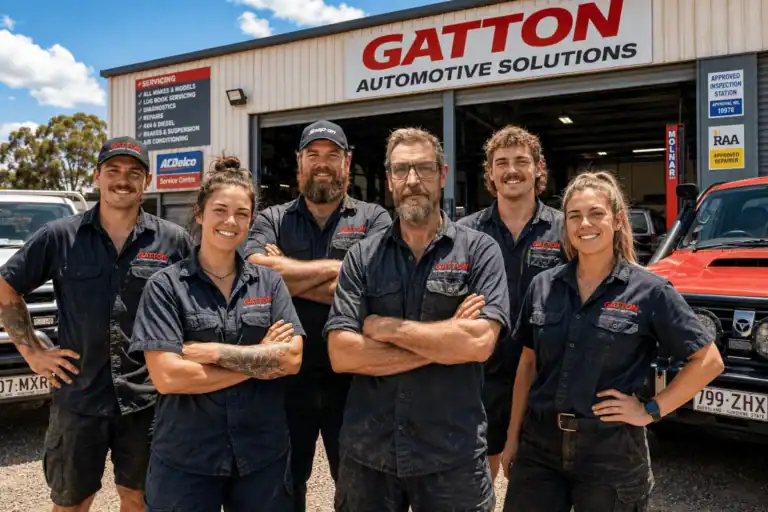
We’re locally owned and operated, and we’ve built our reputation in Gatton on honest advice and fair pricing. We don’t flag unnecessary work, and we don’t push parts replacements that can wait. Our team has five-star reviews behind us, and the consistent feedback is straightforward: we do what we say we’ll do, and we treat people properly.

Fleet operators and businesses running Subaru vehicles in and around Gatton are welcome to discuss servicing arrangements that keep your vehicles on the road with minimal disruption.

Book a Subaru Brake Inspection in Gatton

If your Subaru is showing any brake warning signs, don’t put it off. Give us a call using the Call Us Now button, or use the online booking form to Book Your Free Inspection at our Gatton workshop. We’ll take a look and tell you exactly what’s needed.
Other Services

Whatever your needs we have you covered, see some similar services below or click "See All Services" to explore our full service offering.

Your Local Workshop for Every Vehicle

Gatton Automotive Solutions is the one-stop shop for cars, 4WDs, trucks, and heavy equipment. Honest advice and fair pricing, right here in Gatton.

Honest Pricing, No Surprises

We tell you what’s needed and what it costs before we start. No upselling, no pressure.

Everything Under One Roof

Bring your car in and we’ll inspect it, explain what we find, and quote you upfront.

Subaru Brake System Knowledge

We know Subaru braking systems inside out, from standard to performance setups.

How Subaru Brake Repair Works

From inspection to safe brakes, here's how we handle your Subaru's brake repair in Gatton.

Step 1

Book Your Free Inspection

Book your free inspection to assess your Subaru's brake condition and identify what repairs are needed.

Step 2

Subaru Brake System Inspection

We measure pad thickness, rotor wear, and fluid condition using precise tools to diagnose brake faults.

Step 3

Precision Brake Repair

We replace pads, rotors, or fluid using OEM-spec Subaru parts and proven repair procedures for safety.

Step 4

Test Drive & Handover

We test your brakes on road, confirm smooth and responsive stopping, then hand your vehicle back ready to go.

Five-Star Rated

Verified 5★ Reviews

Quality Parts From Trusted Suppliers

We use genuine and quality aftermarket parts from reputable suppliers. You get reliable components backed by proper warranties.

Book Your Free Inspection

Tell us what you need and we'll get back to you with a clear quote.

Booking Form
  • Vehicle Details
  • Confirm Vehicle
  • Services
  • Contact Details
Honest Quotes
All Vehicle Types
Local & Reliable

Why Book With Us

Book Your Free Inspection
Drop Off Your Vehicle
We Get to Work
Collect Your Car

Frequently Asked Questions

Browse answers to common questions about our services. Can't find what you're after? Give us a call and we'll help.

The most common signs are a squealing or grinding noise when you brake, a spongy or soft brake pedal, the car pulling to one side when stopping, or the brake warning light coming on. Vibration through the steering wheel or pedal when braking can also point to worn rotors. Subarus with all-wheel drive put consistent load on all four brakes, so wear tends to be fairly even across the axles, but it still builds up over time. If you notice any of these signs, get the brakes looked at promptly.

No. A grinding noise usually means the brake pads have worn through completely and metal is contacting metal on your rotors. Continuing to drive in this condition increases stopping distances, damages the rotors further, and significantly raises your repair costs. More importantly, it puts you and other road users at real risk. Pull over safely, and arrange to have the vehicle inspected before driving it again. This is one of those situations where waiting is not worth it.

Several factors influence the final cost: whether you need pads only or pads and rotors, which axle or axles are affected, and the specific Subaru model. Subaru uses different brake setups across its range, with models like the WRX and Outback requiring parts suited to their higher performance or weight ratings. Labour time varies depending on whether calipers need servicing or the brake fluid needs a flush as part of the job. We do not quote dollar amounts here, but we will give you a clear price before any work starts.

Under ACCC guidance, Australian consumer law generally does not require you to have your vehicle serviced or repaired exclusively at a dealership to maintain your manufacturer warranty. An independent workshop can carry out brake repairs and log the work. That said, warranty terms do vary, so it is worth checking your specific Subaru warranty documents if you are unsure. We are happy to discuss what information you need to keep on file. This is general information, not legal advice.

We start by inspecting the full brake system, including pad thickness, rotor condition, caliper operation, brake lines, and fluid quality. On Subaru models with all-wheel drive, we pay particular attention to rear brake wear since these are often the first to go on models like the Forester and Impreza. From there, we confirm exactly what needs replacing and walk you through the findings before starting any work. Parts are fitted and the system is bedded in and tested before the car leaves our workshop in Gatton.

A few patterns come up regularly on Subarus. Rear brake pads on AWD models can wear faster than the fronts, which catches some owners off guard. Older Subaru Outback and Forester models can develop sticking rear calipers, particularly if the vehicle does a lot of highway driving without much hard braking to keep things moving. The Subaru brake booster, which amplifies pedal pressure, can also develop faults on higher-mileage vehicles, usually showing up as a heavy or unresponsive pedal. These are all things we check during an inspection.

Brake pad life varies depending on how the vehicle is driven, the model, and whether it is used for towing or off-road work. As a rough guide, pads often last somewhere between 30,000 and 70,000 kilometres, but that range is wide for a reason. A Subaru Outback used for regular highway runs will wear pads differently to a Forester doing school runs with lots of stop-start traffic. Having your brakes checked at each service is the most reliable way to stay on top of wear before it becomes a problem.

Yes, brake booster repair and replacement is something we handle at Gatton Automotive Solutions. The brake booster sits between the pedal and the master cylinder and uses engine vacuum to reduce the effort needed to stop the car. When it fails, the pedal feels unusually heavy or hard to press, and you may need to push much harder than normal to get the same stopping response. Some drivers also notice a hissing sound near the pedal. If your Subaru’s pedal feel has changed noticeably, it is worth having the booster checked alongside the rest of the brake system.

Continue to site