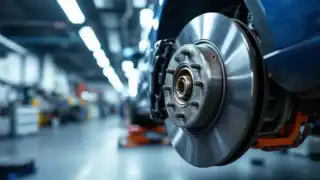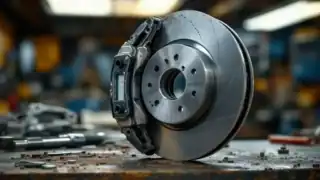
Your brakes are the single most important safety system on your Suzuki. Whether you’re driving a Swift through Gatton’s main street, loading up a Vitara for a run out through the Lockyer Valley, or putting kilometres on a Carry van for work, Suzuki brake repair is one job where waiting to see if things improve on their own is never the right call. If something feels off, getting it looked at quickly is what keeps you and everyone around you safe.
Warning Signs Your Suzuki Brakes Need Attention
Suzuki owners often describe the same handful of symptoms before bringing their vehicle in. Some are hard to miss, others are easy to write off as road noise or a bad day. Here’s what to watch for:
- Squealing or grinding when you brake: A high-pitched squeal usually means the wear indicators on your brake pads are touching the rotors. A grinding sound is more serious and often means the pads have worn through entirely.
- A soft or spongy pedal: If the brake pedal sinks further than usual before the brakes bite, there may be air in the hydraulic lines or a problem developing in the master cylinder or brake booster.
- Pulling to one side under braking: This can point to a seized calliper on one side, uneven pad wear, or a hose that’s partially blocked. It’s a symptom that also affects steering feel, so it’s worth acting on quickly.
- Vibration or pulsing through the pedal: Often caused by warped rotors. This is particularly common on Suzukis used for towing or on hilly terrain, where the brakes work harder over longer periods.
- The brake warning light staying on: This can indicate low brake fluid, a sensor fault, or something more significant in the ABS (anti-lock braking system). It’s not a light to clear and forget.
If your Suzuki is showing any of these signs, the right move is a proper inspection rather than guessing at the cause.
How We Inspect and Repair Suzuki Brakes
Suzukis generally have reliable brake systems, but they do have a few characteristics worth knowing. Smaller models like the Swift and Baleno often pair disc brakes up front with drum brakes at the rear, while heavier models like the Grand Vitara use four-wheel disc setups. Knowing the configuration matters when diagnosing wear patterns and selecting the right parts.
We start with a thorough visual inspection of all four corners. That covers pad thickness, rotor condition, calliper operation, brake hoses and lines, and fluid level and colour. Brake fluid absorbs moisture over time and should be checked against your Suzuki’s service schedule. If it’s been more than two years or the fluid looks dark and contaminated, a flush is usually worthwhile regardless of what else the inspection finds.
For vehicles where the pedal feel or warning light points to a deeper issue, we also check the brake booster and master cylinder. Suzuki brake booster repair is less common than pad or rotor work, but it does come up on older models, and a booster fault can make braking feel noticeably different even when the pads and rotors look fine.
Where parts are needed, we use quality components suited to your specific Suzuki model and year. OEM-spec or genuine-equivalent parts are matched to the vehicle’s braking requirements, not just grabbed off the shelf because they fit. On Suzuki models that use drum brakes at the rear, we also check the wheel cylinders and self-adjuster mechanisms, which are easy to overlook and can cause uneven rear braking if they’re neglected.
What Affects Repair Cost and Timing in Gatton
The cost of Suzuki car brake repair varies depending on how much of the system needs attention. A straightforward front pad replacement on a Swift is a shorter job than replacing all four rotors and pads on a Grand Vitara, or tracking down the source of a gradual pedal fade. We give you an honest rundown of what we’ve found and what actually needs doing before any work starts. There’s no pressure to do more than what the vehicle requires.
Parts availability for Suzuki models in Australia is generally good, and we handle sourcing directly so you’re not left chasing parts yourself. Most standard brake jobs can be completed in a single visit. More involved work, like calliper replacement or a brake booster repair, may take longer depending on parts lead times.
Why Choose Gatton Automotive Solutions for Your Suzuki
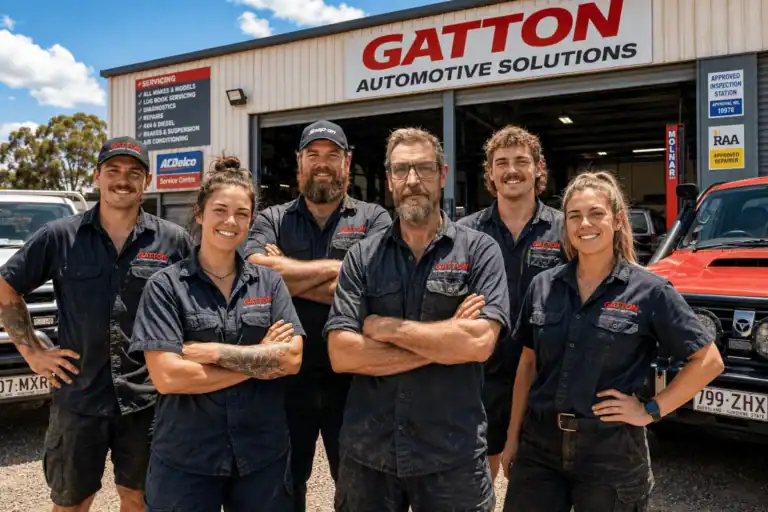
We’re a full-service workshop here in Gatton covering cars, 4WDs, trucks, and heavy equipment. For Suzuki owners in the Lockyer Valley, that means you don’t need to travel to Ipswich or Toowoomba for work that can be done properly right here. Our five-star reviews reflect the way we work: straight advice, fair pricing, and no unnecessary upselling.
If your Suzuki’s brakes also need a roadworthy certificate, we issue those on-site. If there’s a tyre or suspension concern picked up during the brake inspection, we can handle that in the same workshop visit. From general mechanical work for everyday drivers through to heavy vehicle servicing, smash repairs, custom paintwork, and agricultural equipment, Gatton Automotive Solutions is set up to handle more than just a single job at a time.
If your brakes are giving you any reason for concern, Call Us Now or Book Your Free Inspection online. We’re here for Suzuki owners across Gatton and throughout the Lockyer Valley.