Land Rover brake repair is one of those jobs where getting the details right genuinely matters. Land Rovers are built for serious work, whether that’s towing on the Warrego Highway, navigating farm tracks west of Gatton, or handling the daily school run. The braking systems on these vehicles are engineered with that in mind, and they deserve attention from mechanics who understand what they’re dealing with, not a one-size-fits-all approach. If you’ve noticed something off with your Discovery, Defender, Range Rover, or Freelander, it’s worth getting it looked at properly before it becomes a bigger problem.
Warning Signs Your Land Rover’s Brakes Need Attention
Land Rover braking systems are more involved than those on a standard passenger car. Most modern models use electronic brake force distribution (EBD) alongside ABS, and some feature Terrain Response systems that actively adjust braking behaviour across different surfaces. When something goes wrong, you might notice it as a soft or spongy pedal feel, a grinding or squealing noise when you slow down, or the vehicle pulling to one side during braking. These are all signs the system needs inspection.
There are other warning signs that are easy to overlook:
- The brake warning light or ABS light staying on after the vehicle starts
- A pulsing or vibrating sensation through the brake pedal under normal braking
- Increased stopping distances, especially noticeable when towing or carrying a load
- A burning smell after driving in hilly country or after repeated hard stops
- Uneven pad wear visible through the wheel spokes
On older Discovery and Freelander models in particular, brake caliper seizure is a known issue, especially on vehicles that see a mix of highway driving and property use. A partially seized caliper can cause uneven wear across an axle and make the vehicle feel like it’s fighting you under braking.
What Our Brake Inspection and Repair Involves
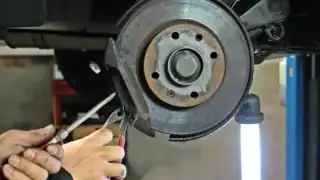
We start every Land Rover brake job with a thorough inspection rather than jumping straight to parts. That means measuring pad thickness across all four corners, checking rotor (disc) thickness and surface condition against manufacturer specifications, and assessing caliper operation for signs of sticking or fluid leaks. We also check brake fluid condition, including moisture content where possible, since brake fluid absorbs water over time and a high moisture level reduces the fluid’s boiling point, which affects braking performance under sustained load.
For vehicles with electronic stability or Terrain Response integration, we scan for any stored fault codes in the brake-related modules. A brake warning light on a Land Rover doesn’t always mean worn pads; it can flag issues with wheel speed sensors, hydraulic pressure, or the electronic parking brake system on newer models. Identifying the actual fault before ordering parts saves time and money.
When it comes to parts, we use OEM-specification or genuine-equivalent components suited to your specific Land Rover model and variant. Pads and rotors for a Defender 110 used as a genuine work vehicle have different requirements to those on a Range Rover Sport used primarily on sealed roads. We factor in how the vehicle is used, not just what it is.
Brake Fluid and Hydraulic System Checks
Land Rover recommends brake fluid replacement at regular service intervals, but many owners only address fluid when a fault appears. Old fluid with high moisture absorption can lead to sponginess at the pedal and, in severe cases, vapour lock under heavy braking. As part of our brake repair work, we check fluid condition and advise honestly if a flush is warranted based on what we find, not as a standard upsell.
What Affects the Cost and Time of Land Rover Brake Repair in Gatton?
A few variables shape how involved a brake repair turns out to be. The most straightforward jobs, replacing worn pads on a single axle with rotors in good condition, are typically completed in a short visit. More involved repairs, such as caliper replacement, brake hose renewal, or addressing a hydraulic fault flagged by the ABS module, take longer and require sourcing the right parts.
Parts availability for Land Rover models can vary. Some components are readily stocked locally; others need to be ordered, particularly for older Defenders or the Discovery 2 and early Freelander. We handle parts sourcing directly, so you don’t need to chase down suppliers yourself. We’ll give you a clear picture of what’s needed and what it involves before any work begins.
Whether you choose OEM Land Rover parts or quality aftermarket equivalents also affects cost. We can talk through both options honestly based on your vehicle’s age, condition, and how you use it.
Why Lockyer Valley Land Rover Owners Come to Us
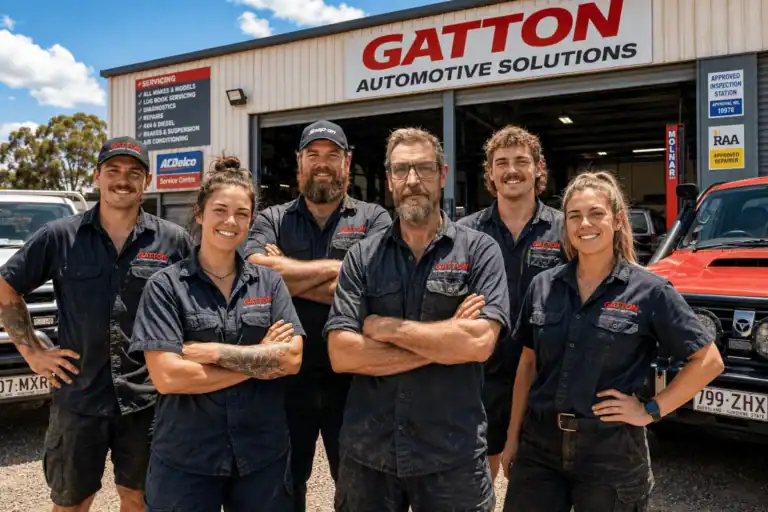
Gatton Automotive Solutions is a full-service workshop handling everything from everyday passenger cars through to 4WDs, trucks, and heavy equipment. Land Rover owners across the Lockyer Valley don’t need to drive to Ipswich or Toowoomba to have their brakes properly assessed and repaired. We issue roadworthy certificates on-site, fit tyres, and handle suspension work, so if a brake inspection turns up something related, it can often be addressed in the same visit.
With five-star reviews from local drivers, our reputation is built on giving people straight answers and doing solid work. We don’t recommend repairs that aren’t needed, and we don’t gloss over things that are.
If your Land Rover’s brakes are giving you cause for concern, Call Us Now or Book Your Free Inspection online. We look after drivers right across the Gatton area and surrounding Lockyer Valley.