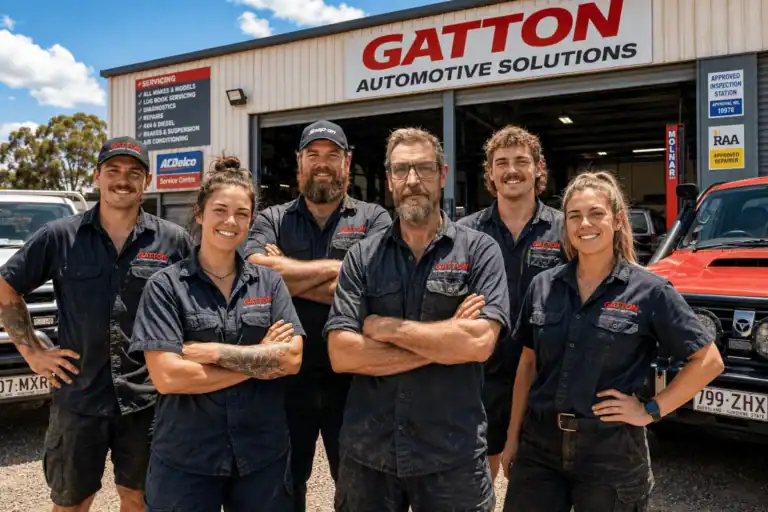
A vibration through the floor, a clunking sound when you accelerate, or a shudder every time you pull away from the lights — these are the kinds of things that bring Honda owners in for a tailshaft inspection. Honda tailshaft repair covers the driveshaft assembly that transfers power from the transmission to the rear wheels (or, on all-wheel-drive Honda models, to both axles). When this component wears or fails, it doesn’t just make the drive unpleasant — it affects how safely and predictably your vehicle behaves on the road. At Gatton Automotive Solutions, we carry out Honda tailshaft repairs for owners across Gatton and throughout the Lockyer Valley, with no need to head to Ipswich or Toowoomba for specialist work.
What Does a Failing Tailshaft Feel Like?
Tailshaft problems on Honda vehicles often start gradually. Early signs are easy to dismiss as road noise or tyre wear, but they tend to get worse over time rather than better. Knowing what to listen and feel for helps you catch the issue before it becomes a more involved repair.
- Vibration through the floor or seat — especially noticeable at highway speeds or during steady acceleration
- Clunking or knocking sounds when moving off from a standstill or changing between acceleration and engine braking
- Shuddering during acceleration, often more pronounced at lower speeds
- Squealing or squeaking coming from underneath the vehicle, which can indicate a worn universal joint (U-joint) in need of lubrication or replacement
- Vibration that changes with vehicle speed — a classic indicator that something in the drivetrain is out of balance
On rear-wheel-drive Honda models like older Legends and some commercial variants, the tailshaft runs the full length of the undercarriage and is more exposed to road debris, corrosion, and impact damage. Front-wheel-drive and AWD Hondas use constant velocity (CV) axle shafts instead, and the symptoms can be similar but the repair process differs. Our first step is always a proper assessment to confirm which component is actually at fault before any work begins.
How We Diagnose and Repair Honda Tailshaft Problems in Gatton
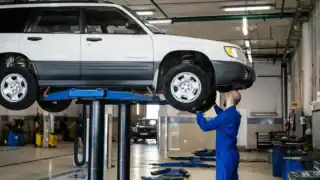
We start with a road test to reproduce the symptoms under real driving conditions. This tells us a lot — whether the vibration is speed-related, load-related, or tied to a specific gear range. From there, we put the vehicle on the hoist for a thorough inspection of the tailshaft itself, the universal joints, the centre bearing (on two-piece shaft setups), and the flanges at each end.
Honda’s engineering tolerances are precise, and wear in U-joints or centre support bearings can cause vibrations that feel like they’re coming from somewhere else entirely. We check for play in each joint, inspect the shaft for straightening damage or corrosion, and examine the mounting hardware for looseness. On AWD Honda models such as the CR-V, we also check the propeller shaft and its associated components for wear at the front and rear differentials.
Where a U-joint or centre bearing is the only fault, we can often replace those components individually. Where the shaft itself is damaged, bent, or severely corroded, full replacement is the more reliable path. We source parts to OEM specification — meaning dimensions, materials, and performance are matched to what Honda designed the vehicle around, not just what’s cheapest and close enough.
What Affects the Cost and Time for Honda Tailshaft Repairs?
A few variables influence how involved a tailshaft repair turns out to be. The most significant is which Honda model and drivetrain type you have — a two-piece prop shaft on a rear-wheel-drive vehicle involves more components than a single-piece shaft, and some AWD configurations require additional setup work to remove and reinstall correctly.
Parts availability also plays a role. Genuine Honda components or quality OEM-equivalent parts for some older or less common models may need to be ordered in. We handle parts sourcing directly from the workshop, so you don’t need to go chasing parts yourself. We’ll give you a clear explanation of what’s needed and what it will cost before we proceed — no surprises mid-repair.
Whether a shaft needs balancing after installation is another factor worth knowing about. A tailshaft that’s reinstalled without being balanced to the vehicle can create new vibrations even if the original fault has been fixed. We treat that step as part of the repair, not as an optional add-on.
Why Gatton Drivers Choose Gatton Automotive Solutions for Drivetrain Work
We’re a full-service workshop covering everything from everyday cars and 4WDs to trucks and heavy equipment, all under one roof in Gatton. Drivetrain work like tailshaft and driveshaft repairs sits comfortably alongside our broader capabilities — suspension upgrades, tyre fitting, roadworthy certificates, and mechanical repairs of all kinds. You’re not dealing with a workshop that handles one narrow category of work; you’re dealing with a team that can look at the whole vehicle and give you an honest picture of what it actually needs.
With five-star reviews from local customers, our reputation in the Lockyer Valley is built on straight advice and fair pricing. We don’t recommend work that isn’t needed, and we don’t dress up a simple job to look more complicated than it is. If your Honda needs a tailshaft repair, we’ll tell you what’s wrong, what the fix involves, and what it will cost — before we start.
If you’re noticing vibration, clunking, or anything else that doesn’t feel right under your Honda, use the Book Your Free Inspection option online or Call Us Now to speak with our team. We’re right here in Gatton, ready to help.