Your Honda’s braking system is one of the few things standing between you and a serious incident on the road. Honda brake repair covers everything from worn pads and scored rotors to brake fluid degradation and caliper faults — and getting it right matters far more than getting it cheap. At Gatton Automotive Solutions, we see Hondas regularly across our workshop, and brake-related jobs are among the most common reasons drivers come through the door. Whether you’re driving a Civic around town, a CR-V loaded with the family, or an Odyssey that covers serious kilometres every week, the brake system deserves proper attention from mechanics who know what to look for.
Warning Signs Your Honda Brakes Need Attention
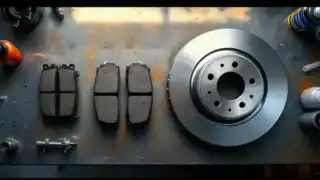
Honda braking systems are generally well-engineered, but they do follow predictable wear patterns that owners can watch for. The most obvious sign is a squealing or squeaking noise when you apply the brakes. Honda fitments typically include a wear indicator on the brake pad that produces exactly this sound once the pad material gets low. That noise is by design. It’s telling you something.
Other signs are worth taking seriously too:
- Grinding or metal-on-metal noise when braking, which usually means the pads have worn completely through and the caliper bracket is contacting the rotor
- Pulling to one side when you brake, which can point to a seized caliper or uneven pad wear across an axle
- A soft or spongy brake pedal that sits lower than usual or feels inconsistent underfoot
- A pulsing or vibrating sensation through the pedal or steering wheel during braking, often caused by rotor runout (slight warping of the disc that creates an uneven braking surface)
- The brake warning light on your Honda’s instrument cluster staying lit after startup
If you’re noticing any of these, it’s worth booking a brake inspection before the issue progresses. Worn rotors and damaged calipers cost significantly more to address than a straightforward pad replacement caught early.
What Our Honda Brake Inspection and Repair Covers
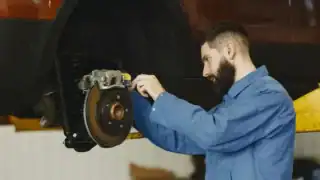
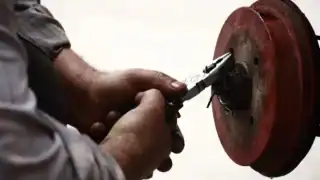
We start with a visual inspection of all four corners, covering pads, rotors, caliper hardware, brake lines, and the master cylinder. On Hondas, we pay particular attention to the rear brakes, as some models use a combined disc and drum arrangement in the rear (often called a drum-in-hat setup) that’s easy to overlook if you’re only checking the visible disc surface. This setup is common on older Accord and Odyssey models and requires a slightly different process to inspect the drum portion correctly.
We also check the brake fluid. Honda specifies DOT 3 fluid in most models, and this fluid absorbs moisture over time, which lowers its boiling point and can cause brake fade under hard use. Many Honda owners don’t realise their fluid is due for a change until it’s been well over two years since the last service. We test the fluid condition as part of any brake inspection and flag it clearly if it needs attention.
For Honda CR-V, HR-V, and Jazz models with electronic parking brake systems, there’s an added step: we use compatible diagnostic equipment to retract the rear caliper pistons correctly during rear pad replacement. Trying to compress these pistons the traditional way risks damaging the electric motor inside the caliper. We carry the tooling to handle this properly.
Parts and Specification Matching
When replacing brake components on your Honda, we source parts to OEM specification or genuine-equivalent quality. Honda brakes are designed around specific friction material grades, and fitting budget pads that don’t match the original spec can affect stopping distances and increase rotor wear. We’ll discuss your options clearly before any work starts, so you can make an informed choice about parts.
What Affects the Cost and Time of Honda Brake Repairs in Gatton?
The cost of a brake job on a Honda depends on several honest variables: which axle needs work, whether the rotors need machining or replacement, the condition of the caliper hardware, and whether the brake fluid needs flushing at the same time. A front pad and rotor replacement on a Civic is a different scope of work to a full four-wheel brake service on a CR-V with a seized rear caliper.
Parts availability for Honda in a regional area like Gatton has improved considerably, and we handle parts sourcing directly through the workshop. You don’t need to chase down components yourself or wait on a courier before booking in. Straightforward pad replacements are often suitable for a fast while-you-wait appointment, and we’ll give you a realistic picture of timing when you book.
Why Gatton Drivers Bring Their Hondas to Us
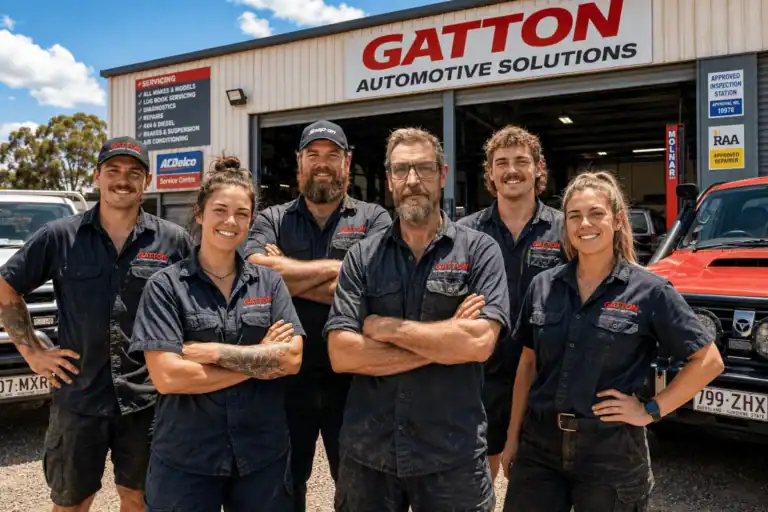
Gatton Automotive Solutions is a locally owned, full-service workshop. We handle everything from everyday passenger vehicles and 4WDs through to light trucks and heavy equipment, which means our team has hands-on experience across a wide range of braking systems. There’s no need to drive to Ipswich or Toowoomba for a brake repair. We have the facilities, the parts sourcing, and the diagnostic equipment to handle Honda brake work right here in the Lockyer Valley.
Our approach is straightforward: we inspect what’s actually wrong, tell you what we found, and give you honest advice about what needs doing now versus what can wait. With five-star reviews from local drivers, we’re a workshop that Gatton families and tradies have come to rely on for practical, no-nonsense mechanical work. We also issue roadworthy certificates on-site and carry out suspension upgrades and tyre fitting in-house, so if a brake inspection turns up related concerns, we can address them without sending you elsewhere.
If your Honda’s brakes are making noise, feeling different underfoot, or you’re simply not sure when they were last checked, Book Your Free Inspection online or Call Us Now. We’re here to help you drive safely in and around Gatton.