A vibration that pulses through the floor under acceleration, a clunking sound when you pull away from a stop, or a shudder that gets worse as speed climbs — these are the kinds of symptoms that bring Suzuki owners in for a tailshaft inspection. The tailshaft (also called a propeller shaft) transfers drive from the gearbox to the rear differential on rear-wheel drive and four-wheel drive Suzuki models, and when it starts to fail, the whole drivetrain feels it. Suzuki tailshaft repair is something we handle regularly at our Gatton workshop, covering everything from worn universal joints through to full shaft replacement.
Which Suzuki Models Need Tailshaft Work?
Not every Suzuki has a tailshaft. Front-wheel drive models like the Swift and Baleno don’t use one. But the models that do tend to do some serious work. The Jimny is probably the most common Suzuki we see with tailshaft issues in the Lockyer Valley, given how many of them spend time on unsealed roads and farm tracks. The Grand Vitara and older Vitara models also come in regularly, along with earlier Suzuki Sierra variants that are still in circulation in rural areas around Gatton and out toward the Darling Downs.
Four-wheel drive Suzukis typically run a two-piece tailshaft with a front section connecting to the transfer case and a rear section running to the differential. Each shaft uses universal joints (U-joints) to accommodate the angle and movement of the drivetrain, and a centre bearing supports the shaft where the two sections meet. Any one of these components can wear out, and on a vehicle that has done regular off-road work or heavy towing, wear tends to come earlier.
Symptoms That Suggest Your Suzuki’s Tailshaft Needs Attention
- Vibration under acceleration that reduces when you lift off the throttle – this is one of the most common signs of a worn or out-of-balance tailshaft
- Clunking or knocking when you first apply throttle from a standstill, often pointing to worn U-joints with play in them
- Shudder at highway speed that gets worse in a specific rev range, which can indicate a balance issue or a failing centre bearing
- Grease splatter under the vehicle near the shaft, indicating a U-joint grease cap or seal has failed
- Squeaking or squealing from under the car on a cold start, which can sometimes be a dry U-joint that hasn’t seized yet
On a Suzuki Jimny specifically, U-joint wear can be accelerated by the factory suspension geometry combined with frequent articulation during off-road use. If you’ve fitted a lift kit, the driveshaft angles change, which can shorten the service life of U-joints noticeably. It’s worth having the shaft inspected after any suspension modification, not just when symptoms appear.
What Suzuki Tailshaft Repair Involves at Our Workshop
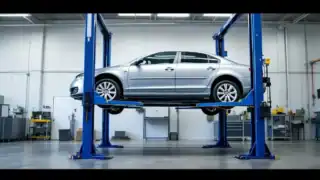
We start with the vehicle on the hoist so we can rotate and load-test the shaft by hand. This lets us check for play in each U-joint, feel for roughness in the centre bearing, and look for any visible damage to the shaft tube itself, such as dents or corrosion that could affect balance. We check the flange connections at both ends too, since a loose or corroded flange can create vibration symptoms that mimic internal shaft wear.
For most Suzuki models, worn U-joints can be replaced individually without replacing the entire shaft, provided the shaft tube is straight and the yokes are in good condition. We use quality-equivalent parts that meet OEM specifications for load rating and grease compatibility. On older Sierras or heavily used Jimnys, sometimes the more practical call is a reconditioned or replacement shaft assembly, and we’ll talk you through the options before any work starts.
If the shaft has been removed for another repair, such as a gearbox or differential service, we’ll always check the U-joints and centre bearing while we have clear access. It saves pulling the vehicle apart twice if something is close to needing attention.
What Affects the Cost and Time for Suzuki Tailshaft Repairs in Gatton?
The main variables are which components need replacing and parts availability for your specific Suzuki model. U-joint replacement on a common model like the Jimny is a straightforward job. Centre bearing replacement adds some labour time, and a full shaft replacement on an older or less common model may require sourcing through a specialist parts channel, which can add a day or two to the turnaround. We handle parts sourcing through the workshop, so you’re not chasing parts yourself or dealing with multiple suppliers.
Off-road-modified Suzukis sometimes need non-standard shaft lengths or heavy-duty U-joints, and we’ll factor that in when we give you a rundown on what’s needed. There are no surprises in how we work – you’ll know what the job involves before we start.
Why Gatton Drivers Bring Their Suzukis to Us
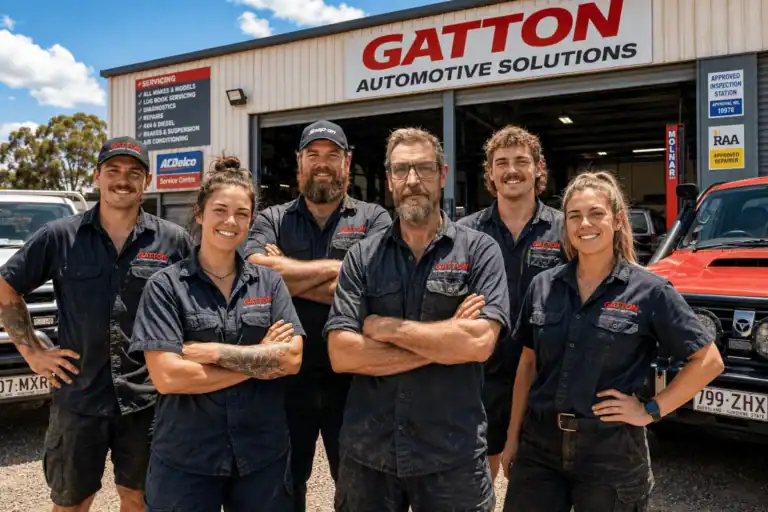
Gatton Automotive Solutions is a full-service workshop handling everything from everyday car servicing to 4WD repairs, heavy vehicles, and farm equipment. Suzuki owners in the Lockyer Valley don’t need to travel to Ipswich or Toowoomba for drivetrain work – we’ve got the hoist space, the diagnostic approach, and the parts sourcing to handle it locally. Our pricing is straightforward, and we’re not in the business of recommending work that doesn’t need doing. With five-star reviews from local drivers and a reputation built on honest advice, we’re the kind of workshop that tells you what’s actually wrong.
If your Suzuki is showing signs of tailshaft trouble, Call Us Now or Book Your Free Inspection online – we’ll take a proper look and tell you exactly what’s going on.