Limited Time: Free Windscreen Wipers With Any Service. Subject To Availability.

Locally Owned & Operated
Honest Upfront Pricing
5★ Reviews
All Makes & Models

Verified 5★ Reviews

Trusted Volkswagen Tailshaft Repair In Gatton

Tailshaft problems affect how power reaches your wheels. We diagnose and repair Volkswagen driveline issues in Gatton with straight advice and fair pricing. Book your free inspection today.

One-Stop Workshop

Honest Advice

5★ Reviews

VW Tailshaft Specialists

Book Your Free Inspection

Tell us what you need and we'll get back to you with a clear quote.

Booking Form
  • Vehicle Details
  • Confirm Vehicle
  • Services
  • Contact Details
Honest Quotes
All Vehicle Types
Local & Reliable

Why Book With Us

Book Your Free Inspection
Drop Off Your Vehicle
We Get to Work
Collect Your Car

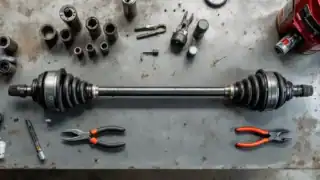
A vibration that builds through the floor as you accelerate, a clunking sound when you pull away from the lights, or a shudder that appears at highway speeds and disappears when you lift off the throttle — these are the signs that bring Volkswagen owners in for Volkswagen tailshaft repair. The tailshaft (also called the driveshaft or propeller shaft) transfers torque from the gearbox to the rear differential on rear-wheel and four-wheel drive Volkswagen models. When it starts to fail, the symptoms are hard to ignore and the risks to your drivetrain are real. At Gatton Automotive Solutions, we diagnose and repair tailshaft faults across a range of VW models, and you won’t need to drive to Ipswich or Toowoomba to get it sorted.

What Does a Tailshaft Problem Feel Like on a Volkswagen?

VW owners often describe the early signs as a subtle vibration through the gear lever or centre console, particularly when accelerating from low speeds. As the fault progresses, that vibration can become a rhythmic shudder felt through the floor or pedals, or it might develop into a distinct clunk or knock when moving off or changing gears. Some drivers notice the noise changes with vehicle speed, getting worse at certain RPM ranges.

On Volkswagen models fitted with constant velocity (CV) joints at either end of the tailshaft, a torn or cracked CV boot is often the first failure point. The boot contains grease that keeps the joint lubricated. Once it splits, the grease is thrown out and grit gets in. Left unaddressed, this accelerates wear in the CV joint itself and can lead to complete joint failure. You might also notice grease spatter on the inside of the rear wheel arch or a clicking noise when turning under load.

Other components prone to wear include the centre support bearing (on two-piece tailshafts fitted to some longer-wheelbase VW models) and the universal joints (U-joints) that connect the shaft to the gearbox output and differential flange. A worn U-joint typically produces a clunk when moving from drive to reverse, or vice versa.

How We Diagnose and Repair Tailshaft Faults in Volkswagen Vehicles

We start with a road test to confirm and characterise the symptom. Vibration that is speed-related points to balance or centre bearing issues; clunking that is load-related tends to indicate U-joint or CV joint wear. From there, the vehicle goes up on the hoist for a thorough visual inspection.

On VW models, we pay particular attention to the CV boot condition, joint play, and the integrity of the tailshaft flange bolts and mounting hardware. Volkswagen uses specific torque values for tailshaft flange bolts, and these must be followed during reassembly to avoid bolt failure or vibration caused by improper fitment. We also check for any signs of transmission output shaft seal leaks, which can contaminate U-joint bearing cups and accelerate wear.

Common VW Models We See for Tailshaft Work

Tailshaft-related faults are more common on rear-wheel drive and all-wheel drive VW models. In the Lockyer Valley, we regularly see Amarok dual-cab utes with high kilometres that have developed U-joint wear through heavy towing and regular dirt road use. The Amarok’s prop shaft is a two-piece design with a centre support bearing, and bearing failure produces a low rumble or vibration that worsens progressively. We also see Touareg and older Phaeton models with rear drivetrain concerns, where parts sourcing requires a little more planning given the complexity of these platforms.

Where the repair involves replacement components, we source parts to VW OEM specification or genuine-equivalent quality. Using undersized or non-spec parts on a Volkswagen drivetrain can introduce balance issues or fitment problems that cause the symptoms to return. We’ll tell you upfront what parts are going in and why.

What Affects the Cost and Timeframe for a Volkswagen Tailshaft Repair?

The scope of the repair drives both cost and time. Replacing a single CV boot is a straightforward job and generally much less involved than a full CV joint replacement or a centre bearing swap. On some VW models, particularly the Amarok, parts are locally available; on others, components may need to be ordered, which can add lead time before the work begins.

Whether you need the full tailshaft rebalanced or replaced also affects the outcome. In some cases, a worn section can be repaired; in others, replacement is the more reliable path. We’ll walk you through the options and the reasoning before any work goes ahead. There are no surprises on the invoice.

Why Gatton Drivers Choose Us for VW Tailshaft Repairs

Gatton Automotive Solutions handles everything from everyday passenger cars and family SUVs through to 4WDs, utes, trucks, and heavy equipment. That breadth means our team has real hands-on experience with drivetrain work across a wide range of vehicle types and load conditions, including the kind of towing and rough terrain use that’s common in the Lockyer Valley. We issue roadworthy certificates on-site, handle parts sourcing in-house, and offer fast while-you-wait servicing for straightforward jobs.

With five-star reviews behind us, we’ve built a reputation in this region on honest advice and doing what we say we’ll do. There’s no pressure to go further than the repair you came in for, and no unnecessary add-ons.

If your Volkswagen is shuddering, clunking, or vibrating through the drivetrain, don’t leave it too long. Book Your Free Inspection online or Call Us Now, and we’ll get your VW assessed right here in Gatton.
Your Local Workshop for Every Vehicle

Gatton Automotive Solutions is the one-stop shop for cars, 4WDs, trucks, and heavy equipment. Honest advice and fair pricing, right here in Gatton.

Honest Pricing, No Surprises

We tell you what’s needed and what it costs before we start. No upselling, no pressure.

Everything Under One Roof

Bring your car in and we’ll inspect it, explain what we find, and quote you upfront.

Volkswagen-Trained Diagnostics

We identify VW tailshaft faults accurately, sourcing correct parts first time.

How Volkswagen Tailshaft Repair Works

From diagnosis to collection, here's how we get your Volkswagen's tailshaft back in safe working order.

Step 1

Book Your Free Inspection

Call us or book your free inspection online to have your tailshaft symptoms assessed by our technicians.

Step 2

Tailshaft Diagnostic Assessment

We inspect shaft wear, play, and damage, then test for vibration using Volkswagen-compatible equipment.

Step 3

Tailshaft Repair Or Replacement

We repair bearings, seals, or couplings, or replace the shaft with OEM-spec parts for your Volkswagen.

Step 4

Final Check And Collection

We test-drive your vehicle to verify smooth operation, then contact you when it's ready for collection.

Five-Star Rated

Verified 5★ Reviews

Quality Parts From Trusted Suppliers

We use genuine and quality aftermarket parts from reputable suppliers. You get reliable components backed by proper warranties.

Book Your Free Inspection

Tell us what you need and we'll get back to you with a clear quote.

Booking Form
  • Vehicle Details
  • Confirm Vehicle
  • Services
  • Contact Details
Honest Quotes
All Vehicle Types
Local & Reliable

Why Book With Us

Book Your Free Inspection
Drop Off Your Vehicle
We Get to Work
Collect Your Car

Frequently Asked Questions

Browse answers to common questions about our services. Can't find what you're after? Give us a call and we'll help.

A Volkswagen tailshaft repair involves inspecting the driveshaft assembly for worn universal joints (the pivot points that allow the shaft to flex as the suspension moves), damaged centre bearings, or a shaft that has bent or become unbalanced. We check the tailshaft from end to end, identify what has failed, and either rebuild the affected components or replace the shaft depending on the condition. You’ll be walked through what we find before any work begins.

No. A vibrating or clunking tailshaft is a sign something has failed or is close to failing, and continuing to drive puts real stress on surrounding drivetrain components. In a worst case, a tailshaft can separate from the vehicle entirely while moving. If you’re noticing a rhythmic shudder through the floor, a clunk when pulling away, or a vibration that worsens with speed, stop driving and have it inspected promptly.

VW models, particularly those with all-wheel drive like the Golf R, Tiguan 4Motion, and Touareg, run complex driveshaft arrangements that can be harder on components than simpler rear-wheel-drive setups. Common causes include worn universal joints or CV joints from high kilometres, dried or cracked rubber boots allowing grease to escape and grit to enter, impact damage from rough terrain, and deteriorated centre support bearings. Age and neglect of routine drivetrain checks are the main contributors we see.

Cost depends on what has actually failed. Replacing a pair of universal joints or a centre bearing is a different job to replacing an entire tailshaft assembly or addressing a CV joint on an AWD model. VW parts can sit at a higher price point than some other brands, so we’ll source quality components and give you a clear figure before we start. There are no surprises once the vehicle is on the hoist.

Generally, no. Under ACCC guidance, Australian consumer law does not require you to use a dealership for mechanical repairs in order to maintain your manufacturer warranty, provided the work is carried out to an appropriate standard and the correct parts and procedures are used. This is general information rather than legal advice, and it’s worth reviewing your specific warranty terms if you have questions. We service Volkswagen vehicles here in Gatton and follow manufacturer specifications.

Most tailshaft repairs are completed within a few hours, though the exact time depends on which components need attention and parts availability. A straightforward universal joint replacement typically takes less time than a full shaft replacement or an AWD-specific driveshaft job on a model like the Touareg. We’ll give you a realistic timeframe when we assess the vehicle so you can plan your day accordingly.

A visual inspection of the tailshaft, CV boots, universal joints, and centre bearing should be part of every logbook service or annual check. You don’t need a separate dedicated appointment for it, but it’s worth asking that these components are looked at if you’re doing a lot of unsealed road driving or carrying heavy loads regularly. Catching a cracked CV boot early, before grease has escaped and damage has spread, is far cheaper than a full joint replacement.

We source quality parts suited to the job, which may be genuine VW components, OEM-equivalent parts from reputable suppliers, or quality aftermarket options depending on the repair and what’s available. We’ll discuss the options with you so you can make an informed call. For VW drivetrain work, using components that meet the manufacturer’s specifications matters, particularly on AWD models where the driveshaft system is more involved. We handle parts sourcing from here in Gatton, so you’re not chasing that side of things yourself.

Continue to site