Limited Time: Free Windscreen Wipers With Any Service. Subject To Availability.

Locally Owned & Operated
Honest Upfront Pricing
5★ Reviews
All Makes & Models

Verified 5★ Reviews

Dependable Hyundai Tailshaft Repair In Gatton

Tailshaft problems affect how your Hyundai drives and handles. We diagnose the issue, repair or replace the shaft, and test it thoroughly before you leave.

One-Stop Workshop

Honest Advice

5★ Reviews

Hyundai Driveline Specialists

Book Your Free Inspection

Tell us what you need and we'll get back to you with a clear quote.

Booking Form
  • Vehicle Details
  • Confirm Vehicle
  • Services
  • Contact Details
Honest Quotes
All Vehicle Types
Local & Reliable

Why Book With Us

Book Your Free Inspection
Drop Off Your Vehicle
We Get to Work
Collect Your Car

The tailshaft is a rotating driveline component that transfers power from your Hyundai’s transmission to the rear differential or, in all-wheel-drive models, between axles. When it’s working properly, you won’t know it’s there. When something goes wrong, the symptoms are hard to ignore. Hyundai tailshaft repair is a job we handle regularly at our Gatton workshop, and getting it diagnosed and fixed early is the best way to avoid a more expensive failure down the track.

What Does a Failing Tailshaft Feel Like?

Tailshaft problems in Hyundai vehicles tend to announce themselves in a few distinct ways. The most common early sign is a vibration felt through the floor of the car, particularly at highway speeds. It often starts subtle and gets worse over time. Some drivers notice a clunking or knocking noise when they pull away from a standstill, change gears, or lift off the accelerator.

A worn or damaged universal joint (U-joint) is frequently behind these symptoms. U-joints are the pivot points at either end of the tailshaft that allow the driveshaft to flex as the suspension moves. When the grease breaks down or the joint wears out, that smooth pivot becomes a rough, noisy one. Centre bearing failure, where the bearing that supports the tailshaft midpoint deteriorates, produces a similar vibration and is common on longer Hyundai wagons and SUVs like the Santa Fe and Tucson AWD variants.

If you’re noticing any of the following, it’s worth getting the driveline inspected before the problem worsens:

  • Vibration through the floor at speed, particularly between 80 and 110 km/h
  • Clunking on acceleration or deceleration
  • A squeaking or squealing noise from under the vehicle
  • Unusual handling or drivetrain shudder on turns (AWD models)
  • Visible grease around the tailshaft or driveshaft area

How We Diagnose and Repair Hyundai Tailshaft Problems in Gatton

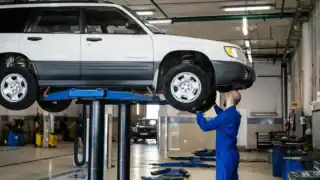
We start with a full undercar inspection, putting the vehicle on the hoist to examine the tailshaft visually and by hand. We check U-joints for play, roughness, or dry movement, inspect the centre bearing for wear, and look at the slip yoke and flanges for corrosion or damage. On Hyundai’s AWD platform, the front and rear propeller shafts each get checked separately because the failure modes differ across the two.

If a U-joint is salvageable with lubrication, we’ll tell you that. If it needs replacing, we’ll walk you through the options. Hyundai uses press-fit U-joints on most models, which means the joint is pressed into the yoke rather than bolted in place. This requires the right tooling to do cleanly, and we have it. We use quality parts that meet Hyundai’s OEM specifications, whether that’s genuine or reputable aftermarket components depending on the model year and what’s available locally.

Once repairs are complete, we road test the vehicle to confirm the vibration is gone and the driveline is running smoothly. On AWD Hyundai models, we also check for any drivetrain fault codes that may have been triggered during the failure, using a scan tool that reads Hyundai-specific data streams.

What Affects the Cost and Timeframe for Tailshaft Repairs?

A straightforward U-joint replacement on a common Hyundai model is generally a faster job than a full tailshaft removal or centre bearing replacement, which involves more disassembly. The cost varies depending on how many components need attention, whether any associated parts have been damaged, and which model you have. An i45 has a different driveline layout to a Santa Fe 4WD or an older Terracan, and the parts and labour involved reflect that.

Parts availability matters too. Some Hyundai components are readily stocked locally; others need to be ordered in. We handle our own parts sourcing, which means we can move quickly when something is in stock and give you an honest lead time when it isn’t. We won’t keep you guessing.

Hyundai Models We See Commonly for Driveline Work

Santa Fe and Tucson AWD owners are the most frequent visitors for tailshaft-related work, given the added complexity of the all-wheel-drive system and the mileage these vehicles tend to accumulate in regional Queensland. iLoad owners and Trajet drivers also come in for driveshaft work, as do older Terracan and Sonata owners. Whatever your Hyundai, we’ll be familiar with the layout and the common failure points for that model.

Why Get Your Hyundai Tailshaft Repaired Locally in Gatton?

Driving to Ipswich or Toowoomba for a driveline repair isn’t the only option for Lockyer Valley Hyundai owners. Gatton Automotive Solutions handles everything from routine servicing to driveshaft diagnostics under one roof. There’s no need to coordinate between multiple specialists or chase parts yourself.

We’re a full-service workshop covering cars, 4WDs, trucks, and heavy equipment, and we’ve built a straightforward reputation locally: honest advice, fair pricing, and no work done without your go-ahead. With five-star reviews from local drivers, we let the results speak. If your Hyundai also needs a roadworthy certificate, suspension work, or tyre fitting while it’s here, we can take care of that at the same visit.

If your Hyundai has developed a vibration, a clunk, or something that just doesn’t feel right under the car, don’t sit on it. Call Us Now or Book Your Free Inspection online and we’ll get to the bottom of it for you right here in Gatton.
Your Local Workshop for Every Vehicle

Gatton Automotive Solutions is the one-stop shop for cars, 4WDs, trucks, and heavy equipment. Honest advice and fair pricing, right here in Gatton.

Honest Pricing, No Surprises

We tell you what’s needed and what it costs before we start. No upselling, no pressure.

Everything Under One Roof

Bring your car in and we’ll inspect it, explain what we find, and quote you upfront.

Hyundai Tailshaft Knowledge

We know Hyundai driveline geometry and can source OEM-spec parts without delays.

How Hyundai Tailshaft Repair Works

From diagnosis through to safe completion, here's what happens when you bring your Hyundai in for tailshaft repair.

Step 1

Book Your Free Inspection

Call Us Now or Book Your Free Inspection to get your tailshaft symptoms assessed by our technicians.

Step 2

Tailshaft Diagnostic Assessment

We lift and inspect your Hyundai's tailshaft, check bearings and joints, and identify the root cause.

Step 3

Tailshaft Repair or Replacement

We repair or replace damaged components using quality parts to Hyundai specifications, then verify smooth operation.

Step 4

Final Check and Collection

We test drive your Hyundai, confirm the vibration is resolved, and have your vehicle ready for safe collection.

Five-Star Rated

Verified 5★ Reviews

Quality Parts From Trusted Suppliers

We use genuine and quality aftermarket parts from reputable suppliers. You get reliable components backed by proper warranties.

Book Your Free Inspection

Tell us what you need and we'll get back to you with a clear quote.

Booking Form
  • Vehicle Details
  • Confirm Vehicle
  • Services
  • Contact Details
Honest Quotes
All Vehicle Types
Local & Reliable

Why Book With Us

Book Your Free Inspection
Drop Off Your Vehicle
We Get to Work
Collect Your Car

Frequently Asked Questions

Browse answers to common questions about our services. Can't find what you're after? Give us a call and we'll help.

The most common signs are a vibration felt through the floor or seat at certain speeds, a clunking or knocking sound when pulling away from a stop, or a shuddering sensation during acceleration. You might also notice an unusual humming or droning noise that changes with vehicle speed. These symptoms usually point to worn universal joints (the cross-shaped couplings that allow the shaft to flex) or a tailshaft that has moved out of balance. Getting it checked early prevents more expensive drivetrain damage down the track.

It is not recommended. A failing tailshaft can deteriorate quickly, and in a worst case it can separate from the vehicle while driving, which is a serious safety risk. Vibration also puts extra stress on the gearbox, differential, and centre bearing. What starts as a minor issue can become a much bigger repair bill if it is left. If you are noticing shuddering or clunking, book your free inspection so we can assess what is happening before it gets worse.

We start by getting the vehicle on the hoist and inspecting the full length of the tailshaft, including the universal joints, centre bearing, and splined slip joint. We check for wear, play in the joints, rust, and any signs of damage from gravel or off-road use. Depending on what we find, we may replace worn universal joints, repack or replace the centre bearing, or balance the shaft. If the shaft itself is bent or cracked, replacement is the right call. We talk you through what we find before any work starts.

Hyundai all-wheel drive models, including the Santa Fe and older Terracan, use multi-piece tailshafts with centre bearings that can wear or collapse over time, especially on vehicles that have covered significant kilometres on rough regional roads. The rubber isolator inside the centre bearing absorbs vibration and is a known wear item. Once it deteriorates, vibration transfers directly into the cabin floor. Hyundai Santa Fe models from the mid-2000s onwards are particularly common candidates for centre bearing replacement at workshops like ours here in Gatton.

Cost depends on whether we are replacing individual components like universal joints or a centre bearing, or fitting a complete replacement shaft. The parts required vary significantly between Hyundai models, and sourcing availability can affect pricing. In many cases, a universal joint replacement or centre bearing swap can be completed within a few hours, making same-day service realistic for straightforward jobs. We will give you a clear quote after the initial inspection so there are no surprises. We handle parts sourcing in-house, which saves you the run-around.

Under ACCC guidance, Australian consumer law generally allows vehicle owners to have their cars serviced and repaired by independent mechanics without voiding the manufacturer warranty, provided the work is carried out to the appropriate standard and relevant parts meet manufacturer specifications. This is general information rather than legal advice, and it is worth checking your specific warranty terms if you have any concerns. We use quality parts suited to Hyundai specifications and document the work carried out, so you have a clear record of the repair.

Tailshaft imbalance is most often caused by a missing or damaged balance weight, a bent shaft from a gravel strike or kerb impact, or wear in the universal joints that allows unwanted movement. Mud or debris packed onto the shaft can also throw it out of balance. Any of these will create a vibration that typically worsens at particular speed ranges. Rebalancing the shaft on specialist equipment can fix minor imbalance, while more significant damage usually points toward component replacement rather than balancing alone.

Tailshafts do not have a fixed service interval the way engine oil does, but they benefit from periodic inspection, particularly on vehicles used for towing, regular off-road driving, or high-kilometre rural use. A good rule of thumb is to have the shaft, universal joints, and centre bearing checked whenever you notice a new vibration or noise, or at least every couple of years on higher-kilometre vehicles. Catching wear early in the universal joints is far cheaper than waiting until the shaft fails or damages surrounding components.

Yes, in many cases worn universal joints can be replaced individually without replacing the entire shaft, which keeps costs down considerably. The shaft is removed, the old joints are pressed out, and new joints are pressed in and secured. This is a practical repair when the shaft itself is straight and undamaged. If the shaft is bent, corroded, or the yokes are worn at the joint caps, full replacement becomes the better option. We assess this during the inspection and recommend whichever approach makes the most sense for your situation.

The terms are often used interchangeably in Australia, though technically a tailshaft refers to the propeller shaft that runs between the gearbox and the differential in rear-wheel drive and four-wheel drive vehicles. Driveshaft can refer to this same component or to the shorter shafts (also called CV axles) that deliver power from the differential to individual front wheels. When we talk about tailshaft repairs, we are referring to the main shaft running lengthwise under the vehicle, not the CV axle shafts at the wheels.

We use quality aftermarket parts that meet or exceed Hyundai specifications for most tailshaft work, including universal joints and centre bearings. Genuine dealer parts are available when specifically requested or where fitment precision is critical. For most Hyundai models, reputable aftermarket components offer reliable performance at a better price point than genuine parts, and we are happy to discuss the options with you before the repair begins. All parts used are recorded on your invoice so you have a full account of what went into your vehicle.

A clunking noise from underneath is often an early warning of a worn universal joint or loose tailshaft flange. If ignored, the joint can deteriorate to the point where it seizes or fractures, which can cause the tailshaft to drop or separate while the vehicle is moving. This is dangerous and can also cause significant damage to brake lines, fuel lines, and the floor of the vehicle. Addressing it promptly is a straightforward repair; leaving it risks a much more serious and costly outcome. Call Us Now if you are hearing this noise.

Continue to site