A Jeep radiator service isn’t something most drivers think about until the temperature gauge starts climbing or steam appears under the bonnet. But the cooling system in a Jeep works harder than most people realise, particularly in a regional setting like Gatton where summer heat, dusty country roads, and a mix of highway and off-road driving put real pressure on engine temperatures. Keeping your radiator in good shape is one of the more straightforward ways to avoid a breakdown that leaves you stranded kilometres from anywhere.
What Your Jeep Is Trying to Tell You
Jeep owners often notice cooling problems gradually rather than all at once. The engine temperature gauge creeping higher than normal is one of the first signs, but there are other indicators worth paying attention to before things get worse.
- Coolant leaking under the vehicle or a sweet smell inside the cabin after driving
- Overheating in slow traffic or when climbing hills under load
- Low coolant warnings appearing on the instrument cluster, common on Cherokee and Grand Cherokee models with onboard monitoring
- Discoloured or rusty coolant visible in the reservoir, which points to scale buildup or internal corrosion inside the radiator core
- White residue around hose connections or the radiator cap, indicating past leaks that have dried and been ignored
- Heater not producing warm air in cooler months, which can be connected to low coolant circulation
If any of these match what you’re seeing, it’s worth getting your Jeep looked at sooner rather than later. Continued overheating doesn’t just damage the radiator; it can warp cylinder heads and cause expensive internal engine damage that’s entirely avoidable.
How We Service a Jeep Radiator
Jeep vehicles span a wide range of platforms, from the compact Renegade to the full-size Grand Cherokee and Wrangler. Each has its own cooling system layout, service intervals, and known tendencies. Our approach starts with a proper assessment before any work is done.
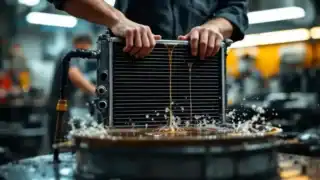
We begin with a cooling system pressure test, which involves pressurising the system to a specified level and watching for pressure drop that would indicate a leak. This tells us whether the radiator itself, a hose, the radiator cap, or another component is the source of the problem. We also inspect the condition of the coolant, checking the concentration, pH level, and whether it’s reached the end of its useful life.
On Wrangler and Grand Cherokee models in particular, we pay close attention to the transmission cooler lines that run through the radiator. Jeep’s integrated transmission-to-radiator cooler design means a failed internal divider can allow automatic transmission fluid and coolant to mix, which causes significant damage to both systems if not caught early. This is a known issue worth checking on higher-kilometre examples.
Where a flush and refill is the appropriate service, we drain the old coolant fully, flush the system to remove scale and contaminants, and refill with coolant that meets Jeep’s OEM specification. Jeep factory fill uses a specific organic acid technology (OAT) formula; using the wrong coolant type, or mixing types, degrades corrosion protection and can cause gel-like deposits that restrict flow. We source the right coolant for your specific model rather than using a generic mix.
If the radiator has physical damage, significant internal blockage, or corrosion that a flush won’t resolve, we’ll talk through whether repair or replacement is the better path for your vehicle and its age.
What Affects the Cost and Time for a Jeep Radiator Service in Gatton
A straightforward coolant flush and refill on a Jeep Cherokee or Compass is a relatively quick job. A full radiator replacement on a Wrangler with an upgraded engine, or sourcing parts for an older Grand Cherokee, takes longer simply because parts need to be ordered and fitment is more involved.
A few things that affect what you’ll pay and how long the work takes:
- Whether a flush and refill is all that’s needed, or whether the radiator needs replacing
- The specific Jeep model and engine variant, as parts vary in availability and price
- Whether OEM-equivalent or aftermarket parts are used, which we’ll discuss with you before starting
- Additional items found during inspection, such as deteriorated hoses, a weak thermostat, or a failing radiator cap, which are inexpensive to address while the system is already open
We handle parts sourcing directly, so you won’t be chasing down a supplier yourself or waiting on a parts run to Ipswich or Toowoomba.
Why Lockyer Valley Jeep Owners Choose Gatton Automotive Solutions
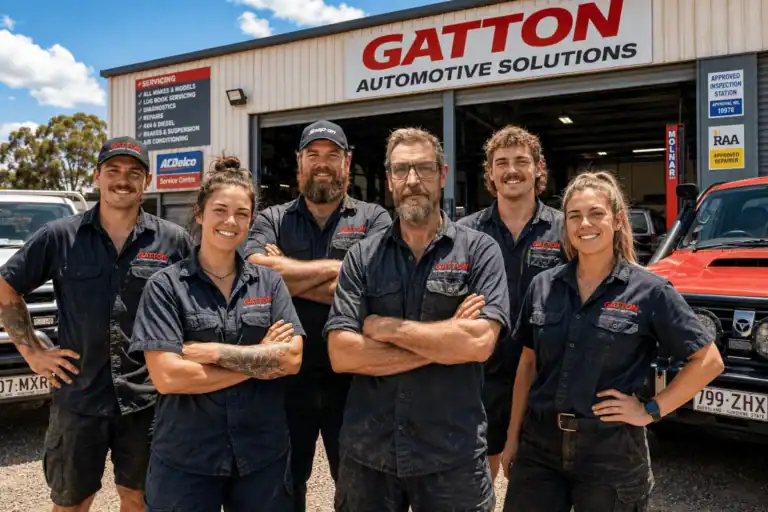
We’re a full-service workshop in Gatton handling everything from everyday passenger cars through to 4WDs, trucks, and heavy equipment. Jeep owners in the Lockyer Valley and surrounding districts don’t need to make the trip to a city dealer for cooling system work. We have the diagnostic equipment, parts access, and hands-on experience to do the job properly here in town.
Our five-star reviews reflect what we’re told most often: straight answers, fair pricing, and no work done that doesn’t need doing. If a coolant flush is all your Jeep needs, that’s what we’ll recommend. If there’s something more serious going on, we’ll show you what we found and explain your options before touching anything. Beyond radiator and cooling system work, Gatton Automotive Solutions also covers smash repairs, custom paintwork, suspension upgrades, tyre fitting, roadworthy certificates, and agricultural equipment servicing, all without leaving Gatton.
Book your free inspection online using Book Your Free Inspection, or Call Us Now to talk through what your Jeep is doing. We’re right here in Gatton and ready to help.