Coolant does more than stop your engine from overheating. It also prevents corrosion inside the cooling system, lubricates the water pump seals, and keeps heat transfer efficient across the radiator, heater core, and engine block. A Jeep radiator flush removes degraded coolant along with the rust particles, scale, and chemical breakdown products that accumulate over time. For Jeep owners in Gatton and across the Lockyer Valley, staying on top of this service is one of the more straightforward ways to protect what’s often a well-worked vehicle.
Why Jeep Coolant Wears Out Faster Than You Might Expect
Jeep models like the Cherokee, Grand Cherokee, Wrangler, and Compass are frequently used for towing, off-road driving, or both. That kind of work pushes coolant temperatures higher and puts the cooling system under sustained load. The organic acid technology (OAT) coolant that Jeep vehicles typically leave the factory with has good longevity under normal conditions, but heat cycling, contamination, and extended service intervals all accelerate its degradation.
As coolant ages, its pH shifts and it becomes acidic. Acidic coolant corrodes aluminium components, and many Jeep engines rely heavily on aluminium for the cylinder head, intake manifold, and coolant passages. The result is fine particles of corrosion circulating through the system, gradually wearing on the water pump, blocking small passages in the heater core, and reducing radiator efficiency. A flush clears all of that out and replaces degraded fluid with fresh coolant mixed to the correct concentration for your vehicle.
Signs Your Jeep’s Cooling System Needs Attention
You don’t always get a dramatic warning before cooling system problems become serious. Sometimes the signs are subtle, and that’s worth paying attention to. Bring your Jeep in if you notice any of the following:
- Temperature gauge running higher than usual, particularly under load or in slow traffic
- Coolant that looks rusty, brown, or oily rather than its original green, orange, or pink colour
- A sweet smell coming from the engine bay or through the cabin vents
- Heater not producing warm air despite the engine being up to temperature
- Coolant level dropping without any obvious external leak
- Milky or foamy residue under the coolant reservoir cap, which can indicate a deeper issue with the head gasket
That last point is worth flagging specifically for some Jeep Cherokee and Grand Cherokee owners. The 3.2L and 3.6L Pentastar V6 engines are generally reliable, but neglected cooling systems can contribute to head gasket stress over time. If the coolant looks contaminated or you’re noticing multiple symptoms together, a proper inspection before the flush gives us the full picture.
How We Carry Out a Jeep Radiator Flush in Gatton
We don’t just drain the old coolant and top up with fresh. A proper flush involves pushing a cleaning solution through the system to break down scale and contamination, then fully purging that solution before the new coolant goes in. Here’s what the process covers:
- Visual inspection of the radiator, hoses, clamps, coolant reservoir, and thermostat housing for cracks, leaks, or swelling
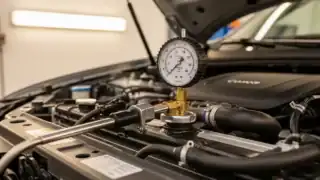
- Pressure check to identify any external leaks before we begin the flush
- System flush using a compatible flush agent to clear scale, rust, and old fluid
- Full drain and refill with OEM-spec or genuine-equivalent coolant suited to your Jeep’s cooling system requirements
- Bleeding the system to remove air pockets, which cause uneven temperature distribution and heater issues
- Check of the coolant concentration to confirm the mixture will handle both high summer temperatures and cold overnight conditions in the Lockyer Valley
If the inspection turns up anything concerning, such as a cracked hose, a leaking radiator, or a water pump showing signs of wear, we’ll let you know what we found before doing any additional work. No surprises on the invoice.
What Affects How Long It Takes and What It Costs
A straightforward flush on a Jeep Cherokee or Wrangler in good condition is typically a same-day service. The variables that can affect the time and cost include the condition of the cooling system when you bring it in, whether hoses or clamps need replacing as part of the job, and the type of coolant your specific model requires.
Jeep’s OAT coolant (often orange or gold in colour, sometimes called HOAT depending on the model year) should not be mixed with conventional green coolant. Using the wrong type can trigger the chemical reactions that cause the corrosion you’re trying to avoid. We source the right fluid for your model rather than using a generic product that might not be compatible.
If your Jeep has high kilometres or hasn’t had a flush in several years, we may find the system needs more attention than a standard flush. We’ll give you an honest assessment of what’s needed and what can wait.
One Workshop, Everything Your Jeep Needs
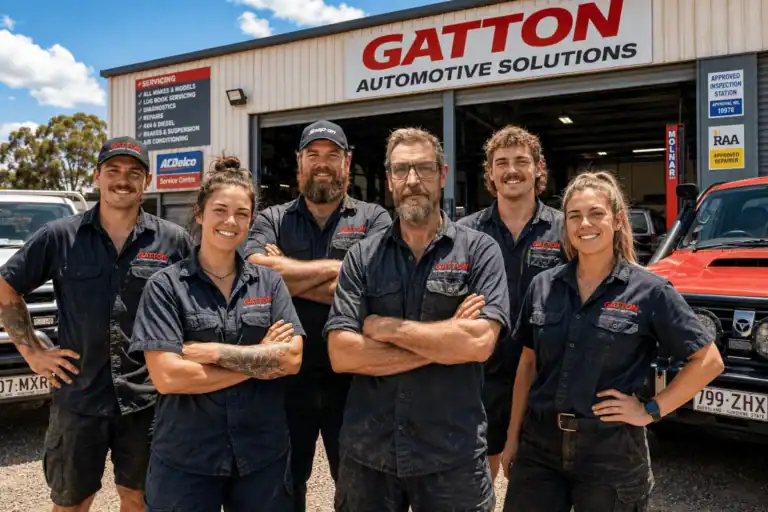
Gatton Automotive Solutions handles everything from routine maintenance to more involved mechanical work, all under one roof. We work on cars, 4WDs, utes, trucks, and heavy equipment, so whatever your Jeep is used for, we’ve seen similar vehicles and similar problems. There’s no need to drive to Ipswich or Toowoomba for cooling system work or any other service your vehicle needs.
Our customers rate us five-star rated, and we think that reflects something simple: we say what the job needs, we do it properly, and we price it fairly. That’s what a local workshop should do.
If your Jeep is overdue for a coolant flush or you’ve noticed any of the symptoms above, Call Us Now or Book Your Free Inspection online. We’re here for Jeep owners throughout Gatton and the wider Lockyer Valley.