A Mitsubishi radiator service is one of those jobs that tends to get pushed down the list until something goes wrong. The radiator sits at the heart of your engine’s cooling system, moving coolant (also called antifreeze) between the engine and the radiator core so heat can be released before temperatures climb too high. When it’s working well, you barely notice it. When it isn’t, the consequences can be serious and expensive. For Mitsubishi owners in Gatton and across the Lockyer Valley, getting on top of radiator health before a problem develops is a straightforward way to protect a vehicle that works hard year-round.
Warning Signs Your Mitsubishi’s Cooling System Needs Attention
Mitsubishi’s passenger and light commercial range, from the Triton ute to the Outlander and ASX, are genuinely well-built vehicles, but like any make, their cooling systems need periodic inspection and service to stay reliable. Knowing what to watch for can save you from a roadside breakdown or a hefty engine repair bill.
- Temperature gauge climbing higher than usual, particularly on highway runs or when towing
- Coolant level dropping repeatedly without an obvious external leak visible under the car
- A sweet or slightly burnt smell from the engine bay, which can indicate coolant escaping onto hot surfaces
- White or grey smoke from the exhaust, especially on startup, which may point to coolant entering the combustion chamber
- Visible coolant staining or residue around hose connections, the radiator cap, or along the radiator core itself
- Rust-coloured or discoloured coolant when you check the overflow reservoir, which suggests the fluid has broken down and is no longer protecting internal components
Mitsubishi recommends specific coolant change intervals for most models, and these aren’t just for the sake of the service schedule. Degraded coolant becomes acidic over time, attacking aluminium components in the radiator and engine. Triton owners who use their vehicles for farm work or towing in particular tend to stress the cooling system more than average, making regular checks worthwhile.
What a Mitsubishi Radiator Service Involves at Our Workshop
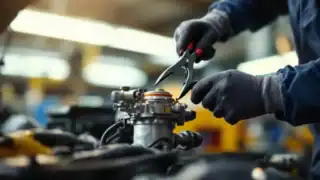
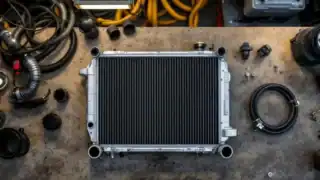
We don’t treat a radiator service as a simple flush and refill. Before anything is drained, we carry out a visual inspection of the radiator core, hoses, clamps, the thermostat housing, and the overflow bottle. Mitsubishi vehicles use an aluminium radiator core paired with plastic end tanks on most modern models, and the junction between those materials is a common spot for slow seepage to develop, especially on higher-kilometre Tritons and Pajero Sports.
We pressure-test the cooling system to check for leaks that aren’t visible at rest. This involves sealing the system and applying controlled pressure to expose any weak points, including internal leaks through the head gasket that can contaminate the coolant without leaving a puddle on the ground. We also check the radiator cap’s pressure rating, because a cap that’s lost its seal tension allows the system to vent coolant before it should.
If a coolant flush is needed, we drain and flush the system, remove any scale or deposit buildup, and refill with a coolant type that matches Mitsubishi’s specifications for your model. Many Mitsubishi vehicles require a specific long-life coolant formulation, and using the wrong type can actually accelerate corrosion rather than prevent it. We match the spec to your exact vehicle, not just the nearest available product.
Radiator Repairs and Replacement
Where a radiator is physically damaged, leaking from the core, or too far degraded to hold pressure reliably, we can discuss repair or replacement options honestly. We’ll walk you through what we’ve found, what the options are, and what we’d recommend for a vehicle of your mileage and use. No unnecessary work gets recommended and no job gets started without your approval.
What Affects the Cost and Time for a Radiator Service?
Several things influence how involved a radiator service ends up being. A straightforward coolant flush and refill on a standard Mitsubishi Triton or Outlander is a relatively quick job. Repairs to hoses, clamps, or the radiator cap add a small amount of parts and labour. Where a leak is traced to the radiator core itself or to the thermostat housing, the complexity and parts cost increases, as does the time required.
Parts availability for current Mitsubishi models is generally good, and we handle sourcing directly from our workshop so you’re not chasing parts yourself. For older models or less common variants, there may be a short lead time on OEM-spec or quality aftermarket components. We’ll give you a clear picture of what’s involved before work starts, including any waiting time for parts if that applies to your situation.
Keeping Your Mitsubishi on the Road in Gatton
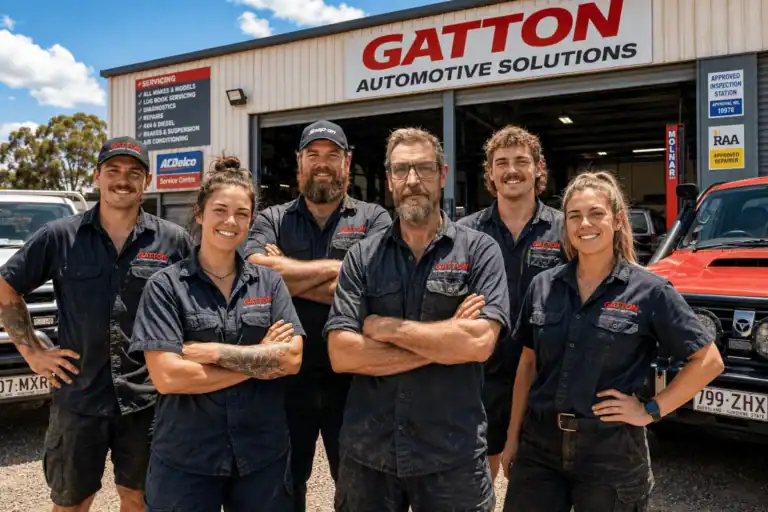
Gatton Automotive Solutions is a full-service workshop locally owned and operated in Gatton, and we look after everything from everyday passenger cars and family SUVs through to Tritons, heavy utes, and farm equipment. There’s no need to drive to Ipswich or Toowoomba for a cooling system service when the same quality of work is available right here in the Lockyer Valley. Our team handles cars, 4WDs, trucks, and heavy machinery, and we’ve built a reputation in the region for straight advice and fair pricing. With five-star reviews, we’re grateful that our customers keep telling their neighbours about us.
If your Mitsubishi is running warm, due for a coolant change, or you’ve noticed anything unusual under the bonnet, Call Us Now or Book Your Free Inspection online. Gatton Automotive Solutions is here to help Gatton drivers stay on the road safely and confidently.