A Jeep radiator repair isn’t a job to put off. The radiator sits at the heart of your Jeep’s cooling system, moving heat away from the engine so it can run at a stable temperature. When it starts leaking, gets blocked, or cracks under pressure, the consequences move fast from a minor inconvenience to a seriously damaged engine. At Gatton Automotive Solutions, we handle Jeep radiator repairs for drivers across the Lockyer Valley, whether you’re running a daily commuter, a loaded Wrangler, or a workhorse Grand Cherokee that earns its keep every week.
Warning Signs Your Jeep Radiator Needs Attention
Jeep’s engine cooling systems are designed to handle tough conditions, but that doesn’t make them immune to wear, impact damage, or age-related failure. Knowing what to watch for means you catch the problem before it becomes an engine rebuild.
- Coolant pooling under the vehicle after it’s been parked, often a bright green, orange, or pinkish fluid with a faint sweet smell
- Temperature gauge climbing higher than normal, particularly in slow traffic or after towing
- White or sweet-smelling steam from under the bonnet, which may indicate coolant is contacting hot engine components
- Coolant reservoir dropping regularly without any visible external leak, which can point to an internal leak into the engine
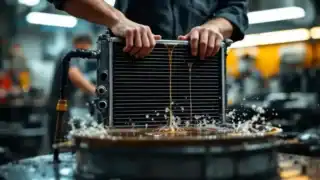
- Visible damage to the radiator, including bent fins, cracks in the plastic end tanks, or corrosion around fittings and hose connections
- Discoloured coolant, rusty brown or sludgy rather than clean and brightly coloured, suggesting the system needs a flush along with any repair
Jeeps like the Grand Cherokee and Wrangler are often used for towing, off-road work, or both. That kind of use puts real thermal load on the cooling system, so if your Jeep is working hard and you’re noticing any of these signs, it’s worth getting a proper look sooner rather than later.
How We Diagnose and Repair Jeep Radiator Problems
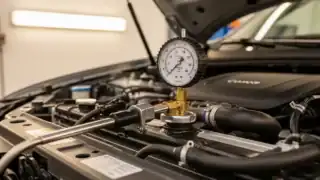
We start with a pressure test on the cooling system, which is the most reliable way to locate leaks that aren’t immediately visible. This involves pressurising the system with a hand pump and checking for pressure loss, while inspecting hoses, the radiator core, end tanks, and fittings for the source.
For Jeeps, this matters more than it might for some other makes. Chrysler-platform vehicles including many Grand Cherokee and Wrangler models have used plastic and aluminium composite radiators where the end tanks crimp onto the aluminium core. These crimp joints are a known weak point, particularly on older Jeep models or those that have seen a lot of heat cycling from off-road use or towing. We check these joints carefully, along with the transmission cooler lines that route through the radiator on automatic transmission models.
Once we’ve identified the fault, we walk you through what’s needed. In some cases a minor coolant leak can be addressed with a hose replacement or fitting repair. More significant radiator damage generally means radiator replacement is the right call, both for reliability and cost-effectiveness. We source quality replacement radiators to OEM specification for your specific Jeep model and engine variant, so the fit and cooling capacity are correct for your vehicle rather than an approximate match.
If the coolant itself is degraded, contaminated, or the wrong type for your Jeep (FCA vehicles have specific coolant chemistry requirements), we’ll recommend a system flush and refill with the correct specification fluid as part of the repair. Running the wrong coolant in a Jeep can accelerate internal corrosion and cause further issues down the track.
What Affects the Cost and Time Involved?
Radiator repair pricing varies depending on what the inspection finds. A hose replacement or minor seal repair is a straightforward job. A full radiator replacement involves draining the coolant, disconnecting hoses and any cooler lines, removing and fitting the new unit, refilling and bleeding the system, then testing the repair under operating temperature. It takes more time, and the radiator itself is the main parts cost.
Other factors that affect the job include your Jeep’s engine and model year (a four-cylinder Wrangler and a V8 Grand Cherokee have different radiator assemblies and part costs), whether OEM or quality aftermarket parts are used, and whether the coolant flush is needed at the same time. We’ll give you a clear picture of what’s involved before any work starts.
Jeep Radiator Repair in Gatton, Without the Drive to the City
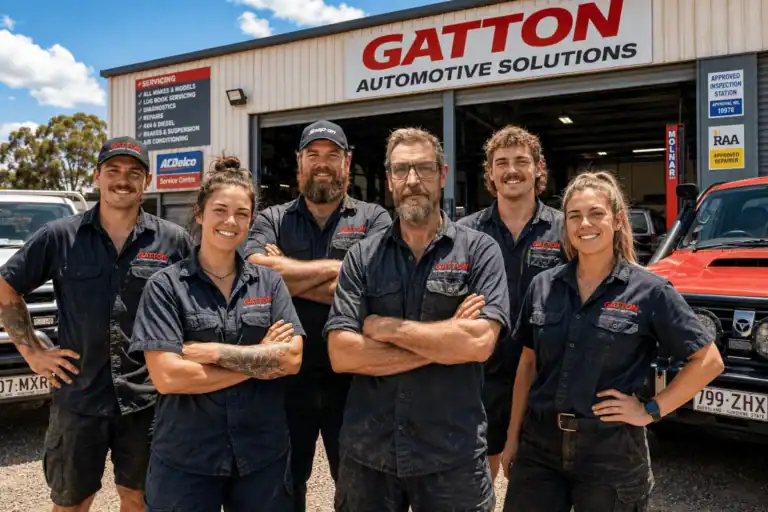
Gatton Automotive Solutions is a full-service workshop handling everything from everyday car servicing to heavy vehicles and farm equipment. There’s no need to drive to Ipswich or Toowoomba for a Jeep radiator repair service when we have the diagnostic equipment, parts sourcing, and hands-on experience right here in Gatton. We see a lot of Jeeps in this region, working vehicles that cover real ground and need to be reliable, and we treat every job accordingly.
We give you honest advice about what’s actually needed and what can wait. No unnecessary work, no upselling, just a straight assessment and a fair price. Our five-star reviews from Lockyer Valley drivers reflect that approach. Beyond cooling system work, the workshop also covers smash repairs and panel work, custom paintwork and sandblasting, suspension upgrades, tyre supply and fitting, roadworthy certificates, agricultural and farm equipment servicing, and parts sourcing handled in-house.
If your Jeep is running hot, leaking coolant, or you’re just not sure what’s going on under the bonnet, Book Your Free Inspection online or Call Us Now and we’ll get it sorted here in Gatton.