Limited Time: Free Windscreen Wipers With Any Service. Subject To Availability.

Locally Owned & Operated
Honest Upfront Pricing
5★ Reviews
All Makes & Models

Verified 5★ Reviews

Reliable Nissan Radiator Flush In Gatton

A radiator flush removes old coolant and built-up deposits from your Nissan's cooling system, preventing overheating and extending engine life. We'll handle it while you wait in Gatton.

One-Stop Workshop

Honest Advice

5★ Reviews

Nissan Cooling Specialists

Book Your Free Inspection

Tell us what you need and we'll get back to you with a clear quote.

Booking Form
  • Vehicle Details
  • Confirm Vehicle
  • Services
  • Contact Details
Honest Quotes
All Vehicle Types
Local & Reliable

Why Book With Us

Book Your Free Inspection
Drop Off Your Vehicle
We Get to Work
Collect Your Car

Coolant does more than keep your Nissan from overheating. Over time, the fluid breaks down, becomes acidic, and starts corroding the metal and rubber components it’s supposed to protect. A Nissan radiator flush removes that degraded coolant, clears out built-up scale and rust particles, and replaces it with fresh fluid mixed to the correct specification for your vehicle. For Nissan owners in Gatton and across the Lockyer Valley, staying on top of this service is one of the simplest ways to avoid a much more expensive repair down the track.

Signs Your Nissan’s Cooling System Needs Attention

Coolant doesn’t announce when it’s past its best. Most people only notice a problem once something goes wrong. Knowing what to look for gives you a chance to act before a minor issue becomes a breakdown.

  • Temperature gauge climbing higher than usual, particularly on longer drives or when towing
  • Coolant that looks rusty, brown, or murky rather than its original green or orange colour
  • A sweet or slightly burnt smell coming from the engine bay after driving
  • Visible residue or crusty deposits around the radiator cap or overflow reservoir
  • The heater not warming up properly inside the cabin, which can indicate restricted coolant flow
  • Your Nissan hasn’t had a coolant flush in line with the manufacturer’s recommended service interval

Nissan’s service schedules typically recommend a coolant flush every two years or around 40,000 kilometres, though this varies by model and engine type. If your Navara, Patrol, X-Trail, or Pathfinder has been running on the same coolant for longer than that, it’s worth having the system checked.

What a Nissan Radiator Flush Involves

This isn’t simply draining the old fluid and topping up with new. A proper flush is a more thorough process that addresses the whole cooling circuit, not just the radiator itself.

We start by inspecting the current coolant condition using a test strip and visual check. Degraded coolant that’s become acidic will show it clearly. We also look at the radiator cap, hoses, thermostat housing, and overflow tank for signs of leaks, cracking, or corrosion before we do anything else. Catching a failing thermostat or a weeping hose connection at this stage saves a lot of hassle later.

Once we’ve assessed the system, we flush it through properly to remove the old fluid along with any scale, rust, or mineral deposits that have accumulated inside the passages. This matters more than it might seem. Restricted coolant passages reduce flow through the radiator, which directly affects how well your Nissan manages heat under load.

The system is then refilled with coolant mixed to the correct ratio and specification for your Nissan model. This is one area where brand awareness genuinely counts. Nissan uses a long-life coolant formulation in many of its newer models, and using the wrong fluid type can cause issues with gasket compatibility and corrosion inhibitor performance. We source parts and fluids to OEM-equivalent specification so you’re not left guessing.

Nissan-Specific Considerations

A few Nissan models have a history of cooling system wear that’s worth knowing about. The Nissan Patrol GU and GQ running the TD42 or ZD30 diesel engine can be particularly sensitive to coolant condition, with the ZD30 especially prone to overheating consequences if the cooling system isn’t maintained properly. The Navara D22 and D40 are also common in this region and respond well to proactive coolant maintenance. If you drive a Nissan that works hard, tows, or does regular highway kilometres between Gatton and Toowoomba or Ipswich, keeping the cooling system in good shape isn’t optional.

What Affects Cost and Time for a Radiator Flush?

A straightforward coolant flush on a standard Nissan passenger car or ute is generally a quick job. Complexity increases if we find related issues during the inspection, such as a stuck thermostat, a deteriorating hose, or a radiator showing signs of internal blockage. In those cases, we’ll walk you through what we’ve found and give you a clear picture of what’s involved before any additional work is done. No surprises, no work carried out without your say-so.

Parts costs vary depending on whether your Nissan takes a standard coolant type or the long-life formulation used in later models. Larger-capacity engines in wagons and 4WDs naturally take more fluid than a small hatchback, which affects the overall cost. We handle our own parts sourcing here in Gatton, which keeps things moving without delays waiting on couriers.

Why Gatton Drivers Choose Us for Nissan Cooling System Servicing

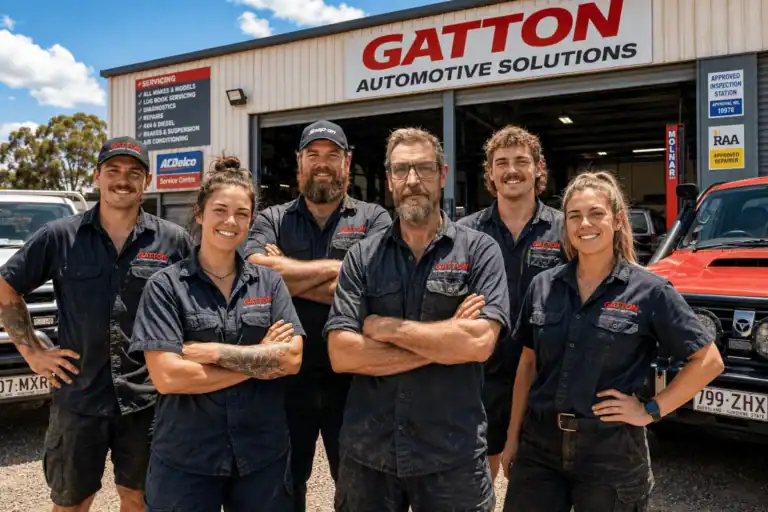
We’re a full-service workshop locally owned and operated in Gatton. Cars, 4WDs, utes, trucks, and heavy equipment all come through our workshop, which means we’re comfortable with the full range of Nissans on local roads, from a daily-driven Pulsar to a working Patrol or a Navara towing a trailer. There’s no need to drive to Ipswich or Toowoomba for cooling system work when it can be handled here.

With five-star reviews, we’ve built our reputation on honest advice and straight pricing. If the flush is all your Nissan needs, that’s what we’ll do. If we find something else worth knowing about, we’ll tell you clearly and let you decide. Gatton Automotive Solutions also offers roadworthy certificates, smash repairs, suspension upgrades, tyre fitting, and agricultural equipment servicing, so whatever else your vehicle needs, it can be handled in the one place.

If your Nissan is showing any of the signs above, or if it’s simply due for a coolant service, Book Your Free Inspection online or Call Us Now and we’ll check the system over and let you know exactly where things stand.
Other Services

Whatever your needs we have you covered, see some similar services below or click "See All Services" to explore our full service offering.

Your Local Workshop for Every Vehicle

Gatton Automotive Solutions is the one-stop shop for cars, 4WDs, trucks, and heavy equipment. Honest advice and fair pricing, right here in Gatton.

Honest Pricing, No Surprises

We tell you what’s needed and what it costs before we start. No upselling, no pressure.

Everything Under One Roof

Bring your car in and we’ll inspect it, explain what we find, and quote you upfront.

Nissan-Trained Cooling Expertise

We know Nissan cooling systems inside out and source OEM-spec parts locally.

How Nissan Radiator Flush Works

Your Nissan radiator flush is handled simply and professionally, from your first call through to collection.

Step 1

Book Your Free Inspection

Call Us Now or Book Your Free Inspection to get your Nissan's cooling system checked without delay.

Step 2

Cooling System Assessment

We inspect your radiator, hoses, and coolant for contamination, blockages, and signs of corrosion or leaks.

Step 3

Complete Radiator Flush

We flush out old coolant, rinse the system thoroughly, and refill with Nissan-specification coolant.

Step 4

System Test & Handover

We test the cooling system under load, verify temperature readings, and hand your Nissan back ready to drive.

Five-Star Rated

Verified 5★ Reviews

Quality Parts From Trusted Suppliers

We use genuine and quality aftermarket parts from reputable suppliers. You get reliable components backed by proper warranties.

Book Your Free Inspection

Tell us what you need and we'll get back to you with a clear quote.

Booking Form
  • Vehicle Details
  • Confirm Vehicle
  • Services
  • Contact Details
Honest Quotes
All Vehicle Types
Local & Reliable

Why Book With Us

Book Your Free Inspection
Drop Off Your Vehicle
We Get to Work
Collect Your Car

Frequently Asked Questions

Browse answers to common questions about our services. Can't find what you're after? Give us a call and we'll help.

Most Nissan models benefit from a coolant flush every two to four years, though your owner’s manual will list the recommended interval for your specific vehicle. Nissans using long-life coolant may stretch further between services, but older models or vehicles doing hard work in dusty or stop-start conditions often need attention sooner. If your coolant looks discoloured, rusty, or low without explanation, that’s a sign to get it looked at regardless of mileage or time.

Old coolant loses its ability to prevent corrosion and regulate temperature properly. Over time, degraded coolant can cause scale and rust to build up inside the radiator, water pump, and engine passages. Left long enough, this leads to overheating, water pump failure, or damage to the head gasket. These repairs cost significantly more than a routine flush. If your temperature gauge is climbing higher than usual or you notice steam from the bonnet, get the car inspected promptly.

Yes. Nissan specifies particular coolant types depending on the model and year, and using the wrong coolant can cause premature corrosion or damage to seals. Some newer Nissans require a blue long-life coolant, while older models may use a different specification altogether. Mixing incompatible coolants can cause gelling and reduce the effectiveness of both. We use coolant matched to your Nissan’s requirements rather than a generic off-the-shelf alternative, which matters more than it might seem for long-term engine health.

We drain the old coolant from the system, then flush the radiator and cooling passages with clean water or a dedicated flushing agent to remove scale, rust, and contaminant buildup. Once the system is clean, we refill it with fresh coolant mixed to the correct concentration for your climate and vehicle. We also check hoses, the radiator cap, and look for signs of leaks while we have the system open. The whole process is typically completed within a couple of hours.

Under ACCC guidance, Australian consumer law generally allows you to have your vehicle serviced by a qualified independent mechanic without voiding the manufacturer warranty, provided the service is carried out to the required standard and the correct parts and fluids are used. This is general information rather than legal advice, and we’d recommend checking your specific warranty terms if you’re unsure. We record the service and can stamp your logbook so your maintenance history stays in order.

The main variables are the size of the cooling system, the type of coolant specified for your Nissan, and whether any additional work is needed, such as replacing a leaking hose or a worn radiator cap. Larger engines hold more coolant, so fluid costs are higher. If the system is heavily contaminated and needs a more thorough flush, that adds a little time. We’re upfront about what’s involved before we start, so there are no surprises.

A few signs are worth watching for: the temperature gauge sitting higher than normal, a sweet smell from the engine bay, coolant pooling under the car after it’s been parked, or visible rust-coloured fluid in the overflow reservoir. Milky or foamy oil on the dipstick can also indicate coolant mixing with engine oil, which is a more serious problem. Any of these symptoms are a reason to bring your car in rather than wait for a scheduled flush. Our team in Gatton can assess what’s going on quickly.

Topping up addresses low coolant levels but doesn’t remove the degraded fluid already in the system. Old coolant contains acids and corrosion byproducts that continue to attack metal components even when the level is correct. Topping up with incompatible coolant can also cause problems if the existing fluid is a different type. A flush replaces the whole system and restores proper corrosion protection. If your coolant is due for a change, topping up is a short-term fix at best.

Continue to site