A Mitsubishi radiator flush is one of those services that doesn’t get much attention until something goes wrong. Coolant — the fluid that keeps your engine from overheating — doesn’t last forever. Over time it breaks down, becomes acidic, and starts corroding the internal surfaces of your radiator, hoses, and water pump. For Mitsubishi owners in Gatton and across the Lockyer Valley, keeping on top of this service is a straightforward way to protect an engine that works hard, often in warm conditions.
Signs Your Mitsubishi Coolant Needs Attention
Mitsubishi’s recommended coolant change intervals vary between models, but the warning signs that something’s already going wrong tend to look the same across the range. Pay attention if you notice any of the following:
- Temperature gauge climbing higher than normal – especially on longer runs or when towing
- Coolant that looks rusty, brown, or murky rather than the clean green, blue, or pink it should be
- A sweet smell near the engine bay, which can indicate coolant leaking onto hot surfaces
- White or grey residue around hose connections or on the radiator cap
- Air in the cooling system – a gurgling sound from the heater or dashboard vents when the engine is warm
- Your Mitsubishi’s heater producing less warmth than it used to, even with the temperature dial turned up
None of these symptoms should be ignored. Mitsubishi engines are generally reliable, but an overheating event caused by degraded coolant or a blocked radiator can lead to head gasket damage or warped cylinder heads – repairs that cost many times more than a routine flush.
How We Carry Out a Mitsubishi Radiator Flush
We start by assessing the condition of the existing coolant using a test strip and visual inspection. This tells us whether the fluid has become acidic and how much internal corrosion may have already occurred. On older Pajeros, Tritons, and high-kilometre Outlanders, we also check for signs of oily contamination in the coolant, which can indicate a failing head gasket before it causes larger problems.
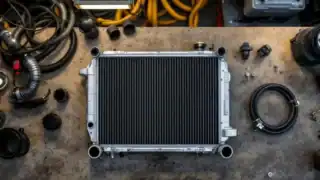
Once we’ve assessed the system, we drain the old coolant fully and flush the radiator and cooling circuit with clean water to remove loose scale, sediment, and degraded fluid residue. We then inspect the radiator cap (which controls system pressure), the upper and lower hoses, the overflow reservoir, and any visible connections. A radiator cap that fails to hold the correct pressure is a common cause of unexpected overheating and is easy to replace at the same time.
After flushing, we refill the system with a coolant mix that meets Mitsubishi’s specification for the model. Mitsubishi uses a long-life coolant in many of its current models – it’s worth noting that mixing incompatible coolant types can cause gel-like deposits to form inside the cooling system, which restricts flow and defeats the purpose of the service. We match the fluid to your vehicle, not just whatever happens to be on the shelf.
Mitsubishi-Specific Cooling Considerations
Mitsubishi Triton utes and Pajero SUVs are common working vehicles across the Lockyer Valley, and they put real demands on cooling systems. The 4D56 and 4N15 diesel engines found in various Triton generations run at higher thermal loads when towing or carrying, and their cooling systems benefit from being flushed on schedule rather than waiting for visible symptoms. The Outlander PHEV is a different case – its cooling architecture includes a separate circuit for the battery and electric motor components, so any cooling work on a PHEV model needs to be scoped appropriately.
What Affects the Cost and Time for a Radiator Flush?
The time involved in a Mitsubishi radiator flush is usually manageable within a single workshop visit, and many customers choose to wait while it’s done. Variables that affect the overall scope of the job include:
- Coolant type and volume – larger capacity engines and systems that require long-life or model-specific coolant affect parts cost
- Condition of associated components – if the radiator cap, hoses, or thermostat are due for replacement, it makes sense to address them in the same visit
- Degree of internal corrosion or scale – a system that has been neglected for a long time may require more thorough flushing to clear
- Whether a flush reveals a more serious issue – coolant contamination sometimes points to a leaking head gasket that needs attention before the system is refilled
We’ll give you a clear picture of what’s needed before any work begins. No guesswork, no surprises on the invoice.
Why Gatton Drivers Bring Their Mitsubishis to Us
Gatton Automotive Solutions handles everything from everyday passenger cars to Triton work utes, Pajero family 4WDs, and heavier commercial vehicles – all under one roof. There’s no need to drive to Ipswich or Toowoomba for a service that we’re fully set up to handle locally. Our workshop sources parts and fluids suited to your specific Mitsubishi model, and we provide honest advice about what’s actually needed rather than working through a list of upsells.
We carry a strong reputation across the Lockyer Valley with five-star reviews, and that’s built on straightforward work at fair prices. Whether it’s a routine coolant service or a diagnosis that uncovers something more involved, you’ll know exactly what we found and what we recommend before we proceed.
If your Mitsubishi is due for a cooling system service or you’ve noticed any of the symptoms above, Call Us Now or Book Your Free Inspection online. We’re here in Gatton and ready to help keep your vehicle running the way it should.