European vehicles are built to tight engineering tolerances, and their cooling systems are no exception. A European vehicles radiator flush isn’t simply draining old coolant and topping it up with whatever’s on the shelf. Many European manufacturers specify particular coolant chemistries, flushing intervals, and bleed procedures that differ meaningfully from what suits a Japanese or American-made vehicle. Getting this right matters for engine longevity, and it’s something we take seriously at our Gatton workshop.
What Goes Wrong When Coolant Is Left Too Long?
Coolant doesn’t last forever. Over time, the inhibitors that protect aluminium components, rubber seals, and the heater core break down. Once those inhibitors are depleted, the fluid turns acidic and begins attacking the very parts it’s meant to protect. European engines, which commonly use aluminium engine blocks, cylinder heads, and cooling system components, are particularly vulnerable to this kind of internal corrosion.
Signs that your coolant may be overdue for a flush include:
- A sweet smell coming from the engine bay or cabin vents
- The temperature gauge sitting higher than normal, or climbing slowly rather than stabilising
- Visible rust or discolouration when you check the coolant reservoir (it should look clean, not brown or murky)
- White or orange residue around the radiator cap or reservoir cap
- Heater output that’s noticeably weaker than it used to be
- Coolant warning light appearing on the dashboard
None of these symptoms should be ignored. A cooling system that’s struggling will eventually cause real engine damage, and in a European vehicle, that can mean costly repairs that a timely flush would have prevented.
How We Approach a European Vehicles Radiator Flush
European brands including Volkswagen, Audi, BMW, Mercedes-Benz, Peugeot, and Volvo typically specify coolant types that meet their own standards rather than generic Australian automotive specifications. Volkswagen Group vehicles, for example, often call for G12, G13, or OAT-type coolants that are not compatible with older green or blue universal coolants. Mixing incompatible types causes a chemical reaction that degrades both fluids and can leave a gel-like residue that blocks the radiator passages. Our process starts with identifying the correct coolant specification for your vehicle before we touch the system.
Once we’ve confirmed the right fluid, we drain the old coolant completely rather than just doing a partial drain and top-up. We flush the system to remove built-up scale, rust particles, and any degraded inhibitor residue. This is especially important on vehicles with alloy radiators and water-cooled turbochargers, which are common across European performance and diesel engines. After flushing, we refill with the correct coolant at the right concentration for Queensland conditions, bleed the system to remove any air pockets, and check for leaks at hoses, the radiator, water pump, and thermostat housing.
We also inspect the radiator cap, as a faulty cap affects the system’s pressure rating and can cause boiling at lower temperatures than the system is designed to handle. If we spot any hoses that are swollen, cracked, or collapsing, we’ll flag that clearly before recommending anything further.
What Affects the Cost and Time for This Service?
A few variables influence how long the job takes and what it costs. European OEM-spec coolants cost more than generic alternatives, but using the wrong fluid to save money can cause corrosion, seal damage, or incompatibility with the existing coolant. We source the correct specification for your vehicle’s make and model, so you’re not unknowingly running a mismatched fluid.
Some European vehicles, particularly those with complex cooling circuits such as separate loops for the turbocharger, gearbox oil cooler, or engine oil cooler, take longer to flush and bleed correctly than a straightforward layout. Vehicles with electric water pumps or thermostat modules that require software commands to open during the flush process may also add time to the procedure. The age and condition of the existing coolant affects the job too. If the system is heavily corroded internally, a single flush may not remove everything, and we’ll discuss what we find honestly rather than just finishing the job and moving on.
Why Get Your European Vehicle’s Cooling System Serviced in Gatton?
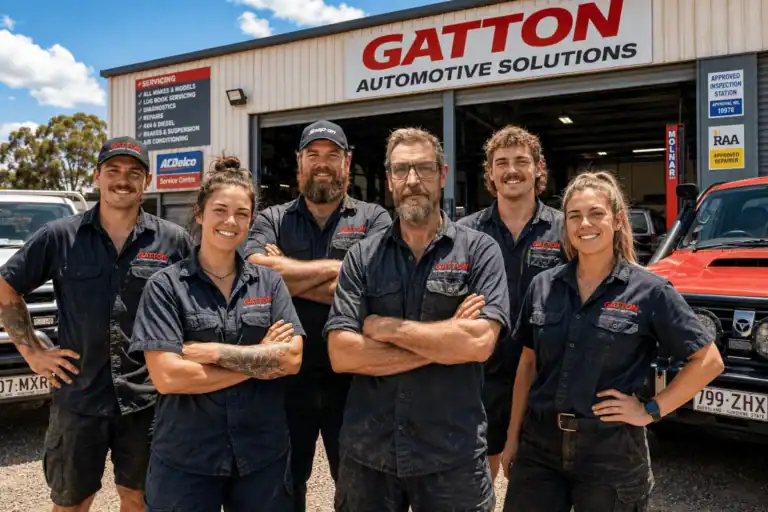
Driving to Ipswich or Toowoomba for a cooling system service on your European vehicle isn’t necessary. Gatton Automotive Solutions handles European vehicles radiator flush work right here in Gatton, with access to the correct coolant types and the diagnostic awareness to do the job properly. We’re a full-service workshop, so if we find a related issue during the flush, whether that’s a weeping hose, a tired water pump, or a cracked overflow reservoir, we can address it in the same visit rather than sending you somewhere else.
Our workshop services everything from everyday passenger cars to 4WDs, utes, and commercial vehicles. We handle parts sourcing directly, so you’re not chasing components yourself. With five-star reviews from locals across the Lockyer Valley, our reputation is built on giving honest assessments and doing the work properly the first time. No upselling, no unnecessary extras.
If your European vehicle is due for a coolant change, or you’re noticing any of the warning signs above, Book Your Free Inspection online or Call Us Now. We’re here in Gatton and ready to help.