A Toyota radiator flush is one of those services that’s easy to overlook until your temperature gauge starts climbing or you notice a faint sweet smell coming through the vents. The coolant in your Toyota’s engine does more than stop it from boiling over in summer — it also prevents internal corrosion, lubricates the water pump seals, and keeps the entire cooling system running within safe temperature ranges year-round. At Gatton Automotive Solutions, we see Toyota owners come in regularly for this service, and more often than not, the ones who’ve left it too long have coolant that’s broken down, turned acidic, and started quietly degrading the aluminium components it was meant to protect.
Signs Your Toyota’s Coolant Needs Attention
Toyota’s factory service schedules recommend a coolant flush at regular intervals, but plenty of Toyotas on the road are running well past that point on degraded fluid. The signs aren’t always dramatic. Some show up slowly, and by the time they’re obvious, corrosion has already started inside the system.
- Coolant that looks brown, rusty, or cloudy rather than the original red, pink, or green colour (depending on your model and year)
- A sweet burning smell inside the cabin or after you shut the engine off
- The temperature gauge sitting higher than usual, especially in stop-start traffic or on a long run
- Visible residue or flaking around the radiator cap or hose connections, which suggests the coolant’s inhibitors have failed
- Heater output that’s weaker than normal, sometimes caused by partial blockage in the heater core
Toyota’s own service guidance for many models specifies a long-life coolant change at around 160,000 km or every five years – whichever comes first – but that’s under ideal conditions. In the Lockyer Valley, where summer temperatures can push hard and vehicles are often working in dusty, agricultural environments, sticking to that outer limit isn’t always the best approach.
What a Toyota Radiator Flush Involves at Gatton Automotive Solutions
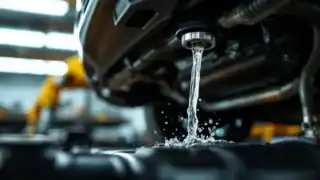
We don’t just drain the old coolant and top it up. A proper flush means removing the old fluid completely, running a flush agent through the system to break up deposits and neutralise acidity, and then refilling with the correct coolant type and concentration for your specific Toyota model.
Toyota vehicles across different generations use different coolant specifications. Older Hiluxes and LandCruisers may use a green conventional coolant, while newer Camrys, RAV4s, and HiAce vans typically require Toyota’s Super Long Life Coolant (SLLC), which is pink and formulated specifically for aluminium-heavy engine construction. Mixing types, or using the wrong one, causes a gel-like sludge that can block the heater core and restrict flow through the radiator. We check your vehicle’s requirements before anything goes into the system.
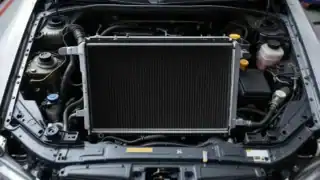
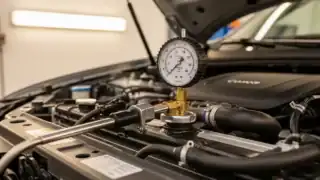
During the service, we also inspect the radiator cap (it holds the system under pressure and fails over time), check hose condition and clamp integrity, and look for any signs of weeping or small leaks around the water pump and thermostat housing. These are common failure points in high-mileage Toyotas and are much cheaper to address while the system is already open than after a roadside breakdown.
Common Toyota Models We Service in Gatton
We work on the full range of Toyota vehicles in Gatton and across the Lockyer Valley: Hilux, LandCruiser (70 Series, 200 Series, and 300 Series), Camry, Corolla, RAV4, Prado, Kluger, HiAce, Fortuner, and Tarago. Commercial operators running HiAce fleets or Hilux work vehicles know that cooling system maintenance directly affects reliability, and downtime on a work vehicle costs more than the service itself.
What Affects the Time and Cost of a Radiator Flush?
A few variables affect how long a Toyota radiator flush takes and what it costs. The coolant type your model requires is one factor – genuine Toyota SLLC or an equivalent OEM-spec fluid costs more than generic coolant, but it’s the right product for the job and we won’t substitute something cheaper to save a few dollars. The age and condition of the system also matters; if there’s significant scale buildup or a component like the radiator cap or a hose needs replacing at the same time, that adds to the scope.
We’re straightforward about this: if we find something that needs attention while the system is open, we’ll tell you what it is and what it costs before we do anything. No surprises on the invoice.
Why Gatton Drivers Choose Us for Toyota Cooling System Work
Gatton Automotive Solutions is a full-service workshop handling cars, 4WDs, trucks, and heavy equipment – all under one roof, right here in town. For Toyota owners in the Lockyer Valley, that means you don’t need to drive to Ipswich or Toowoomba for a cooling system flush or a follow-up mechanical repair. If the flush turns up a bigger issue, we have the capability to handle it: from a leaking water pump to a cracked radiator, smash repairs, suspension work, tyre fitting, and parts sourcing, it’s all handled in-house.
We’ve built a reputation in Gatton on honest advice and fair pricing. Our five-star reviews reflect that, and we’re not interested in upselling work that isn’t needed. If your coolant is fine, we’ll tell you that too.
If your Toyota is due for a coolant flush, or you’re not sure of its service history, use the Book Your Free Inspection button to lock in a time online, or Call Us Now and we’ll assess the system properly and give you a straight answer on what it needs. We’re right here in Gatton, ready to help.