Limited Time: Free Windscreen Wipers With Any Service. Subject To Availability.

Locally Owned & Operated
Honest Upfront Pricing
5★ Reviews
All Makes & Models

Verified 5★ Reviews

Quality Volkswagen Cooling System Flush In Gatton

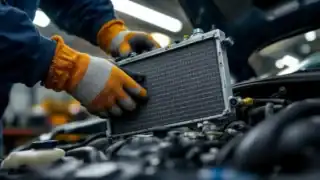
We flush your Volkswagen's cooling system to remove rust, scale, and worn coolant, then refill with factory-spec fluid. Prevents overheating and extends engine life. Book Your Free Inspection today.

One-Stop Workshop

Honest Advice

5★ Reviews

VW Cooling Expertise

Book Your Free Inspection

Tell us what you need and we'll get back to you with a clear quote.

Booking Form
  • Vehicle Details
  • Confirm Vehicle
  • Services
  • Contact Details
Honest Quotes
All Vehicle Types
Local & Reliable

Why Book With Us

Book Your Free Inspection
Drop Off Your Vehicle
We Get to Work
Collect Your Car

Volkswagen engines are engineered to tight tolerances, and the coolant circulating through them does more than just prevent overheating. It transfers heat away from the engine block, protects against corrosion inside aluminium components, and keeps the heater working properly in winter. A Volkswagen cooling system flush removes degraded coolant along with built-up rust, scale, and contaminants before they cause real damage. If it’s been a while since yours was last attended to, or if you’re noticing symptoms that don’t quite add up, it’s worth having it looked at here in Gatton rather than leaving it and hoping for the best.

What Happens When VW Coolant Degrades?

Fresh coolant is slightly alkaline and contains additives designed to protect the internal surfaces of your engine, radiator, and heater core. Over time, those additives deplete. The fluid becomes more acidic and starts to corrode the metals and seals it’s supposed to be protecting. Volkswagen uses a specific coolant formulation, often referred to as G12, G13, or similar OEM-spec types depending on the model and year. Using the wrong fluid or letting it go too long between flushes can accelerate this process significantly.

Volkswagen’s service documentation typically recommends a coolant flush every two years or at certain kilometre intervals, though this varies across models. The Golf, Polo, Tiguan, Passat, and Amarok all have slightly different service schedules and cooling system layouts, so the interval your neighbour follows for their Golf may not match what’s right for your Tiguan.

Signs Your Volkswagen Cooling System Needs Attention

Sometimes the symptoms are obvious. Other times they’re easy to dismiss until something goes wrong. Watch for any of the following:

  • Temperature gauge climbing higher than usual, particularly in slow traffic or on hills
  • Coolant that looks rusty, brown, or has visible particles rather than being clear or lightly coloured
  • A sweet smell from the engine bay or inside the cabin, which can indicate coolant is escaping somewhere it shouldn’t be
  • Heater blowing lukewarm air even when the engine is fully warmed up
  • Visible residue around hose connections or the overflow reservoir
  • The engine warning light appearing alongside temperature fluctuations

Any of these is a reasonable prompt to bring your vehicle in. An overheating Volkswagen can escalate quickly into head gasket territory, which is a far more involved job than a coolant flush.

What Our Volkswagen Cooling System Flush Involves

We don’t just drain the old coolant and refill with new fluid. That approach leaves a significant amount of contaminated fluid behind. Instead, we perform a thorough flush of the system to remove as much of the old coolant, scale, and debris as possible before introducing fresh fluid.

The process includes a visual inspection of the cooling system components, checking hoses for brittleness or cracking, examining the radiator cap seal, and looking for any signs of leaks. On Volkswagen vehicles, we pay particular attention to the plastic coolant reservoir and the hose connections, which are known weak points as mileage climbs. We also check the condition of the thermostat housing, particularly on TSI and TDI engines where coolant passage design can create localised hot spots if flow is restricted.

Where the service calls for it, we source coolant to OEM specification for your specific VW model. Mixing coolant types in a Volkswagen can cause a gel-like reaction that blocks passages and causes serious damage, so getting the fluid right matters as much as the flush process itself.

Does a Cooling System Flush in Gatton Take Long?

For most passenger Volkswagens, this is a service that can often be completed while you wait, depending on what we find during the inspection. If there are underlying issues such as a slow leak, a failing thermostat, or a corroded hose that needs replacing, that changes the time involved. We’ll let you know what we find before any additional work goes ahead.

What Affects the Cost of a Volkswagen Coolant Flush?

A few things influence the final cost. The cooling system capacity varies across VW models, so larger vehicles like the Amarok or the seven-seat Touareg simply require more coolant volume. The specification of coolant matters too. OEM-compatible G13 fluid is more expensive than generic universal coolant, but using the correct type is not optional on a modern Volkswagen. If we discover additional components that need attention during the inspection, such as a split hose or a weeping water pump, those repairs will be quoted separately before any work proceeds.

Why Gatton Volkswagen Owners Bring Their Cars to Us

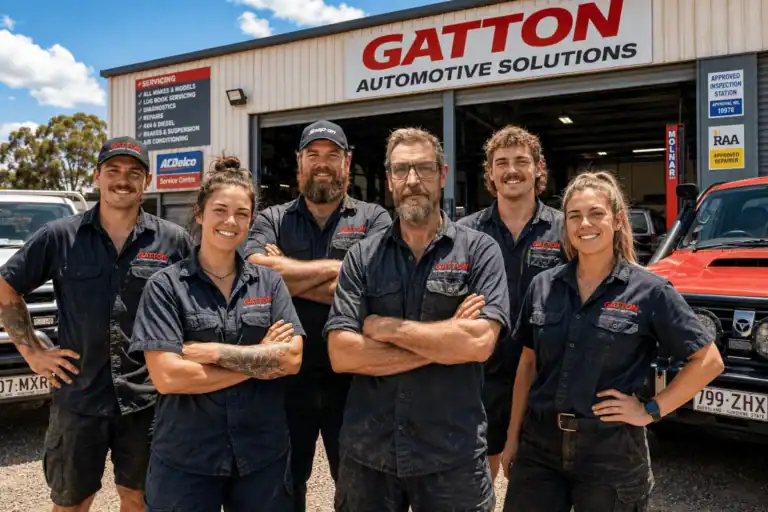
Gatton Automotive Solutions handles everything from daily drivers to utes, 4WDs, farm equipment, and light commercial vehicles, all under one roof. You don’t need to drive to Ipswich or Toowoomba for quality mechanical work on your Volkswagen. With five-star reviews from local customers, our reputation in the Lockyer Valley is built on straight advice and doing the job properly the first time.

We handle parts sourcing in-house, which means we can track down OEM-spec coolant and components without you having to chase parts yourself. Whether it’s a Polo hatchback, a Tiguan family wagon, or a TDI ute doing hard kilometres across the region, we treat every vehicle the same way: look at it properly, tell you what it needs, and get it done. From general mechanical work for everyday drivers all the way to heavy vehicle servicing, smash repairs, custom paintwork, suspension upgrades, tyre supply and fitting, roadworthy certificates, and agricultural equipment, Gatton Automotive Solutions covers it all.

If your Volkswagen is due for a cooling system flush or you’ve noticed any of the symptoms above, Call Us Now or Book Your Free Inspection online. We’re right here in Gatton, ready to help.
Other Services

Whatever your needs we have you covered, see some similar services below or click "See All Services" to explore our full service offering.

Your Local Workshop for Every Vehicle

Gatton Automotive Solutions is the one-stop shop for cars, 4WDs, trucks, and heavy equipment. Honest advice and fair pricing, right here in Gatton.

Honest Pricing, No Surprises

We tell you what’s needed and what it costs before we start. No upselling, no pressure.

Everything Under One Roof

Bring your car in and we’ll inspect it, explain what we find, and quote you upfront.

Volkswagen Cooling System Specialists

We know VW cooling systems inside out and source OEM-spec parts for the job.

How Volkswagen Cooling System Flush Works

From booking through to a fresh cooling system, here is what to expect at each stage of the flush.

Step 1

Book Your Free Inspection

Call Us Now or book your free inspection online to assess your Volkswagen cooling system condition.

Step 2

Cooling System Diagnosis

We inspect coolant condition, hose integrity, and system pressure using Volkswagen-compatible diagnostics.

Step 3

Flush and Refill

We drain old coolant, flush the entire system, and refill with OEM-spec Volkswagen coolant for efficiency.

Step 4

Test and Collection

We verify pressure and temperature stability before handing over your Volkswagen ready for the road.

Five-Star Rated

Verified 5★ Reviews

Quality Parts From Trusted Suppliers

We use genuine and quality aftermarket parts from reputable suppliers. You get reliable components backed by proper warranties.

Book Your Free Inspection

Tell us what you need and we'll get back to you with a clear quote.

Booking Form
  • Vehicle Details
  • Confirm Vehicle
  • Services
  • Contact Details
Honest Quotes
All Vehicle Types
Local & Reliable

Why Book With Us

Book Your Free Inspection
Drop Off Your Vehicle
We Get to Work
Collect Your Car

Frequently Asked Questions

Browse answers to common questions about our services. Can't find what you're after? Give us a call and we'll help.

Most Volkswagen models benefit from a coolant flush every two to four years, though the interval varies depending on the coolant type fitted from the factory. Volkswagen vehicles are often filled with G12 or G13 long-life coolant, which has different service intervals to standard coolant. Using the wrong type or mixing coolant types can shorten the life of the system significantly. We check what coolant is currently in your VW and service it to the correct specification, not just a generic interval.

We drain the old coolant completely, flush the system to remove any built-up deposits or contaminants, and refill it with the correct coolant mixed to the right concentration. The cooling system is then pressure-tested to check for any leaks before the car is returned to you. For most Volkswagen models, the full process takes around one to two hours. If any related issues are found, like a worn hose or a weeping water pump seal, we will let you know before doing any extra work.

Old coolant loses its ability to regulate temperature and prevent corrosion inside the engine and radiator. In Volkswagen engines, which run tight tolerances and aluminium components, degraded coolant can cause corrosion buildup that damages the water pump, clogs the radiator, and puts stress on the head gasket. Overheating can follow quickly once things start to go wrong. The repair costs involved in fixing heat-related engine damage are substantially higher than the cost of a routine flush, so it is not a service worth deferring.

Under ACCC guidance, Australian consumer law generally allows vehicle owners to have their cars serviced by a qualified independent mechanic without voiding the manufacturer warranty, provided the service is carried out to the manufacturer’s specifications and recorded properly. This is general information, not legal advice, and we would encourage you to check the specifics of your warranty if you are unsure. We record the service and use the correct coolant type and procedures for your Volkswagen model, which is what matters for compliance.

Yes, and it matters. Volkswagen and Audi Group vehicles typically require OAT-based coolant, specifically G12, G12+, G13, or the current G13 spec depending on the model year. These are not interchangeable with standard green coolant, and mixing them can cause the coolant to gel and block the system. Drivers in Gatton who have had their VW topped up at a generic servo or had the wrong product added elsewhere sometimes come to us with cooling problems that trace back exactly to that. We always use the correct coolant grade for your specific model.

The main variables are the coolant type required, the capacity of the cooling system, and the condition of the system when we start. Volkswagen-specific coolants cost more than generic alternatives, and some models have larger cooling circuits that require more fluid. If there are related issues to address, like a cracked hose, a worn thermostat housing seal, or a sticky bleed valve, that will affect the final price. We will always walk you through what is needed before starting any work so there are no surprises.

Watch for the temperature gauge climbing higher than usual, a sweet smell coming from the engine bay, visible coolant puddles under the car after parking, or the low coolant warning light appearing on the dash. A heater that suddenly stops producing warm air can also point to a cooling system issue. Any of these signs mean it is worth having the system inspected promptly. Call Us Now or Book Your Free Inspection if you notice anything unusual and we will take a look.

Topping up is a short-term measure, not a substitute for a flush. Over time, coolant degrades and becomes acidic, losing its ability to protect metal and aluminium components from corrosion. Simply adding more fluid dilutes the old coolant but does not remove the degraded product or the contaminants it carries. For Volkswagen models in particular, topping up with the wrong coolant type can also cause compatibility issues. A full flush replaces everything and resets the protection level properly.

Yes, we record the service in your logbook and note the coolant type and specification used. Keeping an accurate logbook record is important for warranty purposes and for maintaining the resale value of your vehicle. Gatton Automotive Solutions services Volkswagen vehicles to manufacturer specifications, so your logbook reflects that the correct product and procedure were used, not just that a generic service was performed.

It is best not to. Discoloured coolant, often appearing brown or rusty rather than the original pink or purple of Volkswagen-spec fluid, indicates the coolant has degraded and may be carrying corrosion particles through the system. Low coolant levels can lead to overheating within a short distance. Driving with either condition risks damage to the water pump, radiator, and potentially the engine itself. Book Your Free Inspection so we can assess the system before the issue becomes something more serious.

Continue to site