A Chinese vehicles cooling system flush is one of those services that tends to get pushed down the to-do list until something goes wrong. But the cooling system is what keeps your engine operating within a safe temperature range, and when the coolant degrades or becomes contaminated, the consequences can be expensive. Whether you’re driving an MG, GWM Haval, LDV van, BYD, Chery, or one of the newer Changan models, we see this service come up regularly at our Gatton workshop, and the good news is it’s straightforward when caught early.
Why Coolant Degrades Faster in Chinese-Manufactured Vehicles
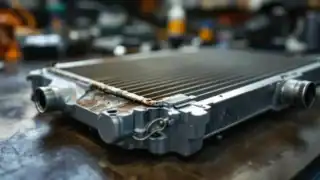
This is a detail worth understanding before you book. Many Chinese vehicle manufacturers specify a coolant type and flush interval that differs from what’s found in Japanese or European vehicles. Several popular models arriving in Australia, including various GWM Haval and MG variants, use OAT (Organic Acid Technology) coolant, which is designed for extended service life but becomes acidic over time if left unchanged. When OAT coolant breaks down, it loses its corrosion inhibitors and can attack aluminium components in the engine and radiator. Running the wrong coolant, or mixing incompatible types, accelerates this process significantly.
Some owners purchasing Chinese vehicles second-hand have no visibility over what coolant is currently in the system or whether it’s been flushed at the manufacturer’s recommended interval. That’s a situation worth addressing sooner rather than later.
Signs Your Cooling System Needs Attention
The symptoms aren’t always obvious until you know what to look for. Bring your vehicle in if you notice any of the following:
- The temperature gauge climbing higher than usual, particularly in stop-and-go traffic or on the Warrego Highway in summer
- Coolant reservoir level dropping without any visible external leak
- A sweet smell from the engine bay, which can indicate a leak or internal coolant burn-off
- Discoloured or rusty-looking coolant when you check the reservoir (it should be clear, green, blue, or orange depending on the spec, never brown)
- A warning light on the dash related to engine temperature or coolant
- Heater output that’s weaker than normal, which can point to a blocked heater core or low coolant circulation
Some of these symptoms overlap with other issues, like a failing thermostat or water pump, which is exactly why a proper inspection matters before simply draining and refilling.
What We Do During a Cooling System Flush
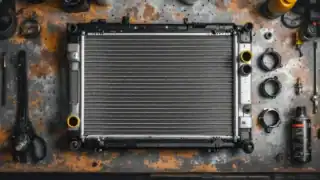
The process goes well beyond a drain and refill. Our technicians start with a visual inspection of the entire cooling system, checking hoses, clamps, the radiator cap, the overflow reservoir, and any visible seals for signs of leakage or deterioration. For Chinese vehicle models, we verify the correct coolant specification against the manufacturer’s service documentation before introducing any new fluid.
We then flush the system to remove old coolant, scale deposits, and any contamination that’s built up over time. A flush dislodges debris that a simple drain misses, which matters especially if the vehicle has gone beyond its recommended interval or has a mixed coolant history. Once flushed, we refill with a compatible coolant to the correct mix ratio for Australian conditions, bleed any trapped air from the system, and check the system holds pressure properly under a pressure test.
If we find related issues during the inspection, such as a hose that’s softened and close to failure, or a radiator cap that’s not holding pressure, we’ll let you know clearly before proceeding. No guesswork, no unnecessary additions.
What Affects the Cost and Time for This Service in Gatton?
A few variables come into play. The coolant type matters, as OEM-spec fluids for certain Chinese vehicle brands can differ in cost from generic coolant. Vehicles with larger cooling system capacities, including some of the larger GWM and LDV commercial models, require more product and time. If the system is heavily contaminated or a secondary issue is found, such as a minor hose failure or a weeping water pump, the scope expands accordingly.
As a general guide, a standard cooling system flush on a passenger car or SUV is a relatively modest job. Commercial vehicles and heavier applications take longer. We’ll always discuss what’s involved before we start, so there are no surprises when you collect the vehicle.
Parts Sourcing for Chinese Vehicle Models
Parts availability for Chinese vehicle brands has improved considerably in Australia over the past few years, but it’s still a variable. Our workshop handles parts sourcing directly, and for cooling system components like thermostats, hoses, or radiator caps, we can source OEM-equivalent parts suited to your specific model. You don’t need to chase parts yourself or wait on a dealer.
A Workshop in Gatton That Handles More Than Just Small Cars
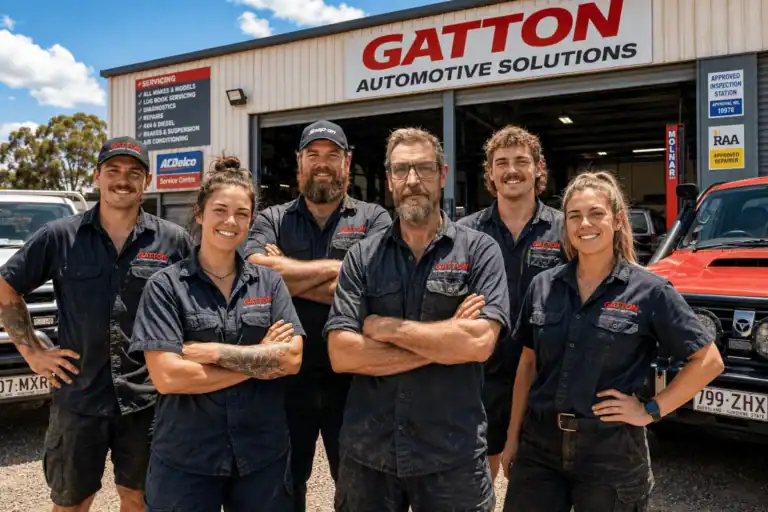
Gatton Automotive Solutions is a full-service workshop covering cars, 4WDs, utes, trucks, and heavy equipment. The same team that services a GWM Haval in the morning handles fleet LDV vans and farm equipment in the afternoon. We issue roadworthy certificates on-site, do tyre supply and fitting, suspension work, and smash repairs, so there’s rarely a reason to make the drive to Ipswich or Toowoomba for automotive work that can be handled locally.
We’re locally owned and operated, and we give honest advice. If a cooling system flush is all your vehicle needs, that’s what we’ll do. If there’s something else worth flagging, we’ll show you why before touching anything.
To get your cooling system checked or to book a flush for your Chinese vehicle, Call Us Now or use the online booking to Book Your Free Inspection with our Gatton team.