A BMW cooling system flush is one of those services that tends to get pushed to the back of the list until something goes wrong. But old coolant doesn’t just lose its effectiveness quietly — it becomes acidic over time, attacking the aluminium components and seals that BMW engines depend on. For BMW owners in Gatton and across the Lockyer Valley, keeping the cooling system in good shape is particularly relevant given the region’s warm summers and the hard work many vehicles do on rural roads and properties. Catching coolant degradation early is far cheaper than dealing with a warped cylinder head or a failed water pump.
What Happens When BMW Coolant Goes Bad
BMW specifies its own coolant formulation, typically marketed as BMW Antifreeze/Coolant or a compatible equivalent meeting the BMW specification. This isn’t just a branding exercise. BMW engines, particularly the inline-six and four-cylinder units across the 3 Series, 5 Series, and X-series, use a lot of aluminium in the engine block, cylinder head, and cooling circuit. Standard green coolant isn’t formulated for aluminium-heavy systems and can cause corrosion damage over time if used as a substitute.
When the factory-spec coolant breaks down past its service life, it loses its corrosion inhibitors. The fluid can become acidic and start attacking soft metal surfaces and the rubber hoses throughout the circuit. You might not notice it immediately, but the damage accumulates. This is why BMW’s service schedule recommends a coolant flush at specific intervals rather than waiting for a visible problem to appear.
Warning Signs That Your BMW’s Cooling System Needs Attention
- Temperature gauge creeping higher than usual, especially in slow traffic or on warm days
- Coolant warning light appearing on the iDrive display or instrument cluster
- Visible discolouration in the coolant reservoir – healthy BMW coolant is typically blue-green; brown or rusty fluid is a clear sign it’s degraded
- A sweet or slightly burnt smell from the engine bay, which can indicate coolant burning off near hot surfaces
- White residue or staining around the reservoir cap, hoses, or at the bottom of the radiator
- Coolant level dropping without an obvious leak, which may point to a slow internal leak or a failing head gasket
If your BMW is showing any of these signs, don’t wait for the next scheduled service. Overheating, even briefly, can cause serious internal engine damage in a short time.
What a BMW Coolant Flush Involves at Gatton Automotive Solutions
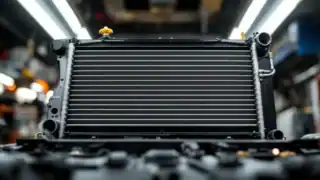
A proper BMW automotive cooling system flush is more involved than simply draining the reservoir and refilling it. We start by running a visual inspection of the entire cooling circuit, including the radiator, overflow reservoir, thermostat housing, water pump, and all hose connections. On many BMW models, the water pump is driven electronically rather than off a belt, which means it can fail without the usual warning signs of a mechanical pump. We check for any signs of weeping or leaks at this stage before we proceed.
We then flush the system to remove old, degraded fluid along with any scale or corrosion deposits that have built up in the passages. Once the system is clean, we refill with a coolant that meets BMW’s specification. Getting the coolant mixture ratio right matters too – the concentration affects both the freeze point and the boiling point of the fluid, and an incorrect mix can reduce the system’s protection in both directions.
After the refill, we bleed the system properly to remove air pockets. Air trapped in a BMW cooling circuit can cause localised hot spots and erratic temperature readings, which is a step that’s easy to rush but important to get right. We then run the engine up to operating temperature and confirm the thermostat is opening correctly and the cooling fan is operating as it should.
What Affects the Cost and Time Involved
The main variable in a BMW coolant fluid flush is whether anything else in the cooling system needs attention while we’re in there. If the thermostat is sluggish, the water pump shows play or weeping, or hoses are soft and cracking, it makes sense to address those at the same time rather than revisiting the job in a few months. We’ll always tell you what we find before any additional work is done.
Using the correct BMW-spec coolant also affects the parts cost compared to a generic vehicle, but it’s not negotiable for a brand like this. Cutting corners with incorrect fluid to save a small amount upfront tends to create far more expensive problems down the track. We handle parts sourcing directly, so you don’t need to track anything down yourself.
Why Gatton Drivers Bring Their BMWs to Us
Gatton Automotive Solutions is a full-service workshop covering cars, 4WDs, trucks, and heavy equipment – all under one roof. For BMW owners in the Lockyer Valley, that means you’re not driving 45 to 80 kilometres to Ipswich or Toowoomba for a cooling system service. We handle everything from general mechanical work through to roadworthy certificates, smash repairs, custom paintwork, suspension upgrades, and tyre fitting, all from our Gatton workshop.
We’ve built a strong local reputation on straightforward advice and fair pricing. We don’t recommend work that isn’t needed, and we explain what we find in plain language so you can make an informed call. With five-star reviews from local drivers, we’re trusted by families, tradies, farmers, and fleet operators across the region.
If your BMW is due for a coolant flush or you’ve noticed any of the warning signs above, Book Your Free Inspection online or Call Us Now to talk it through with our team. We’re here in Gatton to keep your BMW running the way it should.